Sign up for Christina’s Newsletter

Christina Baker Kline

Author Website

  • Books
    • The Foursome
    • Please Don’t Lie
    • The Exiles
    • A Piece of the World
    • Orphan Train
      • Orphan Train Girl: The Young Readers’ Edition of Orphan Train
    • Other Novels
      • Bird in Hand
      • The Way Life Should Be
      • Desire Lines
      • Sweet Water
    • Nonfiction
      • Always Too Soon
      • About Face
      • Child of Mine
      • Room to Grow
      • The Conversation Begins
  • Events
  • NEWS
  • Other Writing
  • About
    • Bio
    • FAQs
    • Contact
    • Photos
  • Newsletter

April 6, 2011 By bakerkline

Rejuvenate Your Writing Life!

A Restorative Mini-Retreat for Writing Mamas

With authors Christina Baker Kline and Deborah Siegel of SheWrites.com

Saturday, May 21, 9:30am – 3:30 pm at the Brooklyn Society for Ethical Culture, 53 Prospect Park West (near the 2/3, F, Q, B)

What do you need to turn your writing dream into a reality?

You spend your days taking care of other people’s needs. This May, give yourself a Mother’s Day gift of time and space for contemplation and creativity.  Think of it as a spa treatment for your mind.

Maybe you’ve kept a private journal and dream of starting a blog.  Maybe you have an idea for a memoir.  Or maybe you just want to start writing and don’t yet know the form.  Chances are, if you’re a mother and trying to write, your greatest obstacle is time.  Whether you’re at the idea stage or further along, we’ll help you get to the next level not only in your writing, but in your writing life.

Christina and Deborah are two professional writing mamas who believe that writing is vital—even when it has to happen in the crevices of our lives. In this beautiful setting we’ll combine strategies for how to fit writing into your everyday life with concrete exercises and feedback designed to get your creative juices flowing.  We’ll provide a stimulating and pampering combination of workshops, group conversations with other writer-mothers, one-on-one consultations, inspiring writing prompts, and Q&As.  You’ll leave at the end of the day with fresh ideas and insights, pages of new writing, concrete goals for your writing and your life – and a sense of community, something no writing mama should be without.

This day-long gift-to-self includes a delicious lunch, healthy snacks, caffeine (and caffeine-free) drinks … and of course – chocolate!  Cost: $175 ($195 after May 1).  Space is limited. Register early to save a spot!

Register NOW

Deborah Siegel, PhD (left) is an expert on gender, politics, and the unfinished business of feminism across generations. She is the author of Sisterhood, Interrupted: From Radical Women to Grrls Gone Wild, co-editor of the literary anthologyOnly Child, founder of the group blog Girl w/Pen, co-founder of the webjournal The Scholar & Feminist Online, and Founding Partner of SheWrites.com. Her writings on women, feminism, contemporary families, sex, and popular culture have appeared in venues including The Washington Post, The Guardian, Slate’s The Big Money, The Huffington Post, The American Prospect, More, Ms., Psychology Today, and The Mothers Movement Online.

Deborah received her doctorate in English and American Literature from the University of Wisconsin-Madison and has been a Visiting Scholar at both Barnard College and the University of Michigan.  She is currently a Fellow at the Woodhull Institute for Ethical Leadership and a member of the Women’s Media Center Progressive Women’s Voice project and serves on the Board of the Council on Contemporary Families.

A mother to boy-girl twins, Deborah recently launched a new “social” writing project through which she’ll be building community and debate around the gendering of childhood as she works on her own writing on these themes.  Follow her thoughts, currently housed at The Pink and Blue Diaries and Twitter, and check out her regular column at She Writes, in which she also tackles issues of work/life, motherhood, and the writing life.

And you know me – Christina.  My bio is on this site!
If you have questions, email me at bakerkline@aol.com.


Filed Under: Blog, Real Life Tagged With: Deborah Siegel, mother writing, SheWrites, spa, writing mamas, writing retreat, writing workshop

March 10, 2011 By bakerkline

Can Writing about Grief Make You Happy?

It might sound crazy, but for Allison Gilbert, writing about mourning has been an uplifting experience:

Several weeks ago my new book, Parentless Parents, was published.  This is the third book I’ve written that deals with mourning and loss.  And while you might assume I’d be the last person you’d want to meet at a cocktail party, I’ve been told otherwise.  I smile; I laugh.  You might even call me bubbly.

Each book I’ve written is the result of successfully pushing through an unwanted and unanticipated experience – and using that experience for something more powerful than anger and self-pity.  Writing about death and grief has been healing for me.

I wrote my first book, Covering Catastrophe, after nearly dying on 9/11.  I was a producer at WNBC-TV in New York at the time, and when the second tower collapsed I thought I was going to be buried alive.  The dust cloud knocked me off my feet, and emergency crews dragged me off the street so I wouldn’t be crushed by falling debris.  I was taken by ambulance to the emergency room at Bellevue Hospital.  Doctors cut off my clothes to examine my skin, and shoved tubes down my throat so I could breathe.

Physically, I was fine.  Emotionally, though, I was in trouble.  I had panic attacks for days, and many journalists I’d later speak with were also having traumatic flashbacks.   Because of what we experienced, three other radio and television journalists and I decided to write a book documenting what it was like to be a broadcaster that day, both personally and professionally.   Creating this book was cathartic for all of us, and what happened after publication was even better.  Covering Catastrophe was turned into a documentary by the U.S. State Department, has been recognized by the National September 11 Memorial & Museum, and every penny earned has been donated to 9/11 charities.   Giving back is the best emotional Band-Aid I know.

Three days after September 11, my father died of cancer.  I was 31 years old.  Almost immediately (and because my mother had died several years earlier) I felt compelled to write about my parents’ deaths.  Always Too Soon was hard to write because for the five years it took to complete, my parents’ deaths were always with me.  I had to deal with how much I missed them with every period and comma I typed.  What kept me going was the anticipation of helping others cope with the same pain.  My muse was an imaginary group of readers who needed comfort and validation.

And readers responded.  Men and women emailed me wanting to talk about being an adult orphan.  Many of these emails specifically addressed the challenges of being a parent without parents.   To manage the influx of emails, I began sorting them by state and city, and then, when I had two or three from any one area, I started playing matchmaker.  It was in putting these strangers together that Parentless Parents, the organization, was formed.  It was also how I knew that Parentless Parents, the book, needed to be written.

In Parentless Parents, I write not only about how the loss of my parents affects me, but also the myriad ways their absence affects my children, who don’t have my mother and father as grandparents.  Since the book came out, it’s been warmly embraced.  Parentless Parents support groups are taking shape all over the country.  The Parentless Parents Group Page on Facebook continues to grow.  And then there are the new emails I’ve been receiving from readers, like this one from a mother of two young children:

“You tapped right into my life, my heart and my soul. It is comforting to know that at least one other person in the world has gone through similar tragedies and has some understanding of what I deal with on a daily basis.”

In truth, I’m happy in the face of what I write because I have an outlet for all my feelings.  Conducting interviews, leading focus groups, creating the Parentless Parents Survey, the first of its kind, and writing – all of it has brought me incredible peace. My upbeat attitude has been shaped by creating a new and different conversation about loss, and the symbiotic relationship I have with my readers.  Ultimately, the most important lesson I’ve learned from writing is that I’m not alone.  

Allison Gilbert, author of Parentless Parents, founded a nationwide network of parents who have experienced the loss of their own mothers and fathers.  To find a Parentless Parents chapter near you, go to www.parentlessparents.com. You can also join Parentless Parents on Facebook by clicking here: http://www.facebook.com/group.php?gid=77976059211&ref=ts.  Watch her book trailer here: http://www.youtube.com/watch?v=j0vYt8L7qNg.  Allison is also the author of Always Too Soon and Covering Catastrophe.

Filed Under: Blog, Real Life Tagged With: 9-11, Allison Gilbert, Always Too Soon, Covering Catastrophe, creative process, grief, Inspiration, losing your parents, mourning, Parentless Parents, WNBC

February 2, 2011 By bakerkline

”I Had to Trust that Intimate Voice”

Memoirist Susan Conley finds out how hard it can be to practice what she preaches:

Four years ago my husband, Tony, and two young boys and I left the States to live in China, and I began to write what I hoped was a memoir. I didn’t call it that at first, because as yet the writing felt more like travelogue. I wrote accounts of the outdoor turtle markets in Beijing and the five-hour line Tony waited in to see an embalmed Chairman Mao. I wrote about dumpling houses and ballroom dancing in public parks, but there was no voice yet to these pieces—they relied mostly on image.

A Chinese man and his American wife had fixed up an old, stone courtyard house in the flatlands on the outskirts of the capital. Every Thursday I took a dicey Chinese cab ride out there (the drivers never knew the way) and taught a writing workshop from 9 to 12 in the morning. There were ten in the class—a Dane, and two Brits, three Americans, a Malaysian, two Australians and one Chinese woman. Her Western name was Sophia, and she’d grown up in China during the Cultural Revolution. She’d never owned a book until she was a teenager. Her parents were criticized publicly by the government and harassed and sent away for being bourgeois.

Sophia had been able to get out of China in the seventies, and she’d made it to the States for college. But she was back in China now, because she wanted to bear witness to that hard past. For class she’d bring in veiled attacks on the Communist Party and the short memory of the Chinese people. How, she asked, could the nation be embracing a free-market economy and fake Gucci hand bags, when so many had died only decades before?

Her writing was sharp, but I wanted to be let inside the material and to discover the emotional wake that the Cultural Revolution had left behind. I also wanted her to be more generous with us. “Please,” I said. “Could we see how you felt the day you were asked to publicly criticize your own sixth grade teacher on stage? What did you wear to school that day? Where did you sleep that night your parents were taken away?”

Sophia wanted to stick to the facts. At times our writing workshop felt like a cultural stand off. I wondered if I was too American in my approach to Sophia’s voice. Too Oprah? Too People Magazine? Sophia said that the Chinese way was not to write about herself. I said the only way that the reader was going to care, was if Sophia made the pieces partly about herself. I also said there was a balance to be struck. Intimacy with the reader didn’t have to mean a cult of personality around the narrator.

Back in my Beijing high-rise, I continued to write my own China story. My boys were my lens. I tried to capture the understanding they came to with Mandarin and the Beijing school bus, and the live turtles on the street. But then I was diagnosed with breast cancer and the travelogue voice was officially over.

When my treatment ended, I knew if I was going to finish this book, it would need a different voice. I tried out one that was distanced and prone to irony. Then one that was humorous. But I couldn’t quite land it. I wrote notes to myself in capitals on my desk: write as if you were talking to Sara back home about trying to buy apples in Beijing. This helped. This got me closer.

Then I gave chapters to an American writer named Anne who’d been living in China for twenty years. She read the excerpts, looked me in the eye and said, “Nice. But are you going to write this story or not? Because this is half way and you can’t go half way with a cancer story.” I’d detailed my surgery in China and my fear. Now Anne wanted more?

Then it was August, and I flew home to Maine and showed the manuscript draft to some of my writer friends. “Good,” was the word they used. “But it’s not personal enough,” my friend Debra said. Not personal enough? “We want to see what was going on inside your mind while you lay in that Beijing hospital. It’s a problem of voice.”

I flew back to Beijing and started teaching the workshops again. Sophia enrolled and showed me a piece she’d been working on. The writing had a new, urgent voice. Sophia had been able to put herself into her story—she’d taken her experience and distilled it down from the sweeping epic into a tight personal narrative.

After class I went home and sat down at my desk. I knew that to fully write about my cancer and the trip back, I had to trust that intimate voice I’d talked Sophia into using. I wrote a new chapter about how my four-year-old, Aidan, had drawn butterflies on pink construction paper the day before my next surgery—and how he’d looked me in the eye and said any time I wanted to leave the operating room, all I had to do was remember those butterflies. I wrote. and something shifted.  This new voice was the most intimate voice I could have imagined, but I had access to it and to more, and the book was launched again. In the end it was a matter of trust. From writer to reader and back again.

Susan Conley lived in Beijing for close to three years and recently returned to Portland, Maine, with her family. Her memoir, The Foremost Good Fortune, comes out this month from Knopf.  She is cofounder and former executive director of the Telling Room, a writing workshop and literary hub for the region. Her work has been published in the New York Times Magazine, as well as The Paris Review, Harvard Review, Ploughshares and other literary magazines. Visit Susan’s website, SusanConley.com here, and her blog, The Hall of Preserving Harmony, here, her Facebook Author Page here, and her Twitter here.

Filed Under: Blog

January 11, 2011 By bakerkline

When “Write What You Know” Takes You Somewhere New

Pianist and memoirist Nancy M. Williams on how her passion for music informed her writing – and vice versa:

Two years ago, during a cold and snowy winter, I began my first book during a writing residency at Vermont Studio Center.   My memoir explored reclaiming my passion for piano at age forty after a twenty-five year hiatus.   While a variety of snowflakes, from clumpy to perforated, fell past my writing studio window, I wrote about my relationship with my father, who during my childhood had supported my writing but abhorred the sound of the piano.  (In contrast, my mother, an amateur pianist herself, had savored my playing.)

Writing my story helped me realize that the wrongs my father had committed during my teens had morphed over time into my lack of resolve.  As an adult, I alone  was responsible for the lack or abundance of classical piano music in my life.

After six months of intensive writing following my return home from Vermont, I had completed a rough draft of my memoir.  Needing the perspective that breaks provide, I put the book in cold-storage, vowing not to read a single paragraph for three months.  I felt a desire stronger than ever, stoked by the act of writing the rough draft, to reach my piano potential, squandered when I abruptly had quit at sixteen.

Although I had sustained my daily piano practice and weekly lessons while drafting my book, I had not performed in public—save the occasional student recital—since beginning adult piano lessons four years earlier.  Now while on break from my memoir, in short order I performed three times at my church: a Chopin Nocturne, Debussy’s Reverie, and part of a Beethoven Sonata.  The experience injected me with so much confidence that I took the train into Manhattan in October to audition for The New York Piano Society, a group of skilled amateurs who hold free concerts in New York City and New Jersey.  Much to my awed delight, the director, Elena Leonova, asked me to perform in two concerts in December.  I felt, as I strode out onto the stage at Baruch Hall, that I had answered a call to myself .

Around the time of my audition, I pulled out the rough draft of my memoir.   I delved back into scenes, editing them closely, yet I sensed that my story felt incomplete.   A year after my first residency, I returned to Vermont Studio Center for another period of concentrated work.

Like the year before, snowflakes fell past my window into the black Gihon River below.  In the quiet of my writing studio, I examined the book’s arc and flow.  I felt befuddled.  Where were the performances at my church?  How could I have left out my audition for The New York Piano Society, let alone the two winter concerts?  Then it hit me:  when writing the rough draft, I had yet to live these experiences.  My performances felt so knitted to the memoir’s material that I assumed I already had captured them as scenes.

The adage write what you know gained for me an entirely new texture, not unlike the varied snowflakes I encountered in Vermont.   Writing about the piano, which I both know and love, spurred me to greater pursuits with my musical passion.  The act of creating my book enriched my life.

Nancy M. Williams is an award-winning creative nonfiction writer and an avid amateur classical pianist.  Visit her website for her online music magazine, Grand Piano Passion, as well as her recordings of some of her piano music.   She is currently at work completing her memoir.

Filed Under: Blog, Discipline, Inspiration Tagged With: Beethoven Sonata, Chopin Nocturne, Debussy's Reverie, Elena Leonova, Nancy Williams, New York Piano Society, piano, Vermont Studio Center

December 16, 2010 By bakerkline

What Makes a Title Great?

Novelist Caroline Leavitt on the impossibility — and importance — of finding the perfect title:

When I finished my new novel, I was relieved, excited, overwhelmed, and then terrified.  I knew I wasn’t really finished — I had to do the one thing that makes my head feel as if it is going to explode:  I had to find the right title. Having published eight other novels, I knew that a title wasn’t just my own creative decision.  My editor, my agent, publicity and marketing were going to weigh in, and truthfully, I could see why. The title’s the first thing a prospective reader sees (besides the cover, of course, which is a whole other story), and if you can’t grab someone’s attention with a few words on the glossy jacket, you may not have a chance with the thousands more that are inside.

A lot of my writer friends are expert book namers.  They argue with marketing, they follow their instincts and convince their editors about the rightness of their choices, but I’ve had no such luck. I admit that I’m horrible at titles, that none of the ones I ever think of seem right to me.  I can, however, recognize a decent title when I see it.  Or at least, I think I can.

Originally, my new novel was called Traveling Angels.  It’s a screenwriting term I got from story guru John Truby.  A traveling angel is a person who comes into the midst of a village, changes everyone’s life, and then vanishes.  How perfect for my novel!  Or so I thought.  But my publisher was afraid no one would get the title.  Plus, it sounded too soft for them, and what did it really mean?  How many people would get the screenwriting reference?  So I came up with a one word-title. Breathe. One of my main characters, a nine-year-old boy, is severely asthmatic. The word “breathe” could also apply to the other characters, who could use a good deep breath themselves.  I loved it.  I was sure it was right!

It wasn’t.  “Not strong enough,” my beloved editor told me.  She asked me to come up with a list, but it was actually she who came up with Pictures of You.  “It’s the name of a Cure song,” she told me, which I knew, and I instantly loved the idea.  (One of my other novels, Coming Back to Me, was the title of a Jefferson Airplane song I loved, and an homage to my husband, whose book on the band, Got A Revolution, was making many Best of the Year lists.)  Plus, the title Pictures of You fit in all sorts of ways, since the novel is about photography and how we choose to see (or not see) the ones we love.

I’m writing another novel now, due to Algonquin in 2012, and of course I’ve worked hard on the title, trying desperately to come up with something that would be both evocative of the story and mind-grabbing.  Set in the late 1950s and early 60s, this new novel is about how we try to keep the ones we love safe, how the unseen in our lives affects the parts we are aware of.  I thought I found the perfect title: The Missing One.  My editor emailed me.  “I love what I’ve read so far of your pages,” she wrote, “but the title has to go.”

Caroline Leavitt’s new novel, Pictures of You, officially out in January 2011, is already in its 3rd printing!   She can be reached at www.carolineleavitt.com, at facebook at http://www.facebook.com/carolineleavitt, at Twitter at @Leavittnovelist, and on her blog, http://carolineleavittville.blogspot.com/.

Filed Under: Blog, Guest Blogs, The Writing Biz Tagged With: book titles, Caroline Leavitt, creative process, finding a title, Inspiration, novels, Pictures of You

  • « Previous Page
  • 1
  • 2
  • 3
  • 4
  • …
  • 34
  • Next Page »

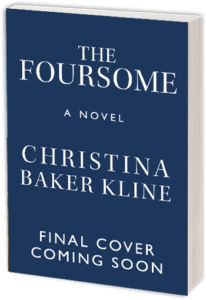
COMING MAY 2026: THE FOURSOME

A literary historical novel set in Civil War-era North Carolina, based on a true family story and told from the perspective of Sarah Bunker, one of two sisters who married Chang and Eng, the famous conjoined twins…learn more

Follow on Substack

Subscribe

Connect with Christina

Contact
  • Facebook
  • Instagram
  • Twitter

Copyright © 2026 Christina Baker Kline · Site design: Ilsa Brink