Sign up for Christina’s Newsletter

Christina Baker Kline

Author Website

  • Books
    • The Foursome
    • Please Don’t Lie
    • The Exiles
    • A Piece of the World
    • Orphan Train
      • Orphan Train Girl: The Young Readers’ Edition of Orphan Train
    • Other Novels
      • Bird in Hand
      • The Way Life Should Be
      • Desire Lines
      • Sweet Water
    • Nonfiction
      • Always Too Soon
      • About Face
      • Child of Mine
      • Room to Grow
      • The Conversation Begins
  • Events
  • NEWS
  • Other Writing
  • About
    • Bio
    • FAQs
    • Contact
    • Photos
  • Newsletter

April 1, 2010 By bakerkline

Reinventing the Novel

My friend Pamela Redmond Satran is a novelist, New York Times bestselling author, ninja web developer, and one-time magazine editor. Now she’s embarking on something entirely new:

Two things inspired me to write my new novel, Ho Springs, online, day by day, instead of writing it for a conventional publisher the way I did my first five novels.  Well, two things that are easy to explain.

The first was my husband, after watching the DVD of American Gangster, telling me he found the movie good enough but ultimately unsatisfying.   “It was a movie,” he explained, “so you knew from the beginning that everything really interesting was going to happen to Denzel Washington and Russell Crowe, and that it was going to build to this big climax at the end.”

That was the problem with conventional novels too, I thought.  They were predictable, limited and finite in form and scope.  Wouldn’t it be more interesting to write – and read – a novel that unfolded in a way that was both more leisurely and more compelling, the way TV shows like Mad Men and The Wire did?

The second influence was creating my blog How Not To Act Old after no one wanted to buy it as a magazine article, turning it into a book and making that book a New York Times bestseller.  That experience taught me that not only was it more fun and exciting to write without an editor between me and my readers, but my own creative instincts were often better than those of the traditional publishing world.

My experience writing five “real” novels and developing two big websites – I’m also a partner in the site nameberry.com, based on the ten baby name books I coauthored with Linda Rosenkrantz – put me in a unique position to create a piece of digital fiction that would combine the best of both worlds.  Rather than writing episodic pieces, I wanted to create a novel that included such conventional elements as a character-driven story, causally-related scenes, and an extended plot that would unspool in unexpected ways, but in a form that could exist only online.

My blueprint was a television series I’d created (but hadn’t sold) a few years ago, set in a fictionalized version of Hot Springs, Arkansas.   A place-based story was perfect for an online novel, I thought, offering a wide range of characters and settings and the potential for stories to expand in an unlimited number of directions.

The big problem was the name, Hot Springs.  The url hotsprings.com was obviously taken.  And then, driving one day, I had a eureka moment: hosprings.com, or Ho Springs.  I was so excited I did a u-turn and drove right back home to track down and reserve the name.

From that moment on, I knew the idea was right.  I wanted to create the site in wordpress, so it would be free and I’d have total creative control, but I couldn’t find a theme that included all the elements – videos, graphic windows that opened to places in the town and story, room for a big block of text.

I needed a designer – or, as it turned out, three designers.  I had a vision for a logo that would look like all the letters were in realistic flames, with the T up in smoke, which called for a photoshop expert.  My budget was zero, or as close to that as I could get.  I was lucky to find Katie Mancinewho built me an amazing logo.

The only problem was, Katie said, she couldn’t design a good-looking site to go with that logo.  Rather, she sold me on the concept “Vintage Tourist Guide,” which was great, but in the end that didn’t work out either.  Katie finally ended up with the design you see now on the site, and my friend Dennis Tobenski, who’s really a composer, made the whole thing dance.  Combined cost: under $1500, and several hundred gray hairs.

Weeks and then months were passing, during which I found a musician, Matt Michael, to write and record two original songs for the site, and also drafted several writer friends to create independent blogs from the characters’ viewpoints.  But the only writing I was doing during this time was putting together the static content describing the characters and the settings.

A novelist creating a work for the web is not, then, just a writer, but a designer, a logician, a manager, a tech guy, a producer.

And then, once you do start writing – or at least, once I did – the process is different too.  I suppose you could write one long story and parcel it out day by day, but the whole point for me was to create it as I went along, publish it immediately, to swing by the crook of my knees with no net below.

That’s the only way to feel the wind on your face, which is something you rarely feel when you’re writing a conventional novel, one that won’t be published for two years or maybe five, that no other person may even see for all that time, or maybe ever.  Writing all my other novels, I’m a big planner, outlining the big story and even each individual scene, revising and reimagining, working on the same piece until I lose sight of where I started and when it will ever end.

With Ho Springs, I get up in the morning, having a vague sense of what I’m going to write about, from which character’s viewpoint, but letting myself be swayed by whatever I encounter between brushing my teeth and opening my computer.  A David Sedaris story in an old New Yorker got one of my characters beaten one morning; an email from a writer friend inspired me to make a video of myself talking about what had influenced me that day.

It wasn’t until after I launched the site that I looked at what anyone else was doing in this arena.  The only site I’ve found that’s similar is All’s Fair in Love and War, Texas, by the brilliant Amber Simmons, which makes me believe God saved me from that Vintage Tourist Guide idea.  Penguin’s We Tell Stories is brilliant, but much more expensively and expertly produced than I could hope for, and more limited in writerly ambition.  Visually-based web fictions that blow me away include Unknown Territories and The Flat on Dreaming Methods.  But they’re movies, really, not novels.

Where is this project going?  My ideal vision is that someone like HBO or a publisher with a production arm will buy it and produce it as a multimedia property, with a television and a web and a book element working together.  I believe that this is how fiction will be written and published in the future, that this will become the new standard long after anyone remembers that Ho Springs ever existed.

Or I may take it down tomorrow and build something else.  The excitement is in creating something.  Holding it in your hands, or staring at it on a screen, holds so much less satisfaction.

Pamela’s personal site may be found here; with Ho Springs just around the corner.  This post originally appeared on the site Noveir.

Add to FacebookAdd to DiggAdd to Del.icio.usAdd to StumbleuponAdd to RedditAdd to BlinklistAdd to TwitterAdd to TechnoratiAdd to Yahoo BuzzAdd to Newsvine

Filed Under: Guest Blogs, The Writing Biz Tagged With: creative process, fiction writing, Ho Springs, How Not to Act Old, Inspiration, Pamela Redmond Satran

December 9, 2009 By bakerkline

Quick Links: They Like Us, They Really Like Us!*

Until a few months ago, I would’ve guessed that a “pingback” is a football position (like nickelback and dimeback.  Those ones are real).  Now I know better.  Whenever anyone links to this blog, I get a pingback – a request for notification.  I’ve been getting these a lot lately, and it occurs to me that the sites that link to mine might be interesting to my readers too.  So here are a few of the latest:

In “Must-Read Writing Articles,” Write It Sideways – a site offering some very good advice about writing – mentions two recent posts on this blog, Under the Influence and Laura Schenone’s Writing About the Past.

In a list of “Five New Literary Blogs to Follow,” First Person Plural – the official blog of The Writer’s Center, a DC-based “independent literary organization with a global reach” – includes A Writing Year, specifically citing Louise DeSalvo”s Why Having Kids is No Excuse, Chad Taylor’s Why Writers Should Care About Twitter, and my Q&A with Julie Metz on designing books, Judging a Book by its Cover.

In “Five Ways to Feel More Legitimate as a Writer,” Real Delia (dedicated to “Finding Yourself in Adulthood”) also mentions DeSalvo’s memorable post, quoting her lines:  “No one I knows cares if you’re writing.  That’s why you have to call it work.  Because that’s what it is.  Your work.  Your life’s work.” Real Delia adds:  Amen, sister.

And over at Art and Degrees of Freedom, “a mish-mash of musings and ideas on the interplay of art, gastronomy, and culture,” Lori Gordon discusses a recent quote on this blog from the French cubist painter Andre Lhote.  “Bridging art and writing,” Gordon muses.  “It just shows that concepts and the words to describe those concepts are timeless.”  That piece is here.

*For the young or pop-culture impaired: the headline is a reference to Sally Field’s cringe-inducing 1984 Oscar acceptance speech in which she gushed, “You like me, right now, you like me!” and which everyone misremembers as “You like me.  You really like me!”

Filed Under: Quick Links, The Writing Biz Tagged With: First Person Plural, pingback, Real Delia, Sally Field, The Writer's Center, Write it Sideways

October 29, 2009 By bakerkline

Guest Blog: Kamy Wicoff on Why and How Writers Need to Network

The founder of the social networking site SheWrites shares her vision for a better (publishing) world:SheWrites logo

Rumor has it that there was a time when writers didn’t have to do anything but write.  There was no such thing as a “platform,” no marketing plan to be incorporated into a book proposal, no need to hustle press opportunities and stay up till 3AM making long lists of bloggers who just might mention your book if you ask them nicely enough.  Writers wrote books; publishers did everything else.

It was never really that simple, of course.  In one of my favorite books about the lives of writers, Her Husband: Hughes and Plath, a Marriage, Diane Middlebrook revealed the world of an ambitious and hardworking couple whose labors went well beyond creating their poems.  Both poets worked hard to publish and promote their work, chatting up editors, appearing on radio and television, and lobbying hard for the attention of critics capable of making or breaking their careers.  Getting your writing read – selling it and attempting to make a living on it – has always been part of the writing life.

And yet.  Things have changed profoundly for writers in the 21st century.  Part of this is a matter of scale.  There is no longer a short list of powerful arbiters who can make or break a book – instead authors are encouraged to pitch their books (and their “brands,” a word Sylvia Plath and Ted Hughes would never have associated with themselves) to a dizzyingly long and diffuse list of critics, bloggers, and other media outlets in the hopes of creating that ever-elusive buzz.  The sheer numbers of outlets and the staggering scope of an author’s book-marketing “things to do list” has increased exponentially since the advent of the web, and as a result the job has gotten harder for the 99.9% of authors who are not best-selling publishing juggernauts.

As the novelist and entrepreneur Jennifer Korman put it in a recent blog post about how and why she decided to become her own publisher: “The new wisdom in the industry is that authors who sell well create direct relationships with their audiences. Ultimately the author is the brand rather than the publisher or the book itself.”  Profound changes in the publishing landscape, Korman points out, present authors with an unprecedented opportunity to take control of their writing lives.

On the other hand, most authors I know have no idea how to take advantage of this opportunity, and instead find that the increased responsibility placed upon them has meant more work for no pay.  Authors have been forced to become mini-entrepreneurs, to reinvent the wheel alone every time they publish, and to largely self-fund their efforts (often taken from their ever-shrinking advances) to boot.  As a result authors are overextended, under-supported, and finding it harder than ever to find the time to sit down and write.  A third way is needed – something between the old, top-down hierarchy of the traditional publishing model and the new, every-author-for-herself inefficiency we have now.

With this in mind, I recently started a social networking site for women writers called She Writes.  The idea is simple: give authors a one-stop shop where they can find the best editing, expertise and knowledge from publishing professionals, and a place to create a community where they can easily share what they know with one another.  The power of the latter should not be underestimated.  Jen Korman is a member of She Writes; her post laid out a budget for starting your own publishing house and publishing your first book.  What she has learned is powerful; what happens when she shares what she learned on a community like She Writes, and learns in turn from her fellow She Writers, is game-changing.  It’s my belief that the authors themselves are the most motivated, talented resource currently in existence in publishing today.  We just need somebody to help us organize and support one another.

On She Writes authors at every stage of their careers can quickly, efficiently ask questions of each other about anything from reviewing outlets to the best places to promote lesbian historical fiction to the most effective ways to use Facebook.  What you don’t know another author probably knows; what she doesn’t know, you may.  And precisely because the publishing landscape has changed so profoundly, this works.  We are not fighting for that one review in the New York Times anymore.  For most of us, sharing what we’ve learned with a like-minded author will not diminish the piece of the pie we’ve carved out for ourselves, but instead will increase our own chances of success, and free up a little bit more of our time to do what we really love to do, after all: write.

Kamy Wicoff is the Founder and CEO of She Writes, an online destination where women can create community and networks, and get the support and services they need at every stage of their writing careers. Kamy is the bestselling author of I Do But I Don’t: Why The Way We Marry Matters, and the co-founder, with the author and critic Nancy K. Miller, of the New York Salon of Women Writers. She serves on the Advisory Council of Stanford University’s Clayman Institute for Gender Research, and was the first fiction/nonfiction editor of Women’s Studies Quarterly.

Filed Under: Guest Blogs, The Writing Biz Tagged With: commercial, Diane Middlebrook, Kamy Wicoff, publishing, SheWrites, social networking, the writing business

October 5, 2009 By bakerkline

Guest Blog: David Harris Ebenbach on Why He Writes Short Stories

… and why we shouldn’t all be writing novels:

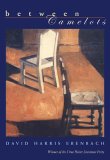
Ebenbach.coverWe are frequently told, by the market and also by the novelists that the market promotes, to revere certain forms of writing over others. The publishing industry by necessity emphasizes profits, and novels sell better than collections of short stories, which means there’s pressure on fiction writers; often we start out writing short stories, on our own or in creative writing workshops, but we soon feel pressured to “graduate” to the novel. The short story is generally regarded as inferior, nothing more than a stepping stone. Yet there is no objectively best form of writing – only the form that suits us best.

It’s an old saw in creative-writing classrooms that content dictates form. This means that certain forms of writing are best suited for certain kinds of material, and not as well suited for others. In poetry, for example, a haiku, with its quiet imagery and its sudden leap, is ideal for describing a moment of insight, and lousy for epic storytelling. A Shakespearean sonnet, with its three quatrains and final couplet, is good for developing an idea in three stages and then summing it up, and not as good at conveying obsessively circular thinking. For that kind of thinking, you might need a sestina, a lengthy poem which repeats certain words over and over.

The same content-form truism holds for fiction. A novel is not just a long short story – it’s a whole other animal. Because of its great size, it’s well-suited to handle complicated plot and structure, and in fact you probably need that elaborate plot to keep a reader interested for all those pages. If what you want to do is shed light on a moment in time, you should probably write a short story, too short for a wildly complicated structure but plenty big enough to illuminate something powerfully. And so the short story is no stepping stone – not any more than a haiku is a warm-up for writing a sonnet. A short story is a vehicle for a certain kind of content, content that won’t be able to find a home anywhere if the only things we write and read are novels. Some authors – including Raymond Carver, Anton Chekhov, Alice Munro and Grace Paley – write for a lifetime without ever needing to “graduate” from short fiction. (And some novelists never feel the need to write a short story.)

This is easy to say, but hard to remember. Several years ago I worked on a manuscript about a new single mother struggling to adjust to parenthood. To make it a novel I intensified this mother’s feelings and embedded them in an elaborate plot, to the point where this woman was behaving in crazy and unrealistic ways. I hadn’t set out to study someone flirting with madness – I had set out to study a person struggling the way many new parents do. But because I felt it had to be a novel, I badly distorted my material.

As soon as I realized my mistake I returned to a more appropriate form; I am now writing short stories about the many diverse experiences of parenthood. Each one is a window on a feeling, a situation, a moment. In writing them as short stories, I am saying what I need to say, how I need to say it.

If we listen to the voices telling us that certain kinds of writing are preferable because they’re more marketable, we may find it impossible to say what we need to say. If we’re going to listen to any voices, I say let’s listen to our own – voices that tell us to find our form and, without apology, make ourselves at home there.

David Harris Ebenbach’s first book of short stories, Between Camelots, won the Drue Heinz Literature Prize and the GLCA New Writer’s Award.  His short fiction has been published in the Antioch Review, the Greensboro Review, and Crazyhorse, his poetry in Artful Dodge, Mudfish, and the Journal of the American Medical Association, and he wrote a chapter, “Plot: A Question of Focus,” for Gotham Writers Workshops’ book Writing Fiction.  Recently awarded a MacDowell Colony fellowship, Ebenbach teaches Creative Writing at Earlham College.  Find out more at www.davidebenbach.com.

Filed Under: Guest Blogs, The Writing Biz Tagged With: Alice Munro, Anton Chekhov, creative process, David Harris Ebenbach, fiction writing, Grace Paley, literary, Raymond Carver, short stories, Thoughts, writing a novel

September 17, 2009 By bakerkline

Q&A with Graphic Designer Julie Metz: Judging a Book by its Cover, Part 2

Earlier this week I posted Part 1 of this conversation with book designer Julie Metz on what makes a successful cover.  Here’s the rest.

What should writers know about how to get their ideas across to a book designer? Writers who have labored over their books for years might be horrified to know that designers do not always have an opportunity to read their manuscripts before designing the cover. This is a result of scheduling and the sheer volume of work required of art departments. I often think it would be helpful to have authors write a short description of their book, not like the teaser ad copy we designers get on tip sheets, but a true synopsis that also identifies recurring imagery and themes. Writers are in the word business, but designers are in the image business. The author knows what her own images and themes are better than anyone else. That said, once those ideas have been successfully communicated, designers love to have the freedom to work with those ideas in ways that might surprise and delight an open-minded author.

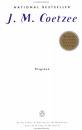
david sedarisCan you give examples of some book covers you particularly like? Just a very few of the smart, clever covers I personally admire include all of David Sedaris, Lorrie Moore’s Birds of America, Nabokov’s Short Stories, J.M. Coetzee’s all-white novels (stark, spare, just like his writing).  I have a small but cherished collection of book covers designed by greats like Paul Rand and Alvin Lustig. And then there are classics like Catch-22.  The original cover design still looks modern and eye-catching.

birds of americaNabokovCoetzeeCatch-22

chick lit

Women writers I know sometimes lament that publishers want to make their book covers too “chick litty” — that is, ultra-feminine, with soft colors and pretty-pretty designs.  Publishers counter that they want to sell books.  What do you think of this ongoing debate? A huge proportion of book buyers are women, so it certainly makes sense for publishers and booksellers to market to this audience, though at times it seems as if books are being packaged like cosmetics. I have designed my share of true chick-lit covers! Some books clearly fit right in to this category of light entertainment and are well served by light and bright (and pink!) packaging.  It’s too bad when a more literary novel ends up too pink and perky. So I can imagine that many women authors feel that the marketplace is dumbing down their work.

What makes a bad book cover? Too much cleverness can confuse book buyers.  Cluttered or just plain ugly turns them away.  Bland, tired, clichéd – ditto.

Have you ever had an author who vehemently didn’t like a cover you designed?  If so, who won that battle, and why? Over the course of twenty working years, that scenario has happened at least a dozen times. My job is to be resilient in the face of rejection, not get too attached to my work, and remember that I am in a service industry! Once, many years ago, an author and editor killed a job I designed that the art director and I loved. “An award winner,” he said (we graphic designers live for those awards). I hung up the phone and cried. After I calmed down, I decided that it was time to grow a tougher skin, and I did. Another time I was called in to meet with a very famous author (who shall remain nameless) who spoke rudely about our efforts to create a cover for one of his novels. I grew even thicker skin. Now I try to cultivate some Buddhist-style detachment: I do my very best work and then release it to my client. I try to have a good attitude, and I try to make my art director’s job easy.

How important do you think a book cover is, ultimately, to the success of a book? In this era, marketing and packaging are extremely important. The cover needs to be strong enough so that when it appears at the size of a postage stamp in a magazine or online review it will still have some impact. But the truth is that while a bad cover may harm sales of a worthy book, and a great cover can help sales of a good book, a great cover will not sell a bad book.


Filed Under: The Writing Biz Tagged With: book design, Catch-22, Chick-lit, creative process, David Sedaris, Inspiration, J. M. Coetzee, Julie Metz, Lorrie Moore, Nabokov

  • « Previous Page
  • 1
  • 2
  • 3
  • Next Page »

COMING MAY 2026: THE FOURSOME

A literary historical novel set in Civil War-era North Carolina, based on a true family story and told from the perspective of Sarah Bunker, one of two sisters who married Chang and Eng, the famous conjoined twins…learn more

Follow on Substack

Subscribe

Connect with Christina

Contact
  • Facebook
  • Instagram
  • Twitter

Copyright © 2026 Christina Baker Kline · Site design: Ilsa Brink