Sign up for Christina’s Newsletter

Christina Baker Kline

Author Website

  • Books
    • The Foursome
    • Please Don’t Lie
    • The Exiles
    • A Piece of the World
    • Orphan Train
      • Orphan Train Girl: The Young Readers’ Edition of Orphan Train
    • Other Novels
      • Bird in Hand
      • The Way Life Should Be
      • Desire Lines
      • Sweet Water
    • Nonfiction
      • Always Too Soon
      • About Face
      • Child of Mine
      • Room to Grow
      • The Conversation Begins
  • Events
  • NEWS
  • Other Writing
  • About
    • Bio
    • FAQs
    • Contact
    • Photos
  • Newsletter

March 22, 2010 By bakerkline

“You Have to Make It Excruciating Somehow”: More on James Cameron

Last week I posted James Cameron’s answer to the question “What’s the most important thing you know about storytelling?” Discussing Cameron’s ideas with the writer Bonnie Friedman – with whom I have an ongoing, percolating conversation about craft and creativity (as regular readers of this blog well know) –, I mentioned that I particularly liked his idea that “you have to take [your characters] on a journey – and then you have to make it excruciating somehow.”  Excruciating – such an intriguing word!  Bonnie agreed, as usual responding with nuance and subtlety to my own visceral reaction:
“It seems to me sheer genius to come at storytelling from this vantage point,” she said.  “So many of us begin from a thing in us that demands to be told and whose unleashed energy we hope will fuel us all the way along, rather than from this distant and perhaps more masterly height.  And that term ‘excruciating’ is somehow so validating.  Because one does find those sequences late in a film just torturously suspenseful.  So many romantic movies end with a chase scene, the main character running: The Graduate, Manhattan, Four Weddings and a Funeral, Up in the Air, Sleepless in Seattle, Casablanca, etc.

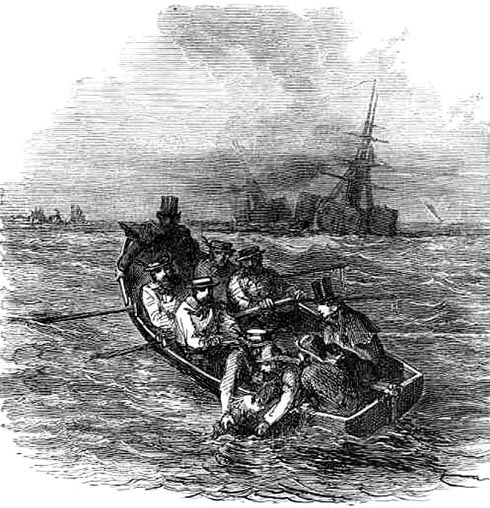
“It’s interesting to think about this in terms of novels.  Even in Great Expectations, a book that precedes the movies by half a century, there’s a grand, excruciating chase scene at the end.  When Pip finally discovers who his benefactor is, late in the story, he also discovers that it’s urgent he help his benefactor run for his life, with the grand escape via the river, the race to intercept a foreign ship — and that sinister mystery craft which shoots out of the gloom and pursues them.  The whole race and apprehension of the benefactor Magwitch has this very quality of the excruciating about it.

“It occurs to me that one effect of this is that the audience is left with fast-beating hearts and an upswing of energy, even as they are haunted by the final, grand, masterpiece-sized vision – and so instead of feeling exhausted by their long journey, they end up energized, and want to relive the thing or recommend it to their friends.”

Add to FacebookAdd to DiggAdd to Del.icio.usAdd to StumbleuponAdd to RedditAdd to BlinklistAdd to TwitterAdd to TechnoratiAdd to Yahoo BuzzAdd to Newsvine

Filed Under: Guest Blogs, The Creative Process Tagged With: Bonnie Friedman, creative process, fiction writing, Great Expectations, Inspiration, James Cameron, Magwitch, Thoughts, writing a novel

March 11, 2010 By bakerkline

The Essential Elements of Storytelling … according to James Cameron

The other night, flipping through channels, I came across a Charlie Rose interview with James Cameron.  Say what you will about the director of Avatar and Titanic (and Aliens) — he knows how to tell a story.  I was so intrigued by his answer to the question “What’s the most important thing you know about storytelling?” that I went to the pbs.com podcast and painstakingly transcribed it.

Here’s what he had to say (minus Charlie Rose’s approving grunts and overtalk):

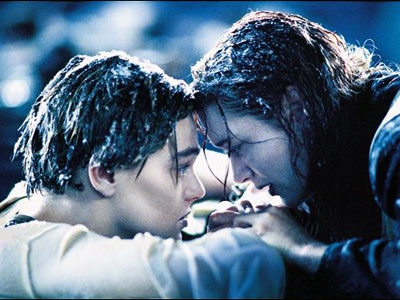
“You have to find a key into the heart of the audience, which means you have to find universals of human experience and then express them in exotic new ways.  So you’ve got to find something that people recognize.  As simple as boy meets girl on a ship which is going to sink.  But the knowledge that it’s going to sink was a critical part of that storytelling.  Because otherwise you had two hours of women in corsets and funny hats before anything happened, before the ship even hit the iceberg.  But if you know it’s sinking, you hang around for all that.

“But I think it’s always about the characters and about how those characters express something that the audience is feeling.  So it has to have some universality to it, having to do with relationships, whether it’s male-female, parent-child, whatever it is.  And then you have to take them on a journey — and then you have to make it excruciating somehow. Challenged, endangered, in pain.  Fear, tension, and triumph.  Some form of triumph — our values, our victory, something.

“In the case of Titanic, everybody died.  Including, at the very end of the film, the main character, but she lived a life that she had learned.   There was an energy transfer from one character to another.  Which I also think is a fundamental of a love story, that there’s some a flow of energy from one character to another.  So I applied that rule set at a very abstract level to Avatar. Because it’s a very different story.  But I think you can step back to a very abstract level of general principles.  If you apply those principles, that will work.”

Add to FacebookAdd to DiggAdd to Del.icio.usAdd to StumbleuponAdd to RedditAdd to BlinklistAdd to TwitterAdd to TechnoratiAdd to Yahoo BuzzAdd to Newsvine

Filed Under: The Creative Process Tagged With: Aliens, Avatar, creative process, Inspiration, James Cameron, storytelling, Thoughts, Titanic

COMING MAY 2026: THE FOURSOME

A literary historical novel set in Civil War-era North Carolina, based on a true family story and told from the perspective of Sarah Bunker, one of two sisters who married Chang and Eng, the famous conjoined twins…learn more

Follow on Substack

Subscribe

Connect with Christina

Contact
  • Facebook
  • Instagram
  • Twitter

Copyright © 2026 Christina Baker Kline · Site design: Ilsa Brink