Sign up for Christina’s Newsletter

Christina Baker Kline

Author Website

  • Books
    • The Foursome
    • Please Don’t Lie
    • The Exiles
    • A Piece of the World
    • Orphan Train
      • Orphan Train Girl: The Young Readers’ Edition of Orphan Train
    • Other Novels
      • Bird in Hand
      • The Way Life Should Be
      • Desire Lines
      • Sweet Water
    • Nonfiction
      • Always Too Soon
      • About Face
      • Child of Mine
      • Room to Grow
      • The Conversation Begins
  • Events
  • NEWS
  • Other Writing
  • About
    • Bio
    • FAQs
    • Contact
    • Photos
  • Newsletter

March 29, 2010 By bakerkline

Writing Tip #11: Don’t Listen to Hackneyed Advice

Write what you know?  On second thought …
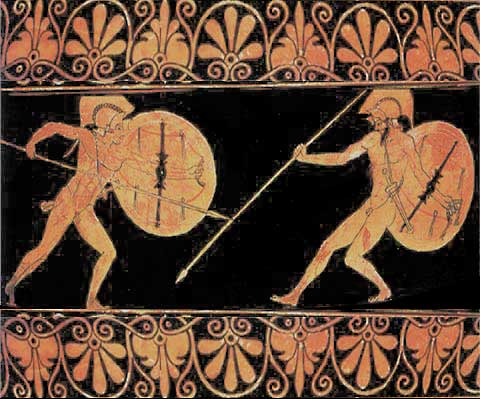
“Creative writing teachers should be purged until every last instructor who has uttered the words ‘Write what you know’ is confined to a labor camp. Please, talented scribblers, write what you don’t. The blind guy with the funny little harp who composed The Iliad, how much combat do you think he saw?”  — P. J. O’Rourke

“It still comes as a shock to realize that I don’t write about what I know; I write in order to find out what I know.”  — Patricia Hampl

“Writing what you know ignores the whole purpose of creative writing. Writing is an act of the imagination. Good writing is generally bigger than the writer — if we only write about ‘what you know,’ our work will never be more compelling than we are.”  — Willie Davis

Add to FacebookAdd to DiggAdd to Del.icio.usAdd to StumbleuponAdd to RedditAdd to BlinklistAdd to TwitterAdd to TechnoratiAdd to Yahoo BuzzAdd to Newsvine

Filed Under: Writing Tips Tagged With: creative process, fiction writing, Inspiration, P.J. O'Rourke, Patricia Hampl, Thoughts, Willie Davis, Write what you know, writing a novel, Writing Tips

March 15, 2010 By bakerkline

Let’s Talk About Dialogue

Last month I received an early copy of Dawn Raffel’s new story collection, Further Adventures in the Restless Universe, which officially debuts this week.  Reading it — a slim, spare set of 21 stories in just over 100 pages that Publishers Weekly calls “a model of economy and grace” — I was struck by how well Raffel writes dialogue.  So I asked her to articulate how she does what she does.  And here’s what she said:

Before I was a fiction writer, I was a journalism student, a theater student, and a fiction editor. All three pursuits taught me some lessons about dialogue:

People almost never speak in perfect sentences. In journalism school, I spent hours writing down verbatim what people said. Real people mix up tenses and subject/verb agreement, repeat, trail off, and go off on tangents halfway through a sentence. Too much of this on the page would be annoying, but a little goes a long way toward establishing authenticity.

Conversations are rarely entirely logical. One person asks a question and the other gives an answer that doesn’t quite match. One makes a comment and the other changes the subject. This happens when we’re obfuscating and when we’re genuinely trying to communicate. We invariably have our own agenda, our own distractions, our own inner drama playing loudly in our head.

Words carry only a portion of the meaning of dialogue. When you study a play, you realize how much is conveyed by tone of voice, by timing, by physicality. On the page, you can utilize the cadence of the dialogue to convey mood (i.e. Is it percussive? Fluid and languid?), and you can make use of a character’s body language (Is she looking at the door while she’s talking? Picking at food?). What’s not said can be important. And colloquial dialogue juxtaposed with a lusher, more expressive narrative voice can convey the sense of a rich inner life behind the words.

“Said” is your friend. “She declared, she exclaimed, she cajoled, she fulminated, she shrieked….” These just call attention to themselves and feel manipulative; they’re cheap ways to conjure emotion. As a fiction editor, I saw how “said” disappears on the page and allows the dialogue and action to stand out.

Using dialogue as a delivery system for lots of exposition is also a cheap shot. People don’t give each other a ton of back story in real conversations (“Remember when we got married ten years ago…”).  Let dialogue advance the story.

Having one character tell another character a story can establish character. In my novel Carrying the Body, one of my characters keeps trying to tell the story of the Three Little Pigs; the way she corrupts the fairy tale is a way of showing the reader who she is.

My best piece of advice is this: Always read your dialogue aloud. If it makes you cringe (which happens to me often on the first round), if it comes out sounding like words no one ever spoke, you know you have your work cut out for you.

Dawn Raffel’s newest book, Further Adventures in the Restless Universe, is a collection of 21 very short stories (several made up almost entirely of dialogue). She is also the author of a novel, Carrying the Body and a previous collection, In the Year of Long Division. Her fiction has appeared in O, The Oprah Magazine, The Anchor Book of New American Short Stories and numerous journals and anthologies. She has taught creative writing in the MFA program at Columbia University and at the Summer Literary Seminars in St. Petersburg, Russia, and is a longtime magazine editor. Her website is DawnRaffel.  Her YouTube video is Further Adventures in the Restless Universe.

Add to FacebookAdd to DiggAdd to Del.icio.usAdd to StumbleuponAdd to RedditAdd to BlinklistAdd to TwitterAdd to TechnoratiAdd to Yahoo BuzzAdd to Newsvine

Filed Under: Guest Blogs, Writing Tips Tagged With: creative process, Dawn Raffel, dialogue, Discipline, fiction writing, Further Adventures in the Restless Universe, Inspiration, writing a novel

December 30, 2009 By bakerkline

New Year’s Resolution: Write that Book! (12 Great Tips)

Just in time for the new year, the fabulous C. M. Mayo shares her strategies for writing – and finishing – your book:

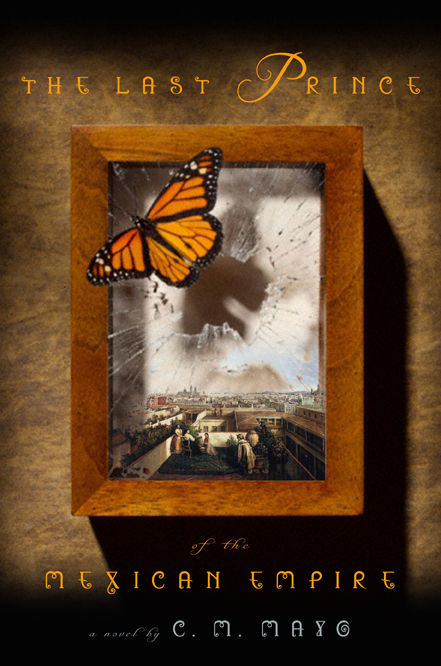
Last spring my latest novel, The Last Prince of the Mexican Empire, was published. This was not a go-to-the-cabin-by-the-lake-and-churn-it-out kind of experience.  No, my novel is a nearly 500-page historical epic based on extensive original research, every line of prose polished to shine like the lighthouse in Alexandria, with more characters than you could pack into a Starbuck’s.  Is it any good?  You be the judge.   What I know for sure is that over the more than seven years it took me to write it, I hung in there.  And eventually I finished.  And then I sold it.  How did I do it?

Herewith one dozen tips:

# 1. Before you begin, state your intentions
It’s important to write them down, stating them specifically, and in present tense.  For example, I write a novel that… you fill in the blanks.  I don’t mean, write down what your novel is about; you might have to fiddle around for a few hundred pages before you figure that out.  But ask yourself, do you want to write a novel that places you among the immortal literary stars?  Or achieve a modest success that might help you get a teaching job?  Or do you just watch to check “publish book” off your “to-do” list?  And how much time and effort are you willing to put into the enterprise of finding a publisher?  It might be easy to find one, or it might take a few years, a bundle of postage, and a mountain of paperwork.  Not to mention heartbreak.  Whatever your path may be, it will be more difficult if you have not clearly identified and acknowledged your intentions.

# 2. Be here now
If you are regretting the past (“I should have started sooner …”) or worrying about the future (“Will they laugh at me?”), you are not writing. And if you are waxing nostalgic about the past (“How wonderful that they liked my short story!”) or daydreaming about the future (“My agent will sell it to the movies for a million dollars!”), you are not writing.  To get the book done, you have to be writing.

# 3. Treat yourself kindly
If you do, your artist self will show up more frequently, and play more freely.  If you bully and criticize yourself, you can sure you’ll end up blocked.

# 4. Keep a pen and something to write on with you at all times
When you’re out and about – driving, at the dentist’s, walking the dog – you just might capture the perfect fragment of dialogue, or hear the opening line of the next chapter in your head.  I don’t recommend those lovely bound “writer’s” journals because they are too big to carry around easily.  I use Moleskines, index cards and sometimes even a small pack of Post-Its.

# 5. When you are writing, always keep your pen resting lightly on the page (if at the computer, keep your fingers on the keyboard)
If you sit back in your chair and lift your hand to your chin, as so many people do, your body is signalizing to your writing self, no, I am not ready. This can contribute to a bad case of block. It’s such a simple thing to always keep your pen on the page, yet very effective.

# 6. Music helps
I find that drifty, New-Agey music in a minor key works best for bringing on the Muses. There is a large literature about music and creativity. I offer a couple of blog posts (with links for more information) on this subject here and here.

# 7. Mise-en-place
This is a French term chefs use that means, more or less, everything in its place. Briefly: start clean, then assemble utensils and equipment; then assemble all ingredients; then wash, cut, chop; then cook. Doing things out of order makes the whole process take longer; the product often come out mediocre (or ruined), and can cause needless stress for the cook and the diners.

This explains why many of the most productive writers write in coffee shops and the rest of them do a lot of housecleaning, n’est-ce pas? It’s not the easiest thing to write a novel when your desk is cluttered with phone bills and stacks of unanswered letters, the dog needs to be walked in five minutes, and, by the way, you’ve left the phone on and your Facebook page tab open. There are people who can work amongst piles and general chaos, but I am not one of them, and I cannot recommend it.

# 8. Learn from other novels
The novels you have already read and love can be your best teachers. But don’t read them passively, for entertainment; neither should you read as an English major might, ferreting out “interpretations.” Read them as a craftsperson. How does Chekhov handle endings? How does Austen handle transitions? How does Hemingway describe food and clothing? Any question you have about your writing conundrums is probably answered, right there, in the books you already have on your shelf. And continue to read, and read actively, with a notebook and pen.

# 9. Learn from books on creativity
Why reinvent the wheel? Whatever your problem (block, confusion, utter despair), you can be sure another writer (or artist) has wrestled with it and has something helpful to say about it in a book. The cost of a book is lentils compared to that of needlessly painful experiences. You’ll find my list of recommended books here.

# 10. Get feedback on your writing
From a writers group, a writing teacher, a freelance editor, workshop participants. You’ll find my 10 tips to get the most out of your writing workshop here.

(For some years I was in a writing group with novelist Leslie Pietrzyk; read what she has to say about it here.)

# 11. Get to know other writers
This is how I found my writers group (thanks, Richard Peabody!), my publisher (thanks, Nancy Zafris!), and my agent (thanks, Dawn Marano!).

Go forth with a spirit of generosity. You never know who will help you, and you might be more helpful to someone else than you realize. So go to readings (they are almost all free!); take workshops, attend conferences, and stay in touch.

# 12. Consistent Resilient Action
Again, why reinvent the wheel? Writers are not the only ones who grapple with their emotions in the face of rejection, failure, criticism, and indifference. There is a large literature on sports psychology. The book I recommend most highly is The Mental Edge by Kenneth Baum. Consistent Resilient Action (CRA) is what sports champions do:  Dropped the ball?  Well, pick it up.  So your first draft is crap?  Write a new one.  An agent rejected you?  Send your manuscript to the next one.  Take a workshop, get feedback, re-read Proust, go write a poem— and so on.  In response to anything negative, instead of wasting your energy in anger, it is crucial to take a positive step, however small, and immediately.

P.S. Many more resources for you here.

And good wishes.

Filed Under: Guest Blogs, Writing Tips Tagged With: C.M. Mayo, creative process, Discipline, fiction writing, Inspiration, Kenneth Baum, Moleskine, The Last Prince of the Mexican Empire, The Mental Edge, writing a novel, Writing Tips

November 5, 2009 By bakerkline

Break the Block in Five Minutes

last-prince-cover-smaller (2)Award-winning writer, translator, and editor C. M. Mayo explains the power of the five-minute exercise:

“I don’t have time to write.”  Everyone and their uncle who has that bodacious idea for a screenplay, it seems, leans on this one.  Do you?

I’m a writer, but that doesn’t mean I always have the time I’d like for writing – the big luxurious swaths of peaceful solitude that, as arts colony-goers know, enable a writer to swan through six months of work in a mere week.  But on any given day I do have some scrap of time I could dedicate to writing.  In the crush of things, it may be only an hour, maybe half an hour.  Maybe less.  No matter what your life looks like, even if you have two jobs and eight screaming kids, you, too, have time to write – though we’re talking five minutes and I know, you may have to lock yourself in the bathroom to grab that much.  But grabbing such scraps of time can make the difference between being a writer who writes and a writer who isn’t.

So here’s a trick: take out an egg-timer (or use the countdown feature on your cell phone) and set it to five minutes. You would be amazed how much you can write in a mere five minutes, and at how much momentum you gain, so much in fact that most people – I say this based on my experiences teaching workshops – find it painful to stop.

What to write? Back in 2006, as an exercise to help my students and also myself, as I was in the midst of long slog (The Last Prince of the Mexican Empire, my nearly 500-page historical novel), I posted one five-minute writing exercise every day for 365 days. These cover dialogue, plot, beginnings, characterization, body language, weather, imagery, synesthesia, and more. You’ll find “Giant Golden Buddha & 364 More 5 Minute Exercises” arranged by month and with a thematic index here.  Most of the exercises are mine, but a number are by other writers and poets who contributed their favorites. Help yourself – and have fun!

And one last tip: when you do these exercises, or any other writing, always keep your pen resting lightly on the paper, or your fingers resting lightly on the keyboard.  If you raise your hand, say, to scratch your chin as you contemplate what to write, your body has alas, powerfully, told your writing mind that it does not want to cooperate.  So cooperate.  With your pen resting lightly on the paper, or your fingers lightly on the keyboard, you’ll see, something will come into your mind and you will write.  And that’s it – you’ve broken the block.  Now may your writing flow.

C.M. Mayo is the author of The Last Prince of the Mexican Empire, which is based on a strange and powerful true story.  Her other works include Miraculous Air: Journey of a Thousand Miles through Baja California, The Other Mexico, and Sky over El Nido, which won the Flannery O’Connor Award. She is the editor of Mexico: A Traveler’s Literary Companion, a portrait of Mexico in works by 24 Mexican contemporary writers. She teaches in the San Miguel Workshops and the Writers Center, and blogs at Madam Mayo.

Filed Under: Guest Blogs, Writing Tips Tagged With: C.M. Mayo, five-minute exercises, Inspiration, The Last Prince of the Mexican Empire, writers' block, writing tip

October 12, 2009 By bakerkline

Thirteen Tips for Actually Getting Some Writing Done

writers_block2Gretchen Rubin is the guru behind the phenomenally successful blog (and soon-to-be book) The Happiness Project.  In this post she shares an inside glimpse at her process.

One of the challenges of writing is … writing. Here are some tips that I’ve found most useful for myself, for actually getting words onto the page.

1. Write something every work-day, and preferably, every day; don’t wait for inspiration to strike. Staying inside a project keeps you engaged, keeps your mind working, and keeps ideas flowing. Also, perhaps surprisingly, it’s often easier to do something almost every day than to do it three times a week. (This may be related to the abstainer/moderator split.)

2. Remember that if you have even just fifteen minutes, you can get something done. Don’t mislead yourself, as I did for several years, with thoughts like, “If I don’t have three or four hours clear, there’s no point in starting.”

3. Don’t binge on writing. Staying up all night, not leaving your house for days, abandoning all other priorities in your life — these habits lead to burn-out.

4. If you have trouble re-entering a project, stop working in mid-thought — even mid-sentence — so it’s easy to dive back in later.

5. Don’t get distracted by how much you are or aren’t getting done. I put myself in jail.

6. Don’t fall into the trap of thinking that creativity descends on you at random. Creative thinking comes most easily when you’re writing regularly and frequently, when you’re constantly thinking about your project.

7. Remember that lots of good ideas and great writing come during the revision stage. I’ve found, for myself, that I need to get a beginning, middle, and an end in place, and then the more creative and complex ideas begin to form. So I try not to be discouraged by first drafts.

8. Develop a method of keeping track of thoughts, ideas, articles, or anything that catches your attention. That keeps you from forgetting ideas that might turn out to be important, and also, combing through these materials helps stimulate your creativity. My catch-all document, where I store everything related to happiness that I don’t have another place for, is more than five hundred pages long. Some people use inspiration boards; others keep scrapbooks. Whatever works for you.

9. Pay attention to your physical comfort. Do you have a decent desk and chair? Are you cramped? Is the light too dim or too bright? Make a salute—if you feel relief when your hand is shading your eyes, your desk is too brightly lit. Check your body, too: lower your shoulders, make sure your tongue isn’t pressed against the top of your mouth, don’t sit in a contorted way. Being physically uncomfortable tires you out and makes work seem harder.

10. Try to eliminate interruptions — by other people, email, your phone, or poking around the Internet — but don’t tell yourself that you can only work with complete peace and quiet.

11. Over his writing desk, Franz Kafka had one word: “Wait.” My brilliantly creative friend Tad Low, however, keeps a different word on his desk: “Now.” Both pieces of advice are good.

12. If you’re stuck, try going for a walk and reading a really good book. Virginia Woolf noted to herself: “The way to rock oneself back into writing is this. First gentle exercise in the air. Second the reading of good literature. It is a mistake to think that literature can be produced from the raw.”

13. At least in my experience, the most important tip for getting writing done? Have something to say! This sounds obvious, but it’s a lot easier to write when you’re trying to tell a story, explain an idea, convey an impression, give a review, or whatever. If you’re having trouble writing, forget about the writing and focus on what you want to communicate. For example, I remember flailing desperately as I tried to write my college and law-school application essays. It was horrible – until in both cases I realized I had something I really wanted to say. Then the writing came easily, and those two essays are among my favorites of things I’ve ever written.

Filed Under: Discipline, Writing Tips Tagged With: creative process, Discipline, Gretchen Rubin, Inspiration, revising, The Happiness Project, Thoughts, Writing

  • 1
  • 2
  • 3
  • 4
  • Next Page »

COMING MAY 2026: THE FOURSOME

A literary historical novel set in Civil War-era North Carolina, based on a true family story and told from the perspective of Sarah Bunker, one of two sisters who married Chang and Eng, the famous conjoined twins…learn more

Follow on Substack

Subscribe

Connect with Christina

Contact
  • Facebook
  • Instagram
  • Twitter

Copyright © 2026 Christina Baker Kline · Site design: Ilsa Brink