
Sign up for Christina’s Newsletter

Christina Baker Kline

Author Website

  • Books
    • The Foursome
    • Please Don’t Lie
    • The Exiles
    • A Piece of the World
    • Orphan Train
      • Orphan Train Girl: The Young Readers’ Edition of Orphan Train
    • Other Novels
      • Bird in Hand
      • The Way Life Should Be
      • Desire Lines
      • Sweet Water
    • Nonfiction
      • Always Too Soon
      • About Face
      • Child of Mine
      • Room to Grow
      • The Conversation Begins
  • Events
  • NEWS
  • Other Writing
  • About
    • Bio
    • FAQs
    • Contact
    • Photos
  • Newsletter

July 4, 2009 By bakerkline

Writing Tip #5: Advice from George Orwell

george-orwellIn his essay “Politics and the English Language,” George Orwell made a list of six rules for writers. “These rules sound elementary,” Orwell wrote, “and so they are, but they demand a deep change of attitude in anyone who has grown used to writing in the style now fashionable.” Though he compiled this list in 1946, it’s as relevant and useful today as it was then:

  1. Never use a metaphor, simile, or other figure of speech which you are used to seeing in print.
  2. Never use a long word where a short one will do.
  3. If it is possible to cut a word out, always cut it out.
  4. Never use the passive where you can use the active.
  5. Never use a foreign phrase, a scientific word, or a jargon word if you can think of an everyday English equivalent.
  6. Break any of these rules sooner than say anything outright barbarous.

Filed Under: Writing Tips Tagged With: "Politics and the English Language", creative process, editing, George Orwell, jargon, literary, metaphor, revising, simile, writing a novel

July 1, 2009 By bakerkline

More Monkey Business

A writer friend, Cindy Handler, asks: “A few posts back [Writing Tip #3: Use a Monkeywrench] you mentioned that you like to give your characters a trait that goes counter to their basic nature and makes it harder for them to get what they want (if I understand correctly).  Could you give an example?  The main character in my novel is so controlling that it works both for and against her, but I don’t think that’s the same thing.”monkey-reading book

So here’s an example.  In my novel-in-progress there’s a 17-year-old tattooed, pierced, tough kid named Michelle who’s in trouble for stealing.  But she steals books.  She loves to read; libraries became a refuge when her home life was in chaos. And her love of reading gives me access to a more interesting inner life for her.

I don’t mean, necessarily, that this kind of contradiction makes it harder for characters to get what they want, only that by working against type I can deepen and expand who they are.  I find, especially at the beginning, that the more complexity I add, the more my characters surprise and intrigue me and the more I have to say about them.

Cindy adds, “And the more real it makes them seem, because real people are full of contradictions.”

Filed Under: Writing Tips Tagged With: beginning, Books, character, characterization, Cindy Handler, creative process, fiction writing, writing a novel

June 26, 2009 By bakerkline

Writing Tip #4: Advice from Kurt Vonnegut

glass of water“Make [your] characters want something right away—even if it’s only a glass of water. Characters paralyzed by the meaninglessness of modern life still have to drink water from time to time.”

Filed Under: Writing Tips Tagged With: creative process, fiction writing, Inspiration, Kurt Vonnegut, writing a novel

June 18, 2009 By bakerkline

Writing Tip #3: Use a Monkey Wrench

monkey_wrench

When I’m developing a new character I often throw a monkey wrench into the works to create internal tension.  I give this person a trait (an obsession, a habit, a fixation, a physical peculiarity or mannerism) that seems to cut against the grain of his or her personality.  I find that these contradictions usually add depth and dimension, and stimulate me to think about my character in new ways.

Filed Under: Writing Tips Tagged With: beginning, character, creative process, fiction writing, writing a novel

June 9, 2009 By bakerkline

Writing Tip #2: Four Basic Elements

writing spaceA novelist friend has an index card with these four words on it taped to the wall above the computer in his study:
CHARACTER
CONFLICT
CHOICES
CONSEQUENCES

Sometimes it helps to remember: it’s that simple.

Filed Under: Writing Tips Tagged With: character, conflict, creative process, Discipline, fiction writing, plot, writing a novel

  • « Previous Page
  • 1
  • 2
  • 3
  • 4
  • Next Page »

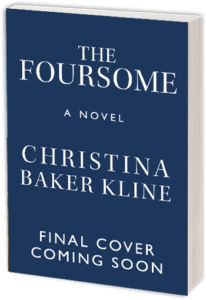
COMING MAY 2026: THE FOURSOME

A literary historical novel set in Civil War-era North Carolina, based on a true family story and told from the perspective of Sarah Bunker, one of two sisters who married Chang and Eng, the famous conjoined twins…learn more

Follow on Substack

Subscribe

Connect with Christina

Contact
  • Facebook
  • Instagram
  • Twitter

Copyright © 2026 Christina Baker Kline · Site design: Ilsa Brink