Sign up for Christina’s Newsletter

Christina Baker Kline

Author Website

  • Books
    • The Foursome
    • Please Don’t Lie
    • The Exiles
    • A Piece of the World
    • Orphan Train
      • Orphan Train Girl: The Young Readers’ Edition of Orphan Train
    • Other Novels
      • Bird in Hand
      • The Way Life Should Be
      • Desire Lines
      • Sweet Water
    • Nonfiction
      • Always Too Soon
      • About Face
      • Child of Mine
      • Room to Grow
      • The Conversation Begins
  • Events
  • NEWS
  • Other Writing
  • About
    • Bio
    • FAQs
    • Contact
    • Photos
  • Newsletter

March 11, 2010 By bakerkline

The Essential Elements of Storytelling … according to James Cameron

The other night, flipping through channels, I came across a Charlie Rose interview with James Cameron.  Say what you will about the director of Avatar and Titanic (and Aliens) — he knows how to tell a story.  I was so intrigued by his answer to the question “What’s the most important thing you know about storytelling?” that I went to the pbs.com podcast and painstakingly transcribed it.

Here’s what he had to say (minus Charlie Rose’s approving grunts and overtalk):

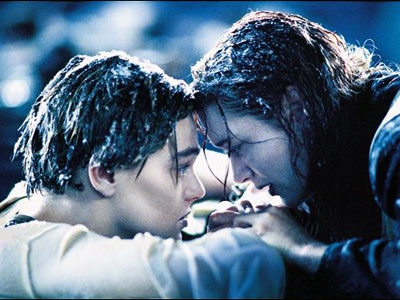
“You have to find a key into the heart of the audience, which means you have to find universals of human experience and then express them in exotic new ways.  So you’ve got to find something that people recognize.  As simple as boy meets girl on a ship which is going to sink.  But the knowledge that it’s going to sink was a critical part of that storytelling.  Because otherwise you had two hours of women in corsets and funny hats before anything happened, before the ship even hit the iceberg.  But if you know it’s sinking, you hang around for all that.
“But I think it’s always about the characters and about how those characters express something that the audience is feeling.  So it has to have some universality to it, having to do with relationships, whether it’s male-female, parent-child, whatever it is.  And then you have to take them on a journey — and then you have to make it excruciating somehow. Challenged, endangered, in pain.  Fear, tension, and triumph.  Some form of triumph — our values, our victory, something.

“In the case of Titanic, everybody died.  Including, at the very end of the film, the main character, but she lived a life that she had learned.   There was an energy transfer from one character to another.  Which I also think is a fundamental of a love story, that there’s some a flow of energy from one character to another.  So I applied that rule set at a very abstract level to Avatar. Because it’s a very different story.  But I think you can step back to a very abstract level of general principles.  If you apply those principles, that will work.”

Add to FacebookAdd to DiggAdd to Del.icio.usAdd to StumbleuponAdd to RedditAdd to BlinklistAdd to TwitterAdd to TechnoratiAdd to Yahoo BuzzAdd to Newsvine

Filed Under: The Creative Process Tagged With: Aliens, Avatar, creative process, Inspiration, James Cameron, storytelling, Thoughts, Titanic

March 8, 2010 By bakerkline

Letting Go

Katharine Davis just finished writing a novel.  Now comes the hard part:

Writing a novel is a long journey.  From the simple physical endurance of turning out all those pages to the emotional ups and downs of the creative act—it’s an enormous endeavor, consuming one’s life for years at a time.

Writers often talk about the difficulty of getting started.  How do you find the voice, where to begin, which point of view, the time frame, the setting?  There are thousands of questions to consider, big and small. Then there is the problem of sticking to it, finding the time to write, getting blocked.  Oh, the agony of finally understanding a character in the thirteenth chapter and having to re-write the previous 200 pages.  How painful it is to discover you’ve gone off on a tangent, another 60 pages.  You love every word, but you have to take them all out.

Eventually, you do the tedious revisions.  Sentence by sentence, word by word, the work of getting the prose just right.  Some days it’s nothing but a pleasure to revise, working on the rhythm, having the perfect metaphor seem to land in your lap.  You might experience the thrill of coming up with that one word that changes everything.  But, the countless hours spent on dialogue that clunks along like the rattle in your car that the mechanic can’t fix, or the flashback that’s brought your narrative drive to a halt – these trials are part of the process too.

Yet, to me, one of the hardest parts of writing a novel is letting it go. You type ‘the end’ in all caps.  You send it out.  You want to celebrate, drink champagne, eat an enormous chocolate cupcake and tell all your friends, “I did it.  I’m done. It’s the best book ever!”  And then, wham.  What have I written?  I didn’t get deeply enough into that character’s head.  Did I tell enough about the mother?  Oh God.  That part’s too sappy.  I should have made it better. These thoughts come at 3 AM, thanks to the champagne, the cupcake, or both.  At that moment, the initial thrill of finding the story, and the enthusiasm of bringing it to the page is like some prehistoric event.

The next day, I feel somewhat better.  There’s that scene where . . . and, remember when . . . , and the ending that can still make me cry.  I find a paragraph I truly love.  When did I write that?  The next few weeks bring a combination of highs and lows.

Letting go of a novel is like sending children off to college.  They’ve spent the last few years of high school driving you crazy, but also bringing you joy and delight. You experience the relief of getting them out from under your roof, to deep sadness.  You miss them.  You want your child to have his own life, to succeed.  But it’s no longer up to you.  Your baby is gone.  Still, you’ve created something with love and hard work.

Months later, when your carefully worked-on manuscript pages have become an actual book, you have the satisfaction of knowing that your story, like your grown child, is out in the world at last.  The joy of connecting with readers and contributing one more piece to the human experience lifts your spirits and brings you the courage to reach for your pen to start writing again.

Katharine Davis’s novels include East Hope and Capturing Paris. Recommended in Real Simple Spring Travel 2007, Capturing Paris was also included in the New York Times suggestions for fiction set in Paris. Davis’s new novel, A Slender Thread, is coming out later this year. She is an Associate Editor at The Potomac Review.  She can be reached at www.katharinedavis.com.

Add to FacebookAdd to DiggAdd to Del.icio.usAdd to StumbleuponAdd to RedditAdd to BlinklistAdd to TwitterAdd to TechnoratiAdd to Yahoo BuzzAdd to Newsvine

Filed Under: Guest Blogs, Real Life Tagged With: A Slender Thread, best-laid plans, Capturing Paris, creative process, East Hope, fiction writing, Inspiration, Katharine Davis, letting go, Thoughts, writing a novel

March 4, 2010 By bakerkline

The Curse of Multitasking

Waiting to pick up my son after his play rehearsal, I sit in the car and grade student essays. I listen to podcasts as I drive over the George Washington Bridge to work. When the phone rings at home and it’s my sister, I get up from my desk to make beds, put in a load of laundry, start the dishwasher.  I make sandwiches for school lunches while fixing dinner.

I have come to realize that I rarely do one thing at a time.  And that’s the problem.

When you write, you can only write.  You can’t do laundry or wash dishes.  You can’t make sandwiches or talk on the phone.  You can’t even listen to music (or I can’t – unless I’m in a coffee shop, where for some reason ambient noise doesn’t usually bother me).  It’s just you and the lined paper – or blank screen – in front of you, and any distraction will not only affect your writing that day, it may change the course or the tenor of the work you’re trying to do.

But multitasking is a hard habit to break, even temporarily.  I sit down to write and items for a “to do” list march through my head.  I suddenly remember that I never called the dentist; I forgot to pick up a package at the post office; we’re out of milk.

In almost every other aspect of my life, my ability to multitask is a good thing.  Doing several things at once is how I’ve learned to juggle my various responsibilities:  mother, wife, editor, teacher, volunteer.  It’s the only way to keep all the balls in the air.

But writing is not about keeping the balls in the air.  It’s about letting them drop.  To unspool a story is to inhabit a different space altogether. You have to let the world in your head grow until it becomes more important than the world you inhabit.  You have to calm your heartbeat, slow your skipping brain, become comfortable with silence.  You have to accept that you will get nothing done except this one thing – this one paragraph or page or, perhaps, on a good day, a chapter – and possibly not even that.

You have to stop worrying about the fact that you’re wasting time.  Of course you are.  That’s what writers do.

And when you emerge from your writing fog you will have accomplished nothing tangible.  You will have checked nothing off your list.  Your teeth still need cleaning.  The package awaits at the post office.  There’s no milk in the fridge.  And your book isn’t finished – far from it.

But perhaps you had a moment of clarity, of insight, about your story.  Maybe you understand it a little better.  And if you really want to be a writer, these moments are more than enough to keep you going, to give you strength to push back against the many-headed hydra of tasks and responsibilities that threatens to devour the precious time you have to create something. Something light-years removed from your ordinary life.

Add to FacebookAdd to DiggAdd to Del.icio.usAdd to StumbleuponAdd to RedditAdd to BlinklistAdd to TwitterAdd to TechnoratiAdd to Yahoo BuzzAdd to Newsvine

Filed Under: Real Life Tagged With: best-laid plans, creative process, Discipline, Inspiration, multitasking, Real Life

March 1, 2010 By bakerkline

Why Do I Even Want to Write a Novel?

With a challenging, fulfilling job and a satisfying personal life, Anne Burt questions her desire to write a novel – and finds the answer in an unexpected place:

Thomas Roma, Untitled, 1984

Motivation has always been as cruel to me as it has been – well – motivating. I’ve been motivated to write because: I imagine glory when the world reads my masterpiece; I need to act out some childhood revenge fantasy about surpassing my father; I have a contorted sense that immortality is achievable through words on a page.  Any analysis of my past motivations leaves me thinking I’m either a narcissist or an idiot or both.

I’ve won enough self-awareness through experience and therapy over the years to dispel the notion that any of my three aforementioned motivations for writing are a) possible, or b) matter.  I’m over it, and I sleep better at night and enjoy my life far more as a result.

The truth is, I have a creative, absorbing job I love that uses my skills and education, puts me in the company of artists each day and takes care of my family of four.  I have a meaningful career as a writer and editor as well; while I haven’t published a novel, I’ve published books and essays on subjects that move me and have given me great pride and sense of accomplishment.

My old demons don’t scare me into action anymore – for better (who needs the agitation?) or for worse (the agitation drove me to my writing desk, after all).

But a nagging question remains: do I need to recapture the negativity of these old motivations in order to see the writing of a novel all the way through from beginning to end, or has general life happiness turned my old desire to write a novel into phantom-limb syndrome?

Last week I attended an artist talk, one in a series I oversee as part of my job, by photographer and Columbia University School of the Arts professor Tom Roma. I know Tom, so I was prepared to be entertained by his banter, and I know his photographs, so I was prepared to hear about the extreme care with which he approaches every level of the process.  I was unprepared, however, to find the answer to my question.

Discussing his teaching philosophy, Tom described an assignment he gives his undergraduate and grad students in which he sends them to the library or a bookstore.  “I tell them to scan the shelves, feel the spines, look at the size and shape and heft of the books,” he said. “Then I tell them to pull out the one that speaks to them as an object.  Subject doesn’t matter; what matters is how it feels in their hands, how satisfied they are by holding this thing, whether they feel they need this object in their lives.  When they find the book, they must check it out of the library, or buy it from the store, and that will be the inspiration for the size and feel of their book of photographs.  Whenever they get lost in the middle of the work, or feel directionless or confused, I send them back to hold and feel the book because that book is their goal and will motivate them to create.”

And that was it.  I realized that I was missing something so obvious, so straightforward that it was not only staring me in the face but spilling out over every surface in my home, weighing down my shoulder bag week after week, keeping me up late at night reading, making me miss subway stops, informing my favorite conversations, and even creating the best moments spent with my children:  novels are the book for me.  Novels are my goal, and motivate me to create.  The the-ness of a novel matters to me; I run my hands over its spine and feel its weight and size and heft. Essay collections, careers, articles – not so much.

I want to create something I am truly passionate about, and until I commit myself to seeing a novel through, beginning to end, I won’t have done it. My true motivation is as simple, and as complicated, as that.

Anne Burt is Director of Communications for Columbia University School of the Arts. She is the editor of My Father Married Your Mother: Dispatches from the Blended Family and co-editor with Christina Baker Kline of About Face: Women Talk About What They See When They Look in the Mirror.  Anne received Meridian Literary Magazine’s Editors’ Prize in Fiction in 2002.

Add to FacebookAdd to DiggAdd to Del.icio.usAdd to StumbleuponAdd to RedditAdd to BlinklistAdd to TwitterAdd to TechnoratiAdd to Yahoo BuzzAdd to Newsvine

Filed Under: Guest Blogs, Real Life Tagged With: Anne Burt, beginning, Columbia University School of the Arts, creative process, fiction writing, Inspiration, Thomas Roma, Thoughts, writing a novel

February 21, 2010 By bakerkline

Roxana Robinson on Writing About Place

Reading Roxana Robinson’s latest novel, Cost, I was struck by how beautifully and naturally she writes about place, from the coast of Maine to the streets of New York.  Consider this, for example – a coastal view from the perspective of a painter: “Julia’s studio was in the barn overlooking the meadow. Through the big picture window she had painted this many times, the rich rippling grass, the moving water beyond it, the glittering sea-bright light…. For the meadow, for that smoky pink grass, first an undercoat of dead green, for depth.  Or maybe yellow, deep yellow, for vitality.”  Or, later on, this visit to a drug dealer’s Brooklyn apartment:  “The foyer was tiny, with scarred gray walls and a floor littered with Chinese restaurant flyers. The lock on the front door was heavily reinforced with metal plates, but the door itself stood slightly ajar.  They went inside.  There was no light, and they started gingerly upstairs in the dark.”

I wanted to know how Roxana approaches writing about place, and what she may have learned about her process over the years that could be helpful to others.  So I wrote her and asked.  Below is her thoughtful response:

When I teach, I tell my students that, first of all, you must write the scene so that  your reader can see it. Sight is the sense we depend upon most, so, show us the room, or describe the forest path, or create the supermarket aisle, so that we feel as though we’re in it ourselves.

Place, the location, the setting, is integral to fiction. We’ll never forget the sense of openness and possibility, of well-groomed, natural loveliness, of the combination of freshness and candor with deep subtlety and venerability, that underlies the scene in “Portrait of a Lady,” when Isabel Archer has afternoon tea outside, on the lawn of an English country house. The velvet grass, the Persian rug, the tinkling cups. The glorious young woman, and the world before her.

But creating place isn’t simply a question of seeing, it’s a question of feeling as well. The way you feel about a place is the way your reader will come to feel about it – which is as it should be. So you must write from your heart about the place – about every place, a gas station on the New Jersey turnpike or your old kindergarten classroom. The way it makes you feel should be included in the description. Maybe you (or your character) are in a state of exaltation when you stop there for gas, and the way the sun gleams on the gas nozzles makes you giddy with joy. Maybe you hated your kindergarten teacher, the way her dress wrinkled across the hips, and her bad breath. Your feelings should go into the way you describe the wooden tables, the big windows, the boxes of blocks.

I often write about a place that I love. In my story collection A Perfect Stranger, the story “Assez” is, on one level, a love-letter to a part of France that I know very well. I wanted to write about that part of Provence, the way the wind sounds, the way the dark cypresses look, the way it feels to walk through a silent village late at night. So that part of the process of writing that story was really my own pleasure in remembering and revisiting a place I love so much.

In Cost, I did something similar. Much of the book is set on the coast of Maine, in an unnamed place. The book is centered on a shabby old clapboard farmhouse near the water, as the old saltwater farms often were. I have spend many summers on the coast of Maine, and it’s another region I know well and love, with its deep blue skies, bracing waters, staggering tides. But the house I describe is actually based on a particular saltbox cottage in Cape Cod, a place where I went as a child. So the book is, in a way, saying goodbye to a place that I felt very strongly about. It was a way of paying tribute to it, describing the place as I had known it. It was an opportunity for me to reveal, to the reader, the great delights of a place like that, for all its shabbiness and quirks. The house I knew was a place of great solace, solid and silent, peaceful, sheltering and beautiful in its deep connection to its surroundings: the lilacs outside the windows, the apple orchard gone wild in the meadow, the water in the cove, murmuring at the bottom of the hillside.

Because the house was so beloved, it became an integral part in the narrative. That wasn’t something I planned beforehand, but it somehow wrote itself into the story, because the house, and the landscape around it, were such a powerful presence.

Place should always be a part of the narrative – and it always is, really. What two people say to each other in a small stuffy bedroom will be very different from what they say to each other in a noisy train station.

And it’s also just as important for me to visualize the scene before I write it. I’m describing it for myself as much as for the reader, allowing myself to enter into that space, and those emotions. Here we are, I’m saying, this is how it looks. This is how it feels to be here. Now we’ll begin.

*****

Roxana Robinson is a critically acclaimed fiction writer, author of four novels (including her latest, Cost) and three collections of short stories. Her work has appeared in The New Yorker, Harper’s, and The Atlantic; it has appeared often in Best American Short Stories, and has been widely anthologized and broadcast on National Public Radio. Four of her works have been chosen Notable Books of the Year by The New York Times, and she was named a Literary Lion by The New York Public Library.  She has received Fellowships from the Guggenheim Foundation, the National Endowment for the Arts, and the MacDowell Colony.  Her website is www.roxanarobinson.com.

Add to FacebookAdd to DiggAdd to Del.icio.usAdd to StumbleuponAdd to RedditAdd to BlinklistAdd to TwitterAdd to TechnoratiAdd to Yahoo BuzzAdd to Newsvine

Filed Under: Guest Blogs, The Creative Process Tagged With: Cost, creative process, fiction writing, Inspiration, Maine, New York, Roxana Robinson, Thoughts, writing about place

  • « Previous Page
  • 1
  • …
  • 4
  • 5
  • 6
  • 7
  • 8
  • …
  • 23
  • Next Page »

COMING MAY 2026: THE FOURSOME

A literary historical novel set in Civil War-era North Carolina, based on a true family story and told from the perspective of Sarah Bunker, one of two sisters who married Chang and Eng, the famous conjoined twins…learn more

Follow on Substack

Subscribe

Connect with Christina

Contact
  • Facebook
  • Instagram
  • Twitter

Copyright © 2026 Christina Baker Kline · Site design: Ilsa Brink