Sign up for Christina’s Newsletter

Christina Baker Kline

Author Website

  • Books
    • The Foursome
    • Please Don’t Lie
    • The Exiles
    • A Piece of the World
    • Orphan Train
      • Orphan Train Girl: The Young Readers’ Edition of Orphan Train
    • Other Novels
      • Bird in Hand
      • The Way Life Should Be
      • Desire Lines
      • Sweet Water
    • Nonfiction
      • Always Too Soon
      • About Face
      • Child of Mine
      • Room to Grow
      • The Conversation Begins
  • Events
  • NEWS
  • Other Writing
  • About
    • Bio
    • FAQs
    • Contact
    • Photos
  • Newsletter

September 27, 2010 By bakerkline

Beast of Burden

You may have noticed that I haven’t posted much lately.  Keeping a blog is like having a pet — it requires constant maintenance.  And when I wasn’t deep into writing my novel, I derived a lot of pleasure from it (and still do, in sporadic bursts).  But working on a novel is like having a newborn baby.  It keeps you up at night, it needs constant feeding, it’s unpredictable and exhausting.  And like new parents who find that the frisky puppy that brought them  so much pleasure before the baby came along has begun to feel like a burden, with its manic energy and constant need for attention, I find myself wishing that someone else would feed and walk this bloggy beast for me.

So I’ve decided — as I work toward my early 2011 novel deadline — to give myself a break.  I’ll still post when I’m inspired, most likely once or twice a week, and when other writers send me fabulous pieces.  (I have a few in the hopper now.)  If you subscribe by email — see the button at right — you’ll be alerted when there’s a new post. And I’ll point my readers toward other blogs by writers that I love.  Alice Elliott Dark, wise woman/fiction guru, has only posted twice so far, but her new blog, Walks with Dogs (appropriately enough), is already on my list of favorites.  Louise DeSalvo, memoirist and mentor, provides thoughtful meditations on writing at WritingaLife.  And I stumbled on novelist Janet Fitch’s wonderful blog when someone sent me her “Ten Writing Tips that Can Help Almost Anyone” (yes, it’s true, they can).

Meanwhile I’ll continue to feed and walk my own blog-dog, just not so often or with such guilt when I don’t.  And in the spring, when the baby is sleeping through the night, I’ll have more energy for the beast.  For now, he can sleep at my feet while I’m writing, dreaming bloggy dreams.

Filed Under: Blog, Real Life Tagged With: Alice Elliott Dark, best-laid plans, Discipline, fiction writing, Inspiration, Janet Fitch, Louise DeSalvo, Real Life, writing a novel

May 27, 2010 By bakerkline

Lost in Translation

The Portuguese writer Clara Paulino thought she’d never find another language that could express the depth and nuance of her experience.  And then she did:

A few months ago I made the momentous discovery that I can write in English.

Strange discovery, one might say, given that I have lived “in English” for the past seven years and teach Art History to American students. Yet it was the sound of Portuguese that welcomed me into this world, and English is not even my second language. I was introduced to it at the rather late age of fourteen in Porto, Portugal by the intensely British Ms. Symington, who started every class by frightening us. “Picture each word as a scalding hot potato,” she’d say with glee.

In spite of years living in different countries, I never felt confused. Other languages did very well for most things, but only in the warm diphthongs of Portuguese could my inner self step onto the page – or so I thought. The creative impulse, too elusive even for Freud, must surely resist anything foreign to the earliest experiences!

For years I filled page after page with cedillas, tildes and circumflexes (Portuguese on the page resembles a cross between words and music), publishing widely in books and magazines.  Then I moved to the States to teach at a university in South Carolina. Suddenly I fell into a state of linguistic confusion and creative paralysis. “Why don’t you just translate your Portuguese stories?” asked my American friends.

But I couldn’t.  It is tricky to put anything other than a short note into a new system. A language has a peculiar, slightly odd (to unaccustomed eyes) geography, archeology, even time. It swells into hyperbolic mountains, retreats into timid valleys, blends deserts and forests in disconcerting oxymora – all in its own inimitable way; it lives on layers of semantic sediments; it stretches and contracts in rhythms as varied as the rumba and the waltz. A language breathes like an animal and winds its way towards meaning like a plant towards the sun.

If a word is planted in foreign soil, it either dies or adapts – and adaption is only another word for change. Good translators know this. They look at each word from different angles and consider all the contexts while looking for the right niche to move it into. It is painstaking, often thankless work because so much of it is invisible.

Publishers want the book out, and it needs to be readable, but does “O poeta é um fingidor/Finge tão completamente/Que chega a fingir que é dor/A dor que deveras sente — by the Portuguese poet Fernando Pessoa –really mean “The poet is a faker/Who’s so good at his act/He even fakes the pain/Of pain he feels in fact (published translation)?  Not quite.

“Not quite” is the problem.

Don’t get me wrong. I am for the translation of texts, all texts, from memos to Shakespeare. The idea of not reading Tolstoy because Russian is a closed book to me is frightening. But I wish I could read it in Russian not only to hear its time, including the silences between the words, but its sounds too. Sound is important; sound carries landscapes on its fluttering wings, and at least for me, reading is listening. Anna Karenina in the original language conjures up a world imaginatively and sensually so different from that of any other version! Language conveys so much more than plot that, to be good, translators have to be magicians.

And though I have translated other people’s work – rarely, and with the utmost reverence – my magic tricks fail abysmally when I try to translate my own work. Sentences turn and twist in the oddest directions, and soon a text is born that carries the original only as memory. Exasperating, yes – but also a reminder that meaning is more than semantics, that it rests in form more than one could ever imagine.

So it was indeed momentous discovery when I found that places and characters came to life in English as mysteriously and miraculously as they do for me in Portuguese. I realized how well I know this language now, how lovely it is to explore its wild and secret places, how capably it translates my foreign experience.

Clara Paulino was born in Portugal and educated in England, Germany and the U.S. She has degrees in English and German Literature, and a Ph.D. in Art History, and has taught at universities in Portugal and the U.S. In Portugal she wrote articles for various magazines as well as Danças com Gémeos, a fictionalized memoir of a professional woman raising twin girls.  She has worked as a freelance translator and interpreter and is currently editing a 19th-century Women’s Travel Writing Series for the London publishers Pickering & Chatto. She is also working on a memoir about growing up in a nation under Fascism.

Add to FacebookAdd to DiggAdd to Del.icio.usAdd to StumbleuponAdd to RedditAdd to BlinklistAdd to TwitterAdd to TechnoratiAdd to Yahoo BuzzAdd to Newsvine

Filed Under: Blog Tagged With: Anna Karenina, best-laid plans, Clara Paulino, creative process, Fernando Pssoa, Inspiration, Portugal, Portuguese, translation

May 14, 2010 By bakerkline

How to Guest Blog (Is This Postmodern, or What?)

In which the intrepid C. M. Mayo (whose recent novel, The Last Prince of the Mexican Empire, is not-so-coincidentally out in paperback) explains why guest blogging is a flourishing new literary genre and a powerful tool for promotion, and provides 10 hot tips for coming up with your own guest blog posts. And does it, of course, in a guest blog.  Derrida would have a field day.

I felt very avant garde back in 2006, when I wrote my first guest-blogs for Wendi Kaufman’s now, alas, apparently abandoned “Happy Booker” blog (“If I Had an iPod: Top 5 Mexican Music Selections “) and for the travel blog World Hum (“The Speed of Rancho Santa Ines”).  But over the past year, in promoting this new novel, Holy Smokes! I’ve written for:

  • Work-in-Progress (“How to Hang in There and Finish Your Novel”)
  • beatrice.com (“What Connects You to the 1860s?”)
  • A Writing Life (“Break the Block in 5 Minutes”)
  • bookreporter.com (“A Book Club Meeting Menu”)
  • Largehearted Boy (Playlist for The Last Prince of the Mexican Empire)
  • Red Room (“C.M. Mayo Celebrates a Batch of Bookstores”)
  • Potomac Review Blog (“Who Knew That Mexico Had a Half-American Prince?”)
  • Virginia Center for the Creative Arts Blog (“VCCA Memories”)
  • … and more.

I’m not unusual in this regard; many long-established writers are newly busy with guest-blogging— and hosting guest-bloggers. On my own blog, Madam Mayo, I’ve hosted several other writers on their so-called “blogtours” — Sandra Beasley, Sandra Gulland, Joanna Smith Rakoff, Porter Shreve, Tim Wendel, and many more (view the full line-up of Madam Mayo’s guest-bloggers here). Two more examples: Leslie Pietryk and Christina Baker Kline, both outstanding novelists, frequently host other writers on their blogs, Work-in-Progress and, well, this one here.  (Editor’s note: praise unsolicited.)

And so — 10 tips for coming up with your own guest blog posts:

1. Think about music: what songs might make a great soundtrack? Which songs might your characters would sing in the shower?

2. Think about food: any recipes from the book? Any recipes your characters might concoct?

3. Think about places: perhaps a certain city or mountain or lakeside resport in your book (or etc) is special. Photos, please!

4. Fantasize: which actors could play the parts in the movie? If your character were born in Virginia in 1960 instead of say, France in 1765, where would she work?

5. Tell a story about the book (e.g., how I found my agent; why I finally, with much gnashing of teeth, threw out chapter 1; the day I got the idea to write the book).

6. Thank those who helped you (Chekhov? Tolstoy? Teacher? Mom? Husband? Dog? Cat?).

7. Select an excerpt that might work.

8. Interview yourself (don’t be shy!). Ask yourself three questions about the book.

9. Offer helpful hints (How to bake bread; how to write a novel in 12 easy steps (ha ha); how to keep your cat off the laptop; how to find time to write; how to find an agent).

10. Generate lists, e.g., three poets who influenced my understanding of rain; 10 reasons to take a writing workshop; 7 cities I wish were in the novel but they didn’t make the cut ; my favorite places to write in Washington DC; 5 books everyone in Bethesda should read right now; 4 yoga poses to make your creativity bloom …

In sum, guest-blogging is at once a flourishing new literary genre and a powerful tool for literary promotion. While you probably won’t get paid in cash to write a guest blog, you will get paid, and sometimes very handsomely, in clicks. And if you don’t think that counts, check out what Facebook charges per click for advertising. (Speaking of which, please click here.)

P.S. More resources for writers here.

C.M. Mayo is the author of The Last Prince of the Mexican Empire, an historical novel based on the true story and named one of Library Journal’s Best Books of 2009. She is also the author of a travel memoir, Miraculous Air, which won the Flannery O’Connor Award for Short Fiction. A long-time resident of Mexico City and an avid translator of Mexican poetry and fiction, she is the editor of Mexico: A Traveler’s Literary Companion. She divides her time between Mexico City and Washington DC, and blogs on sundry subjects at Madame Mayo.  This was adapted from a post on First Person Plural.

Add to FacebookAdd to DiggAdd to Del.icio.usAdd to StumbleuponAdd to RedditAdd to BlinklistAdd to TwitterAdd to TechnoratiAdd to Yahoo BuzzAdd to Newsvine

Filed Under: Blog Tagged With: best-laid plans, C.M. Mayo, creative process, guest blog, Jacques Derrida, self-promotion, The Last Prince of the Mexican Empire, writing a novel

May 2, 2010 By bakerkline

Five Ways to Jumpstart a Revision

A page from James Michener's rough draft of his novel The Covenant

This week I’m working on revising fiction with my undergraduate and grad students at Fordham. Below are some of the tips and ideas I’ve collected over the years that my students find most useful. (Next week I’ll talk in this space about the best exercises I’ve found for revising nonfiction.)

1) First, answer these questions:
What is my story about? Another way of saying this is: What is the pattern of change? Once this pattern is clear, you can check your draft to make sure you’ve included all the crucial moments of discovery and decision. Is there a crisis action?

2) Write three new openings. Each one should be at least a paragraph long. In each opening, start from a different moment in the story – maybe even at the very end.

3) For a dialogue scene in your story/novel: go back and ground it in the physical world by adding:
a. two actions or gestures that will help us see another important character
b. two physical descriptions of another character that will help us visualize him or her
c. two setting or atmosphere details that will help put readers in the scene

4) The dramatic elements of a story/novel – crisis, power shifts, emotional connections, and withdrawals – are often mirrored on a smaller scale within a scene.

Try analyzing one of your own scenes, asking yourself:
a. What kind of power does each of the main characters have?
b. Where is there at least one shift in power – or even a failed attempt to take power?
c. Where is there at least one moment of making or breaking the emotional connection between the characters? Does it raise the emotional temperature?
d. Is there a mini-crisis or turning point? Something that is said or done, however minor, after which things cannot go back to quite the way they were before?

5) Are your most important lines in direct dialogue, or summarized? Generally, these should be direct. Is information or idle chatter direct or summarized? Generally, these should be summarized. Revise to make sure that the most important moments are in direct dialogue.

Add to FacebookAdd to DiggAdd to Del.icio.usAdd to StumbleuponAdd to RedditAdd to BlinklistAdd to TwitterAdd to TechnoratiAdd to Yahoo BuzzAdd to Newsvine

Filed Under: Blog Tagged With: best-laid plans, creative process, fiction writing, James Michener, revising, revision, The Covenant, writing a novel

April 26, 2010 By bakerkline

Tap Dancing on the Beach

Hooray and congratulations!  It’s pub day for Debra Galant, whose new novel, Cars from a Marriage, “delivers wit, charm and characters who feel like next-door neighbors,” according to Booklist. So why does Debra feel like she’s tap dancing on the beach?

Politicians kiss babies. I take pictures of them chewing on postcards advertising my new novel, Cars from a Marriage.

I know this is neither dignified nor author-like.

Nor are a lot of things I’ve been doing in the six weeks leading up to my April 27 pub date.

I’ve become a regular in the Staples’ label aisle, because advertising postcards are nothing without labels reminding people that the book is “Perfect for Mother’s Day!” and that they might win a free iPod nano if they enter a contest by telling me their best story about love and cars.

I ambushed the New York International Auto Show in early April, handing out several hundred cards while my husband followed me around, camcorder in hand, to record my rejections Michael Moore style.

I’ve spend ungodly amounts of time on Facebook, and have searched every nook and cranny of the internet looking for every book blogger I can find and charm.

I’m doing this to keep my own spirits up because it appears that neither my publisher nor the book industry at large is particularly excited about the publication of my third novel.

My first two novels were proudly displayed at the front of Barnes & Noble stores all over the country. This one won’t be. B&N has only ordered 1,000.

It breaks my heart that a book that comes out barely two weeks before Mother’s Day – a novel that should really appeal to reading women – won’t be seen by the shoppers who might be looking for a present for their reading mothers and wives.

It breaks my heart that my parents, who were so excited by my first novel, have become so jaded by the bruising process of trying to hand-sell my books to their friends that they practically don’t want to ask anymore. And the few friends they do ask will most likely march into a Barnes & Noble, not find it, and feel that they’ve done their bit.

Sure, sure, poor me. Poor published author. I’ve actually got a novel coming out from a major New York publishing house and I’m whining. And I have the poor grace to be whining at exactly the moment when friends and relatives are coming up to me with cheerful congratulations.

But the truth is, even though my friends want me to be, I’m not excited. I’m not remotely optimistic about my book’s chances. Like Hollywood and junior high school, the book industry is increasingly dominated by a few stars, and it’s pretty obvious that I’m not one of them. What I’m feeling, at this moment on the cusp of publication, is small and inconsequential.

The irony is, when a new book comes out is when I feel least like a writer. It’s when I feel like Willy Loman.

Eventually, sometime late at night, when I least expect it, I’ll feel like a writer again. I’ll be lying in bed reading a great book, and I’ll notice a fabulous sentence or a great plot device or a marvelously unreliable narrator, and I will appreciate the sentence or the device or the narration the way a tailor would note the stitching on another tailor’s suit.

I might even write a fabulous sentence, or get an idea for a story or a novel that will thrill me. And then I’ll remember that I really am a member of a great guild and that having my words published and read by complete strangers is an honor and a privilege – maybe even a piece of immortality.

In the meantime, though, to stave off depression, I’m using every wile I have to eke out new fans. One by one by one. Handing out cards to babies, barnstorming auto shows, leaving stacks of cards at the YMCA. It feels a little like tap dancing on the beach — kicking up a lot of sand, but making no noise whatsoever.

Absurd, perhaps. Yet it does take place on a comfortingly human scale. The other day, shopping at Coldwater Creek, I made friends with two ladies in the dressing room, both teachers. We were advising each other about how we looked in various outfits and whether our fat rolls showed. One of them wondered whether I would wear a certain blouse, which was the tiniest bit sheer, to work. That’s when I dug into my purse and handed them each a postcard for Cars from a Marriage.

“I’m an author,” I said. “I have a new book coming out.”

They were delighted – just completely bowled over – to be in the presence of a real writer. And that delighted me.

Debra Galant’s new novel, Cars from a Marriage, comes out today — April 27 — from St. Martin’s Press. You can read more on her website, her blog or her Facebook page.

Add to FacebookAdd to DiggAdd to Del.icio.usAdd to StumbleuponAdd to RedditAdd to BlinklistAdd to TwitterAdd to TechnoratiAdd to Yahoo BuzzAdd to Newsvine

Filed Under: Blog Tagged With: beginning, best-laid plans, Booklist, Cars from a Marriage, Debra Galant, fiction writing, Real Life, Thoughts, writing a novel

  • 1
  • 2
  • 3
  • 4
  • Next Page »

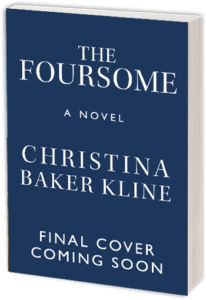
COMING MAY 2026: THE FOURSOME

A literary historical novel set in Civil War-era North Carolina, based on a true family story and told from the perspective of Sarah Bunker, one of two sisters who married Chang and Eng, the famous conjoined twins…learn more

Follow on Substack

Subscribe

Connect with Christina

Contact
  • Facebook
  • Instagram
  • Twitter

Copyright © 2026 Christina Baker Kline · Site design: Ilsa Brink