Sign up for Christina’s Newsletter

Christina Baker Kline

Author Website

  • Books
    • Please Don’t Lie
    • The Foursome
    • The Exiles
    • A Piece of the World
    • Orphan Train
      • Orphan Train Girl: The Young Readers’ Edition of Orphan Train
    • Other Novels
      • Bird in Hand
      • The Way Life Should Be
      • Desire Lines
      • Sweet Water
    • Nonfiction
      • Always Too Soon
      • About Face
      • Child of Mine
      • Room to Grow
      • The Conversation Begins
  • Events
  • NEWS
  • Other Writing
  • About
    • Bio
    • FAQs
    • Contact
    • Photos
  • Newsletter

August 13, 2009 By bakerkline

Quick Link: The Name So Nice I Used it Twice

babyYou’d think that someone who spends her days creating and naming characters might have gotten the hang of it by the time she had to name some actual humans.  That’s what I thought, at least.  In fact, I was rather smug about it …

So begins my guest post on Nameberry, a very cool baby name site that’s the brainchild (so to speak — yes, I did) of bestselling writers Pamela Redmond Satran and Linda Rosenkrantz.

Even someone who names fictional people for a living can make mistakes when naming real live babies.  Like when I named my three sons: Eli, his brother William, and his other brother William.

Read more here.
Filed Under: Quick Links Tagged With: best-laid plans, Nameberry, naming characters, Pamela Redmond Satran, Real Life

August 6, 2009 By bakerkline

Guest Blog: Debra Galant on Being Between Novels

Exploring the Process of Coming up with the Next Big Idea

I am between novels. I’ve been between novels for close to seven months now, which is typical for me. I am a slow germinator. I’m not devoid of ideas – that’s not the problem – I’m just devoid of an idea that I think I want to spend several thousand hours wrestling with. Having written three novels, I know exactly what the commitment is.

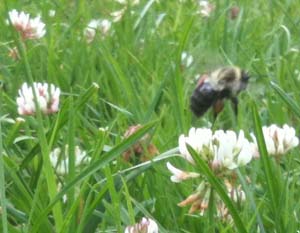
bumblebeeThis is what happens when I’m between novels.

The first few months, I don’t even try to get the Big Idea. I revel in the things that I’ve given up during the writing of my previous novel. I read prodigiously. I start diets and gym regimens. I fantasize about cleaning the entire house and settle for a closet. I go through entire weekends without feeling guilty. I enjoy being a civilian.

Once I get that out of my system, I start to wonder if I’ll ever write another novel. Fueled by anxiety, ideas begin to percolate. They appear in dreams. They’re triggered by odd encounters with strangers or obits and other chance juxtapositions.

I chase them breathlessly, bringing candy and flowers. Sometimes I’ll even get to know them, start thinking about introducing them to my family. Finally, a few days or a few weeks into my infatuation, I begin to discover their flaws. The voice is wrong or the subject is wrong or perhaps the idea is good but the project is beyond my power to execute. I retreat sheepishly.

I was actually 13 pages into one idea before I decided that I had no business creating a protagonist who was a Puerto Rican man in his 20’s. But first I had to agonize about whether I was being wise or lazy in deciding to give up the project. It was like a breakup. I asked various people for their opinions – my husband tried to convince me to stick with the idea – until my therapist mercifully gave me permission to stop.

We decided – my therapist and I – to go back to the idea-chasing stage with a little less desperation.

I picked up two of my favorite books about writing, Jane Smiley’s Thirteen Ways of Looking at a Novel and Annie Dillard’s The Writing Life, and allowed myself to fall in love again with the idea of being a writer. I also decided to embrace the pace of summer. I bicycled to the park with Smiley’s book and a notebook. The brilliance of the sun brought me back to the summer of ’79, when I was a cub reporter in North Carolina. I scribbled some notes. And then, just because I could, I used the video camera on my iPhone to record a bumblebee parachuting from clover to clover.

My mother used to worry about my bookish ways. “All work and no play makes Debbie a dull girl,” she would say. Julia Cameron, in How to Avoid Making Art (Or Anything Else You Enjoy),  says the same thing: “For most people creativity is a serious business. They forget the telling phrase ‘the play of ideas’ and think that they need to knuckle down and work more. Often, the reverse is true. They need to play.”

Novelists are good worker bees. Writing a manuscript of 80,000 or 100,000 words requires it. But maybe before a worker bee can make honey, she must first drift lazily from clover to clover, sucking the sweet nectar and getting drunk on the fullness of summer.

Debra Galant has written three novels. The first two, Rattled and Fear and Yoga in New Jersey, are comic novels about suburban life in New Jersey. Her forthcoming Cars from a Marriage, coming out next year from St. Martin‘s, follows a 20-year marriage through a series of car trips told by both the husband and the wife. In addition to writing novels, Galant is a new media pioneer. Baristanet, which she founded in 2004, was named the best placeblog in America in 2007.

//

Filed Under: Guest Blogs, Real Life Tagged With: Annie Dillard, beginning, best-laid plans, creative process, Debra Galant, fiction writing, Inspiration, Jane Smiley, Julia Cameron, Thoughts, writing a novel

July 27, 2009 By bakerkline

Ode on a Monday Morning

Unlocking the Forest“To have begun is to be half-done;

dare to know; start!”

— Horace

(Thanks to Tasha O’Neill for her image of a doorway at the Rockefeller Gardens in Seal Harbor, Maine,“Unlocking the Forest.”)

Filed Under: Inspiration Tagged With: beginning, best-laid plans, creative process, Discipline, fiction writing, Horace, Inspiration, Maine, Tasha O'Neill, Thoughts, writing a novel

July 20, 2009 By bakerkline

Guest Blog: Marina Budhos on Endings & Best-Laid Plans

Author Marina Budhos writes about finishing her latest novel:

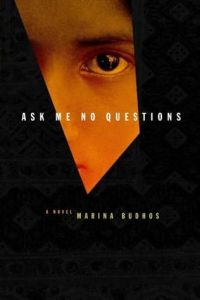
ask me no questionsMy plan this summer was to force myself to write to the end of my historical novel, a book I have been working on for a number of years while I completed other projects.  Summer is my best writing time, when I am home, puttering around my house, the children off in camp, with no teaching responsibilities fracturing my attention. My aim, then, was to bring this all to a head, especially since the end of this novel is meant to be very dramatic and also violent, a crescendo of so many parts, voices, themes.  And yet even the most thoughtful of plans have a way of upending.
Set against the crumbling backdrop of late 19th century British Empire, my novel is about the unlikely friendship between an Indian woman and English woman—a bond that is threatened when they move from India to a Caribbean sugar estate, and violence starts to sweep the plantation.  It is an ambitious book, as I am juggling multiple points of view along with foreign and historic settings, politics, even technical information about sugar growing that I must make vivid to a modern reader.

After building up this world over a number of years, I anticipated that the challenge of writing the ending would be that it was like a tidal wave that is slowly mounting, ready to curl; and yet one would still need to pay attention to the water particles.  One would still have to build scene by scene, moment by moment, even as you were aware of these huge forces compelling the narrative forward.

To my surprise, the ending, the denouement, a series of fast-paced acts, is coming swifter than I expected.  There was no deep rumble in my consciousness, no mounting wave of creativity.  Mostly I find myself sketching out plot—one bad event and bad decision leading to another, and hopefully mounting to tragedy.  This is somehow vaguely disappointing, and runs counter to my more romantic vision of the summer’s work.  But perhaps this is what I need to do—work more as an architect, more cerebrally— setting down the structure.  Then the deeper, unconscious swells will emerge.

This is what I tell myself now as I write event-driven material, pushing toward the end.  Sometimes we need to ride the waves.  And sometimes we must navigate with a plot compass, trusting that instinct and fever dreams will return.

Marina Budhos writes adult and young adult fiction and nonfiction.  Her recent novel, Ask Me No Questions, won the James Cook Teen Book Award and was an ALA Best Book.  Her prior books include House of Waiting, The Professor of Light, and Remix: Conversations with Immigrant Teenagers.  In 2010, she will publish a YA novel, Tell Us We’re Home, and Sugar Changed the World, co-authored with her husband, Marc Aronson.  She teaches creative writing, literature, and Asian Studies at William Paterson University, and can be reached at www.marinabudhos.com

Filed Under: Guest Blogs, The Creative Process Tagged With: Ask Me No Questions, best-laid plans, creative process, fiction writing, finishing a novel, historical novel, Marc Aronson, Marina Budhos, Thoughts, William Paterson University, writing a novel

June 7, 2009 By bakerkline

A Not-Writing Lesson

Thursday, 11:15 a.m.  The phone rings.  I look up from my writing and squint at Caller ID:  PUBLIC SCHOOLS.  And just like that, my work day is over.thermometer

In the office of the school nurse at Hillside Elementary School, Eli sits slumped in a chair, his face pale, pupils dilated.  His forehead is hot.  “He’s 102.  This fever is going around,” the nurse says.  “Could be a virus.  Or …”  She doesn’t finish the sentence, but we both know what she’s thinking.  A child at another elementary school in our town has Swine Flu.  “You’ll need to get him to a doctor right away.  And even if it’s only a virus, he can’t come back to school for a week.”

I make an appointment for 2:15 p.m.  By 3:45 Eli and I have spent an hour in the pediatrician’s waiting room surrounded by other pale-faced, feverish kids, and half an hour alone in a sterile examining room.   Finally the doctor arrives to take Eli’s temperature (still 102), administer a flu test (negative), and send us home with a prescription for plenty of liquids and sleep.  Yep, it’s “only” a virus.

I relate this story because it is a small illustration of how my best-laid plans can evaporate in a moment.  Four single-spaced, handwritten pages — my daily goal — may not sound like much, but some days it’s impossible.  On Wednesday, before Eli got sick, I’d started writing about a new character; my hand flew across the pages.  Thursday was a different story: the two pages I managed to eke out before the school called were painstaking and hard-won.  Friday, with Eli home and miserable, I didn’t write at all.

Sometimes it’s the life of the mind.  Sometimes it’s just life.  And knowing when to give up, to let go of my expectations for myself and simply exist in the moment, watching “Mythbusters” with Eli, is a lesson I’m still learning.

Filed Under: Real Life Tagged With: best-laid plans, Christina Baker Kline blog, Discipline, Family, fiction writing

  • « Previous Page
  • 1
  • 2
  • 3
  • 4

COMING MAY 2026: THE FOURSOME

A literary historical novel set in Civil War-era North Carolina, based on a true family story and told from the perspective of Sarah Bunker, one of two sisters who married Chang and Eng, the famous conjoined twins…learn more

Follow on Substack

Subscribe

Connect with Christina

Contact
  • Facebook
  • Instagram
  • Twitter

Copyright © 2025 Christina Baker Kline · Site design: Ilsa Brink