Sign up for Christina’s Newsletter

Christina Baker Kline

Author Website

  • Books
    • The Foursome
    • Please Don’t Lie
    • The Exiles
    • A Piece of the World
    • Orphan Train
      • Orphan Train Girl: The Young Readers’ Edition of Orphan Train
    • Other Novels
      • Bird in Hand
      • The Way Life Should Be
      • Desire Lines
      • Sweet Water
    • Nonfiction
      • Always Too Soon
      • About Face
      • Child of Mine
      • Room to Grow
      • The Conversation Begins
  • Events
  • NEWS
  • Other Writing
  • About
    • Bio
    • FAQs
    • Contact
    • Photos
  • Newsletter

May 24, 2010 By bakerkline

Permission to Write

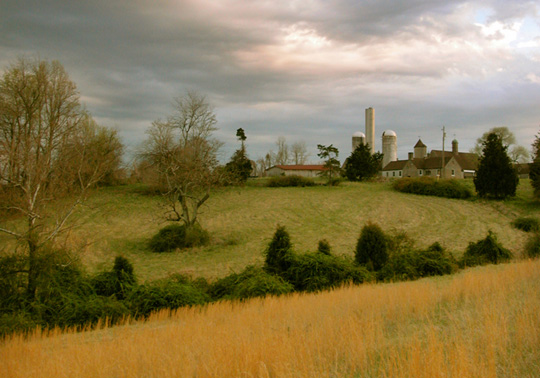
The Virginia Center for the Creative Arts, photo by Bernard Handzel

A small, bare room.  An old lamp, an upholstered chair, a wooden desk by the window.  Cows and trees beyond.  No papers to grade, no phone calls to return.  All the things that distract me, keep me from writing fiction — the to-do lists, children’s schedules, work-for-hire, committee meetings — are gone, gone, gone.

Some people are here at the Virginia Center for the Arts for six or eight weeks.  Me? Only one.  And carving this week out of my busy life with three kids, teaching, and editing was like chipping a cave out of rock.  But I was determined to do it.  For this reason: to winnow my life down to one simple thing.  I know from experience that if I can leave this place with a sense of clarity about my novel-in-progress and a handful of pages, I’ll be able to keep going, even in the midst of my busy life.

The day stretches ahead.  My choices are few, and therefore simple.  I am here to write.

What are your writing conditions today?  How do you plow through the clutter to find a clear space in your head — and on your desk — to write?

Add to FacebookAdd to DiggAdd to Del.icio.usAdd to StumbleuponAdd to RedditAdd to BlinklistAdd to TwitterAdd to TechnoratiAdd to Yahoo BuzzAdd to Newsvine

Filed Under: Blog Tagged With: Aaron Mahler, fiction writing, Inspiration, Real Life, VCCA, Virginia Center for the Creative Arts, writing a novel

May 20, 2010 By bakerkline

Can We Write About Our Kids? Further Reflections

The writer Lisa Gornick revisits this vexing question — and digs a little deeper:

A few weeks ago I posted on this site an account of writing — and ultimately deciding not to publish — an essay about my teenaged son. Most of the responses were questions about whether the caution I took with my son should extend to other categories: siblings, spouses, parents, nieces, nephews. These questions pushed me to reflect more deeply on various threads of my decision.

The first thread was a creepy feeling I’d had reading certain pieces, often beautifully crafted and insightful, about painful and disturbing events in an author’s child’s life. I understand the impulse to record these moments because I have it, too: the dramas we share with our kids are gripping and soaked in emotion. They matter to us; at times, they occlude everything else. As writers, we want to fashion these experiences into narratives that will help us both to understand our children and ourselves and to believe that we’ve made lemonade from our lemons.

But here’s the rub:  Good writing and good parenting aren’t always compatible. Good writing requires casting a cold eye on the other and on the self and then telling the truth about those observations. Good parenting requires casting a warm eye on our children and then employing tact and prudent boundaries about what we express. The creepy feeling arose when it felt as though the parent was riding shotgun to the writer.

The second thread concerns the notion of consent. Whereas all sentient writers — journalist, biographer, memoirist, novelist, poet — struggle with the impact of their work on those about whom they write (directly or indirectly), most do not believe that they require the consent of their subjects. To complicate matters further, in relationships with significant imbalances of power, consent cannot truly be granted: children cannot grant consent for sexual relations with adults; patients, compromised by transferences and vulnerabilities, cannot grant sexual consent to therapists. In these relationships, a sacred trust is conferred by the less powerful onto the more powerful. What implications does this have for the writer and her child?

These threads came together for me reading Michael Chabon‘s charming and at times philosophical collection of essays, Manhood for Amateurs, where we can find a model for how to write about our kids without — and there’s no other way to say it — harming them. Chabon’s children in these essays are the well-loved, self-assured kids that inhabit hip, urban, affluent communities. In “D.A.R.E.,” Chabon’s thirteen-year-old daughter apprehends listening to the Beatles that there are allusions to pot. Over dinner, she shyly raises the subject with her father, who, as the household expert on the Beatles and, his daughter now recognizes, on marijuana too, confirms her observation.

“Wait,” Chabon’s ten-year-old son demands. “You mean — have you actually smoked marijuana?” Ambushed, Chabon struggles to uphold the vow he and his wife made to be honest when this question inevitably arose.

By the close of the essay, we know that Chabon’s thirteen-year-old daughter is experiencing an explosion of understanding, but not if she dreams of being a dancer or has a crush on her science teacher. We know that his ten-year-old son has antennae up for everything, but not if he cried seeing the Katrina photographs or gloated when he got a home run. We know that his six-year-old daughter struggles with her daunting older sibs to be part of it all, but not if she has been reading since three or still sucks her thumb. If you put me in their respective Berkeley classrooms, I couldn’t pick out a one of them. The children, lively as they are, remain safely flat, their inner selves shielded, because Chabon’s essay is about himself: his attempt to uphold the pledge he’d made with his wife that when the time arrived, they would talk honestly with their children about drugs.

As parents, we have no problem sharing photos of our little kids with bubble bath beards or with their faces smeared with spaghetti sauce because adorable as these images are to us as parents, to an audience, they are clichés. They reveal nothing unique or private about the child. When our kids reach adolescence, sailing into the red light and velvet darkness, to use Chabon’s metaphor for crossing from innocence to knowingness, from simple childhood goodness to complex adolescent transgressiveness, they do not want their parents deciding which of their many faces to make public. They do not want their parents writing their travelogues.

Or do they? After the first blog post, I forwarded my son a link. A few days later, I asked if he’d taken a look. “Yeah. Nice, Mom,” he said with about as much enthusiasm as if I’d inquired how he liked his cereal. Serves me right, I thought. Teenaged boys have other things on their minds than their mother’s scribbles.

He headed down the hall to his room, calling over his shoulder, “You should have published that essay.”

Lisa Gornick is the author of a novel, A Private Sorcery (Algonquin), short stories in various literary quarterlies (including a Best American Short Stories distinguished story of the year), and numerous academic articles.  She has a PhD in clinical psychology from Yale and is a graduate of the writing program at NYU, and is currently working on a collection of stories and a novel.

Add to FacebookAdd to DiggAdd to Del.icio.usAdd to StumbleuponAdd to RedditAdd to BlinklistAdd to TwitterAdd to TechnoratiAdd to Yahoo BuzzAdd to Newsvine

Filed Under: Blog Tagged With: A Private Sorcery, creative process, Inspiration, Lisa Gornick, Manhood for Amateurs, Michael Chabon, Real Life, writing about your kids

May 18, 2010 By bakerkline

Get Inspired!

Recently I shared some exercises I use with my students at Fordham for revising fiction and narrative nonfiction.  But a lot of us need inspiration at the other end of the process, too — right at the beginning.  So below are some of the best writing prompts I’ve used over the years.  Some I made up, some I gathered from other writers, and some I found in books.

You can approach these any way you wish: write about yourself, another person, or a character you’ve created.  Don’t think too much — just start.  Here’s an idea from Monica Wood, in The Pocket Muse:  “Set a timer for forty-five minutes, and don’t get out of the chair until the timer dings.  Even if you sit staring at the page the entire time, you’re ingraining the habit.”  And another piece of advice from Monica: “Tempted to quit early?  Make yourself this promise: One more sentence.  Say this every time you want to quit early:  One more sentence.”

So — to write!  Here you go:

  • Write about your hidden talent.
  • Write about the first time you felt dispensable.
  • Write about a disagreeable person who, for whatever reason, you have an attachment to.
  • Write about a photograph that means something to you, and why.
  • Give me your morning.  Breakfast, waking up, walking to the bus stop.  Be as specific as possible.  Use the five senses.  Take it slow.
  • Write about “leaving.” Approach it any way you want. Write about your divorce, leaving the house this morning, a friend dying, packing for a trip.
  • Everyone has a secret — some dark only because hidden.  Give a character a secret and a reason for hiding it.
  • Write about a family story.  The one you don’t like.  The one your mother always tells on a third glass of wine.
  • Write a story about two overlapping triangles in opposition, the most obvious being two lovers and their four parents.
  • Finally, a great one from The Pocket Muse: Almost any situation includes insiders and outsiders.  Most human beings, no matter what their stations, consider themselves outsiders.  Write about being an insider.

Add to FacebookAdd to DiggAdd to Del.icio.usAdd to StumbleuponAdd to RedditAdd to BlinklistAdd to TwitterAdd to TechnoratiAdd to Yahoo BuzzAdd to Newsvine

Filed Under: Blog Tagged With: creative nonfiction, creative process, Discipline, fiction writing, Inspiration, memoir, Monica Wood, The Pocket Muse, writing exercises, Writing Tips

May 11, 2010 By bakerkline

Revising Nonfiction

Sometimes when you’re revising it helps to have a specific assignment.   Last week in this space I listed some exercises that my fiction-writing students find useful.  Here are some revision ideas that my memoir and journalism students particularly like:

1) Write down three adjectives (beautiful, aggressive, haughty) that describe a character in your narrative/memoir. (Be sure the adjectives describe different qualities, not the same ones.  For instance, handsome, well-groomed, muscular are too similar, as opposed to handsome, talkative, and mechanically inclined, which reveal different aspects of the character.)

Without using any of the adjectives (or synonyms), write a half-page scene or passage that shows the character engaged in action and perhaps speaking some dialogue that will suggest the selected qualities.

2) List 10 objects in your main character’s bedroom, car, living room, or other place. Make these objects as specific as possible, giving titles of books, contents of photographs, kind of junk food, etc.  Three of these objects should be connected to the story.  Using this list, write a half-page description of the character’s space, mentioning the objects or other elements of the décor (such as paint color) that will give readers clues to character.

3) Cut your story into scenes, summary, and flashbacks. Number each piece in the order in which it appears.  Then lay these pieces out on a table or floor and see what you’ve got.  How many scenes are there?  Is every scene necessary?  Can some be combined, deleted, or summarized?  Are important scenes buried in sections of summary?  Are there missing scenes?  Is the material from the past in the right places?  Try rearranging the sequence of events.  Experiment.  Move beyond fiddling with sentences to this kind of re-envisioning and rearranging.

4)  Choose a moment from your story-in-progress that could benefit from intensifying a character’s emotional or physical experience.

Focus on the place: the sights, smells, and weather.  For three minutes, free-write sensory details as rapidly as possible in present tense.  Look back and select the most striking or significant sensory details.  Look for places they might fit into the original passage.  Rewrite the opening paragraph, moving slowly, incorporating some of these details.

5) Write three different endings. Think about what is resolved and what is left unresolved with each ending.

6)  And finally — this is so obvious I hesitate to put it on the list, and yet I’m always amazed at how many of my students consider it a novel idea.  Retype at least one full draft, “making both planned and spontaneous changes as you go,” as Janet Burroway advises.  “The computer’s abilities can tempt us to a “fix-it” approach to revision, but jumping in and out of the text to correct problems can result in a revision that reads like patchwork.”

Add to FacebookAdd to DiggAdd to Del.icio.usAdd to StumbleuponAdd to RedditAdd to BlinklistAdd to TwitterAdd to TechnoratiAdd to Yahoo BuzzAdd to Newsvine

Filed Under: Blog Tagged With: creative process, Discipline, exercises, Inspiration, Janet Burroway, revising nonfiction, revision, Thoughts

May 6, 2010 By bakerkline

Can We Write about Our Kids?

"Adolescence," by Eddie Durrett (oil on canvas)

Novelist and clinical psychologist Lisa Gornick explores this question — and finds an answer she can live with:

Last year, I wrote an essay about a dark patch in the otherwise largely luminous life of my sixteen-year-old son. When the essay was finished, I showed it to him.

It was Sunday morning. My son put down the newspaper to read the pages I handed him, and I left him alone in the kitchen, busying myself with chores. I was prepared for him to say simply, “No.” Although I’d been discreet in the essay, with a focus on parenting issues rather than him, he was nonetheless a character. On these grounds alone, I imagined he might say “I don’t want you writing about me.” He might worry what his friends or teachers or coaches would think. On a deeper level, he might feel intruded upon: this was his life, his journey. So it was with surprise and relief that I heard his response when I came back into the kitchen.

“It’s fine, Mom.”

“Really? You’re not worried it could have some kind of negative impact on you?”

My son rolled his eyes. “Clear my dishes for me, okay? Luvya.”

A few hours later, we had a disagreement about something that now eludes me but was of the bread and butter variety of whether he should go to the movies with his ninety-nine hours of homework still ahead.

“What right do you have to tell me what to do?” my son snapped. “You’re going to exploit me with that essay.””

I froze. What? the injured parent in me wanted to retort. You told me it was fine. You told me you had no problems with it.

Yes, the observer in me said: here is the truth of what he feels.

Perhaps you are thinking that with these reflections about how I decided not to publish an essay about my son, I am doing precisely what I disavow: writing publicly about him here. But there is, I think, a qualitative difference. My son, in these paragraphs, is what Forster called a “flat” character, defined by one or two traits. Other than the blandest, most stereotypical facts, I have not revealed anything about him.

For many years, I worked as a psychotherapist as well as a writer. During that time, I faced a similar dilemma. Whereas it was clear that patient confidentiality had to be maintained, what about writing about anonymous “case material” in the service of training and theoretical development? Every clinician has to resolve this conflict in his or her own way; as with raising children, there are myriad wrong roads, but no one right road. The road that I chose was not to write about my patients. I feared that the very act of thinking about what transpired with my patients as “material” for something I might be writing would alter the interaction, my attention divided between observing with curiosity so as to better understand my patient and consciously or unconsciously intervening in ways that would advance the story I was trying to tell.

With the essay I showed my son, it became clear that assent and dissent were bundled together. How could he open up to me if he worried that what he told me would end up in print? How could I exhort my son to be careful about the footprints he leaves on Facebook and in texts and emails, then turn around and publish something that later might be taken out of context and used against him in the infinite cyberspace where nothing ever disappears? How could my son feel loved if I used his story — which I know through the privilege of being his parent — for my own purposes?

Sanctimonious as it sounds, we owe our children our sacred trust. We can tell sweet stories about our children when they are babes and young children, but when as adolescents they sail off into what Michael Chabon gorgeously calls “the red light and velvet darkness,” we need to allow them that journey without fear that we will intrude ourselves unnecessarily or force them to live forevermore with their private voyage documented by us. Equally important, our children need to believe that we will let them sail away — that central as they are to us, we don’t need them to be the subject of our work. We can find our own material.

Lisa Gornick is the author of a novel, A Private Sorcery (Algonquin), short stories in various literary quarterlies (including a Best American Short Stories distinguished story of the year), and numerous academic articles.  She has a PhD in clinical psychology from Yale and is a graduate of the writing program at NYU, and is currently working on a collection of stories and a novel.

Add to FacebookAdd to DiggAdd to Del.icio.usAdd to StumbleuponAdd to RedditAdd to BlinklistAdd to TwitterAdd to TechnoratiAdd to Yahoo BuzzAdd to Newsvine

Filed Under: Blog Tagged With: A Private Sorcery, creative process, Inspiration, Lisa Gornick, Michael Chabon, Real Life, writing about your kids

  • « Previous Page
  • 1
  • 2
  • 3
  • 4
  • 5
  • …
  • 19
  • Next Page »

COMING MAY 2026: THE FOURSOME

A literary historical novel set in Civil War-era North Carolina, based on a true family story and told from the perspective of Sarah Bunker, one of two sisters who married Chang and Eng, the famous conjoined twins…learn more

Follow on Substack

Subscribe

Connect with Christina

Contact
  • Facebook
  • Instagram
  • Twitter

Copyright © 2026 Christina Baker Kline · Site design: Ilsa Brink