Sign up for Christina’s Newsletter

Christina Baker Kline

Author Website

  • Books
    • The Foursome
    • Please Don’t Lie
    • The Exiles
    • A Piece of the World
    • Orphan Train
      • Orphan Train Girl: The Young Readers’ Edition of Orphan Train
    • Other Novels
      • Bird in Hand
      • The Way Life Should Be
      • Desire Lines
      • Sweet Water
    • Nonfiction
      • Always Too Soon
      • About Face
      • Child of Mine
      • Room to Grow
      • The Conversation Begins
  • Events
  • NEWS
  • Other Writing
  • About
    • Bio
    • FAQs
    • Contact
    • Photos
  • Newsletter

July 14, 2010 By bakerkline

How Do You Become Someone Else?

The writer Elizabeth Strout, explaining what it’s like to write from the point of view of an irascible retired schoolteacher in her 2009 Pulitzer Prize-winning book, Olive Kitteridge:

“I actually see myself in all my characters.  In order to imagine what it feels like to be another person I have to use my own experiences and responses to the world.  I have to play attention to what I have felt and observed, then push those responses to an extreme while keeping the story within the realm of being psychologically and emotionally true.  Many times after writing a story or a novel, I will suddenly think, oh, I’m feeling what (for example), Olive would feel.  But in fact the process has worked the other way.”

Filed Under: Real Life Tagged With: character, Elizabeth Strout, fiction writing, Inspiration, Olive Kitteridge, Real Life, The Creative Process

December 6, 2009 By bakerkline

What Makes a Book Great? A Voracious Reader Shares Her Insights

From October 2008 to October 2009, Nina Sankovitch read one book a day and wrote about it on her blog, Read All Day.  After learning about this project in a New York Times article, I went to Nina’s site and found some terrific insights into what makes a book great – so I asked Nina if I could adapt them here:

The traits of great writing are: genuineness, truth, fearlessness.  Say it out loud: no fear. Let your words flap in the wind and light up the sky and bring in the readers, like a boat into a harbor.  Write straight and true and without a safety net.  No safety net!  All the books I’ve read and loved have taken a chance and won.  They won me over with their honesty and beauty.  And I know the hard, hard work that goes into making a novel or a memoir or a short story or a poem. Only hard work and unfettered talent can make such beautiful and moving works of words.

An author who writes without fear – of rejection, of rebuke, of ineptitude, of foolishness or seriousness – can write a great book. If the writer is free of fear, she can go out there and express every aspect of a story, the smells of the characters, the sight of the places, the nature of the emotions, and the pull of the struggle being waged for or against the characters.

Why does greatness matter?  It matters not only because reading such books is a pleasure but also because a great book presents the world in a whole new way.  Not the whole world, necessarily, but a piece of the world, or a person or a thought, presented in such a way that the reader has not thought of before.  Seeing an issue or a person or a situation from a new angle changes the way your mind works, enlarges your mind and enlivens it, as well.

A great story makes us care, heart and soul, about the movement, the struggle, the change. We care when the characters are genuinely portrayed, when just a slight detail can define a whole person.  We care when the place where the story takes place breathes for us; when it is alive and it cradles or rejects the characters within its orbit: think of the Croatia of Josip Novakovich, the Brazil of Paul Coutinho, or the Ireland of Claire Keegan: “On either side, the trees are all and here the wind is strangely human.  A tender speech is combing through the willows.  In a bare whisper, the elms lean.  Something about the place conjures up the ancient past: the hound, the spear, the spinning wheel” (from Walk the Blue Fields). I could be in all those places and know someone who lived and struggled, and I am more, I am richer for having been there, having known the people and the struggle and the outcome.

The best books are the ones that do not follow a formula or try too hard to be a certain genre. When I read a book I know when I am being manipulated and when I am being told a truth. The best stories present a truth about life in any way that the author finds best, even if it is in lies. An author has to be fearless in just not worrying about the verisimilitude of the story, or is it too romantic, too gross, too quiet or too loud.  She has to write without fear of refusal.

Between reader and writer there is a kind of pact. The pact is that the writer will lay out his/her genuine thoughts and ideas through the medium of the best words and characters and plot he/she can work out, and that the reader will commit to reading the result.   I believe that in my year of reading my brain has become more robust and energized, and life all around me is better. The writer of a great book gives us, the readers, a new tank of oxygen, allowing us to dive again and again into life.  Great good comes from reading great books.

Since finishing her year of reading, Nina Sankovitch has been writing a book blog for The Huffington Post.  Recently she signed a contract with HarperStudio to write Tolstoy and the Purple Chair, a book about her year of magical reading.

?

Filed Under: Guest Blogs, Inspiration Tagged With: Great Books, Inspiration, Nina Sankovitch, Read All Day, The Creative Process, Thoughts, writing a novel

November 18, 2009 By bakerkline

Guest Blog: Essayist Maureen Stanton on Why Insight is the Last Thing to Come

For this writer, the creative process happens in stages – and the final one makes all the difference:

Stanton essayThe first is the molecular stage, that early collection of bits of information, what I find fascinating, unusual, funny or poignant at the time it occurs, whether I retain it in memory or in a physical form on pieces of paper.
The critical mass stage is next.  The particles are vibrating on their own in proximity to one another until they reach a critical mass and a reaction occurs.  The writing begins in a fury, raw data, raw memory, stream of consciousness writing.

Incubation happens throughout the writing when I walk away from the piece and it sits inside me, silently arranging itself, so that when I next visit it, I have made important connections. Then I edit and rewrite.  The placement of events and observations creates irony, mood, pathos, humor.  Events are taken out of the chronological or random order and purposefully placed, refined, commented on.  Incubation can happen over a period of months or years, but also during the active writing periods, each night when I turn off my computer and go to bed with an essay on my mind. This seems important, that the essay is written only partially at the desk.  Much of it is written while I garden or walk or lay in bed mulling it over.

Insight is the last thing to come, what the story is really about. I often don’t know until very late in the process, and the story is frequently about something other than I intended, if I let the piece take the path it wants.  The telling phrases, observations, and reflections I add at this stage give the narrative facts a luminescence that only distance and learning can yield.  I can look with relative detachment at my experience and see it for what it really was, and in subtle ways, infuse these small epiphanies into the essay.

Distance.  Perspective.  It can take years to learn how an experience has sculpted me, to tell the story, to locate its pulsing heart.

Editor’s note: I discovered these observations in Stanton’s essay, “On Writing ‘Zion,’” in The Fourth Genre: Contemporary Writers of/on Creative Nonfiction, which I’m using in a creative nonfiction class at Fordham. Stanton’s insights were so helpful to my students that I asked her for permission to adapt them here – something I normally don’t do.

Maureen Stanton’s essays have also appeared in Creative Nonfiction, Iowa Review, and American Literary Review, among other places. Three of her essays were listed as “Notable Essays” in Best American Essays; her work has received a Pushcart Prize, the Mary Roberts Rinehart Award in Creative Nonfiction, The Penelope Niven Award in Creative Nonfiction, and The Iowa Review Award in Creative Nonfiction, among other prizes.  She has twice received an Individual Artist grant from the Maine Arts Commission, and a 2006 National Endowment for the Arts Literature Fellowship, and grants from the Vogelstein Fund and the Barbara Deming Memorial Fund.  She teaches creative nonfiction writing at the University of Missouri.

Filed Under: Guest Blogs, The Creative Process Tagged With: beginning, Discipline, Inspiration, Maureen Stanton, The Creative Process, Thoughts

November 3, 2009 By bakerkline

Quick Link: On Auto Wrecks and Adultery

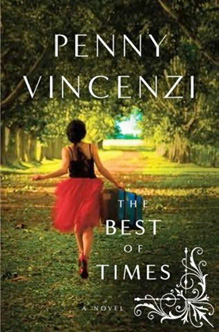
bestoftimesWhen I lived in London last summer I was lucky enough to get to know the novelist Karen Essex.  (Her recent, internationally bestselling books are Leonardo’s Swans and Stealing Athena.)  Recently she moderated a conversation between Penny Vincenzi, the #1 bestselling British novelist, and me because our new novels — The Best of Times and Bird in Hand — both begin with car accidents that change the lives of the central characters.  Karen was interested in two things in particular:  Was the accident the inspiration for the novel, or merely a device, a catalyst for the story?  And – as long-married women, how strange, unsettling, or awkward was it to write about adultery and divorce?
To find out the answers to these and other provocative questions, click here.

Filed Under: Bird in Hand, Quick Links Tagged With: Bird in Hand, car accident, Karen Essex, Leonardo's Swans, Penny Vincenzi, Stealing Athena, The Best of Times, The Creative Process

June 28, 2009 By bakerkline

I See Imaginary People

ghost personTalking with WNYC newscaster and ‘All Things Considered’ host Amy Eddings recently, I learned that before she became a journalist she used to write fiction. “But my novelist friends talked about hearing the voices of their characters in their heads as they wrote. I never heard those voices,” she said. “That was when I realized I was better suited to nonfiction.”

I’ve never thought of the difference between fiction and non-fiction writing quite like this, but she’s right, I think. Long ago I read an interview with Alice Walker in which she spoke about writing her novel The Color Purple. She worked alone in a small house, and every day her characters – whom she identified as ancestors – would come in and hang out for a while, telling her their stories. “When I was writing The Color Purple I was just in service,” she said. “I don’t know if you’ve ever had the experience of knowingly putting yourself in service to whatever it is … where you really know what you’re supposed to be doing, and you’re there. You’re on the job. You give up everything else to do that. So I was serving these ancestors basically. And I did it as well as I could do it. It was like prayer.”

Writing a novel isn’t always like that, but most fiction writers will recognize Walker’s depiction of being at the mercy, one way or another, of her characters, of being beholden to their points of view. Writing fiction – listening to the voices in your head – requires entering a kind of dream state, a consciousness that isn’t your own. Part of the joy and the pain of writing fiction is that at some point, if it’s going well, these strange, unbidden voices take over.

Filed Under: The Creative Process Tagged With: 'All Things Considered', Alice Walker, Amy Eddings, The Color Purple, The Creative Process, WNYC

COMING MAY 2026: THE FOURSOME

A literary historical novel set in Civil War-era North Carolina, based on a true family story and told from the perspective of Sarah Bunker, one of two sisters who married Chang and Eng, the famous conjoined twins…learn more

Follow on Substack

Subscribe

Connect with Christina

Contact
  • Facebook
  • Instagram
  • Twitter

Copyright © 2026 Christina Baker Kline · Site design: Ilsa Brink