Sign up for Christina’s Newsletter

Christina Baker Kline

Author Website

  • Books
    • The Foursome
    • Please Don’t Lie
    • The Exiles
    • A Piece of the World
    • Orphan Train
      • Orphan Train Girl: The Young Readers’ Edition of Orphan Train
    • Other Novels
      • Bird in Hand
      • The Way Life Should Be
      • Desire Lines
      • Sweet Water
    • Nonfiction
      • Always Too Soon
      • About Face
      • Child of Mine
      • Room to Grow
      • The Conversation Begins
  • Events
  • NEWS
  • Other Writing
  • About
    • Bio
    • FAQs
    • Contact
    • Photos
  • Newsletter

November 3, 2009 By bakerkline

Quick Link: On Auto Wrecks and Adultery

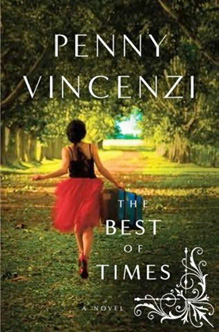
bestoftimesWhen I lived in London last summer I was lucky enough to get to know the novelist Karen Essex.  (Her recent, internationally bestselling books are Leonardo’s Swans and Stealing Athena.)  Recently she moderated a conversation between Penny Vincenzi, the #1 bestselling British novelist, and me because our new novels — The Best of Times and Bird in Hand — both begin with car accidents that change the lives of the central characters.  Karen was interested in two things in particular:  Was the accident the inspiration for the novel, or merely a device, a catalyst for the story?  And – as long-married women, how strange, unsettling, or awkward was it to write about adultery and divorce?

To find out the answers to these and other provocative questions, click here.
Filed Under: Bird in Hand, Quick Links Tagged With: Bird in Hand, car accident, Karen Essex, Leonardo's Swans, Penny Vincenzi, Stealing Athena, The Best of Times, The Creative Process

November 1, 2009 By bakerkline

Quick Link: The Picture that Inspired 80,000 Words

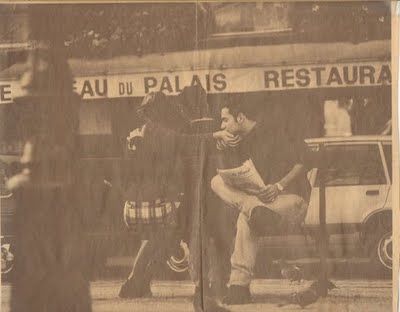
BIH inspiration“The newspaper clipping is in tatters.  Folded, yellowed, curling at the edges and mended in places with clear tape, it was tacked to the bulletin board in my office for eight years….”  So begins a guest post I wrote this week for In This Light, a blog about the influence of images on writers and writing.   Instinctively I knew that this image would help me access the core motivations of my characters in Bird in Hand, who act in comparably indiscreet and scandalous ways …

You can read the rest here.

Filed Under: Bird in Hand, Quick Links Tagged With: beginning, Bird in Hand, character, Christina Baker Kline, creative process, Dory Adams, fiction writing, In This Light, Inspiration, Paris, writing a novel

September 18, 2009 By bakerkline

Quick Link: The Page 69 Test

69 signThe “test” is simple:  is page 69 of Bird in Hand representative of the rest of the book?  Would a reader skimming that page be inclined to read on?  These were the questions posed to me by Marshal Zeringue, who edits book blogs including CftAR, The Page 69 Test, and Writers Read.

A fun idea, I thought – if perhaps a little gimmicky.  And then, to my surprise, I discovered that page 69 is a turning point in my novel.  Read more here.

Filed Under: Bird in Hand, Quick Links Tagged With: Bird in Hand, Page 69 Test, turning point

September 10, 2009 By bakerkline

Five Life Lessons I Learned Writing my New Novel

supermodel1. I am not a supermodel. Or a professional soccer player.
At times, over the eight long years it took to finish Bird in Hand, I was seized with panic. Look at all those fresh-faced young writers madly producing books, while I grow wrinkled and gray! But then I realized: it doesn’t matter how damn old I am. Unlike some professions, writing does not require that you have dewy skin or the speed of an antelope. All that matters are the words on the page. So when I got into a panic about my work, I reminded myself that life is long; some of my favorite writers have done their best work in their seventies and eighties. And not only that, but …

2. Older really is wiser, at least in some ways.
Climbing up and over the hill of middle age, I’ve learned that some of the positive clichés about aging really are true. I trust my first impulses more. I’m more confident about what I know for sure. I believe that I can write a decent sentence. I care much less than I used to about what people think. I understand my own process. Which leads me to …

3. What works for me is what matters.
Writers are always asked about their work habits because it’s endlessly fascinating (even to other writers). Do you write in the morning or the afternoon? Do you work on a laptop or with a ballpoint pen? Do you sit in a basement, like John Cheever, or an austere sliver of a room, like Roxana Robinson? Do you work for two hours or ten?

But here’s the thing: it doesn’t matter what anyone else’s process is. What matters is what works for me. For example – unlike most other novelists I know, I’m not a morning person. My best writing time may be mid-to-late afternoon. Writing Bird in Hand, I often worked in a generic Panera Bread Shop in a different town, on subways, and in dentists’ offices. I also wrote the first drafts longhand, which few seem to do anymore. Maybe I could train myself to write first drafts on the keyboard, but why should I? This is what works for me.

And that’s my point. I’m still intrigued by how other people work, but I also know that writing is a strange alchemical business, and I need to follow my own impulses. Whatever it takes to get the words on the page is what I need to do. And I also need to remember that …

kid food4. My life feeds my work.
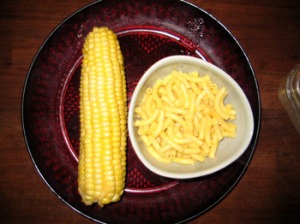
For a long time my “real” life and my writing life seemed like two separate states, and when I was in one I felt guilty about neglecting the other. I’ve come to understand that time away from writing nourishes my creativity; time immersed in the creative process allows me to inhabit my personal life with less conflict and more serenity. All the bits and pieces of my life experience feed my writing in ways I don’t even realize until they’re on the page. I drew on this in Bird in Hand by writing about the minutiae of childrearing, “…endless bland kid dinners, fish sticks and chicken nuggets and macaroni and cheese and Classico sauce with spaghetti, on a revolving loop.” At the same time, though …

5. Contrary to popular opinion, quality time is as important as quantity time.
In the final few months writing Bird in Hand, I went around in a perpetually foggy state, and I often felt guilty about my lack of focus. What I came to realize is that my kids – who are 9, 13, and 14 – like having me around, but they don’t always require my undivided attention. Being there when they got home from school in the afternoon, having conversations in the car, family dinners, weekend excursions, cooking together, and the occasional board game made up for a lot of times when I might have been physically present but mentally in a different time zone.

Knowing that there were plenty of times when I’d drop everything and focus on the moment – quality time, that is — my kids were happy to let me work when I had to. And they began taking themselves off to do their own work, too. The oldest one writes and records music. My second child plays piano for hours. And the younger one is currently obsessed with Harry Potter. Some of the best moments are when I feel the household humming with activity – mine and theirs.

I originally wrote this guest post for Lisa Romeo Writes, a terrific blog about “writing, reading, books, life after the MFA, editing (and editors), submissions, getting published (and rejected), media & the publishing business, journalism, revisions, and the writing life.”

Filed Under: Bird in Hand, Real Life Tagged With: Bird in Hand, Christina Baker Kline, Lisa Romeo Writes, Real Life, Roxana Robinson

September 6, 2009 By bakerkline

My Ten-Year Overnight Success

I wrote this piece several weeks ago for SheWrites, a social networking site for women writers, and it was picked up a few days later by More.com.  I’m reprinting it here because I’ve gotten more feedback on it than on any other essay I’ve written.  People called it “brutally honest” and “courageously candid”; one writer said she could never imagine being so self-revealing.  Another wrote that she burst into tears reading it because my experience was so close to her own.  Perhaps because I’ve come through this to some kind of other side, I didn’t worry that I was being too candid — I just wanted to write frankly about my experience.   But it’s hard for writers to speak honestly about the difficult times, I think, particularly when they’re ongoing.

Stacked BooksI suddenly look rather prolific. In the past two years I have published two novels – my new one, Bird in Hand, comes out this week – and co-edited an essay collection, and I’m under contract for another novel. “I don’t know how you do it!” a friend exclaimed the other day. “You make it look so easy.”
I agree that it looks easy now – three books in two years is pretty good. But it took a long eight years to get to this point, during which time my confidence was so shaken that I questioned everything about myself as a writer. More than once, I wondered if I would ever publish again.

Here’s what happened: In the mid-nineties, after making a small but audible splash in the big pond with my first novel, Sweet Water, my second novel floated quietly on the surface. In truth, Desire Lines did nearly as well as the first, but the publisher’s expectations – and advance – had been much higher. Nobody would quite say it, but I sensed it: the book was a disappointment. I felt like a failure.

(A friend who got a large advance for a book that sold modestly described walking down the hall with the publisher himself and running into a famous, perennially bestselling author. “X, this is Y,” the publisher said dryly. “He’s the one who subsidized your book.”)

When Desire Lines came out I was working on a new novel. But my sense of having let people (including myself) down, combined with moving to the suburbs and raising three young children, played havoc with my self-confidence. On top of that, I was writing about the death of a child who was exactly the age of one of my own, and the subsequent dissolution of a marriage. This difficult, painful material, while not specifically autobiographical, cannibalized my own experience in myriad ways and often felt overwhelming.

In the middle of all of this, I took on what turned out to be a disastrous ghostwriting project to help pay for that house in the suburbs. Without an adequate contract (or, it must be said, a clear sense of boundaries), the whole thing eventually imploded. I took a full-time teaching job and other works-for-hire to make up the lost income when my kids were 6, 4 and not quite a year old, and at some point, without even quite understanding what was happening, I became completely demoralized. I sunk into what I now recognize as a mild depression.

With the help of a therapist and support from my husband, I eventually rallied. My children grew, my teaching job got easier, I acclimated to life in the suburbs. And after four agonizing years, I turned in an unwieldy manuscript. My editor at the time took forever to read it; I didn’t hear anything until one day her assistant called to say that the novel was “in the pipeline,” scheduled to be published in the spring. I was flabbergasted – I knew it wasn’t anywhere near ready. I went to lunch with my editor and she asked what I was working on now, and out of nowhere I summoned a new idea, fully formed, like a movie pitch, about a single woman who meets a guy online and moves to Maine.

“I love it,” she said. “Why don’t you write it quickly, and we’ll publish this book first? The economy is rough – people want to buy books that make them feel good. And the other one is dark and complicated. This book sounds like fun.”

So I did it. I wrote The Way Life Should Be in a fever of relief after the torment of the other novel. This new book was a lighthearted, humorous, first-person, present-tense story with recipes, and looked nothing like my life. It was a joy to write.

Within several years, this new book was published – and I was back on track. (The editor was right; people were eager for a light, funny read.) When I turned back to the old manuscript, I had regained my confidence. I had a new perspective and a new editor who proposed radical structural changes that helped transform the manuscript. And after all that time, I had distance enough to see it clearly. I finally knew exactly what I needed to do.
`
In my eight-year publishing drought, when I feared I might never finish another book and it seemed as if other authors were whizzing merrily by, writing one novel after another, I felt as if I’d blown my chances, fallen out of the race. But what I’ve come to realize – and what may be heartening to others who, like me, take a while to get their act together or go through ebbs and flows – is that when you do eventually publish, the intervening years disappear. The current book is the only thing that counts, and it doesn’t matter how long it took you to get there.

So yes, now it all looks easy. But I need to acknowledge just how hard it was, and how long it took, if only to remind myself how important it is not to get caught up in other people’s judgments and my own unrealistic expectations. Ten years after I wrote the first word of Bird in Hand, it is finally being published. During the fallow years, I gained insights into marriage and family life and the complicated choices people make that I didn’t have access to when I was younger. I developed the confidence to write from the perspective of mature characters, including men (which I’d never done before). And I think that, perhaps as a result of the many drafts and revisions, Bird in Hand is the best thing I’ve written. It’s certainly my proudest accomplishment — probably even more so because it’s not an overnight success.

Filed Under: Bird in Hand, Real Life Tagged With: Bird in Hand, Christina Baker Kline, creative process, fiction writing, Inspiration, Thoughts, writing a novel

  • « Previous Page
  • 1
  • 2
  • 3
  • 4
  • 5
  • Next Page »

COMING MAY 2026: THE FOURSOME

A literary historical novel set in Civil War-era North Carolina, based on a true family story and told from the perspective of Sarah Bunker, one of two sisters who married Chang and Eng, the famous conjoined twins…learn more

Follow on Substack

Subscribe

Connect with Christina

Contact
  • Facebook
  • Instagram
  • Twitter

Copyright © 2026 Christina Baker Kline · Site design: Ilsa Brink