Sign up for Christina’s Newsletter

Christina Baker Kline

Author Website

  • Books
    • The Foursome
    • Please Don’t Lie
    • The Exiles
    • A Piece of the World
    • Orphan Train
      • Orphan Train Girl: The Young Readers’ Edition of Orphan Train
    • Other Novels
      • Bird in Hand
      • The Way Life Should Be
      • Desire Lines
      • Sweet Water
    • Nonfiction
      • Always Too Soon
      • About Face
      • Child of Mine
      • Room to Grow
      • The Conversation Begins
  • Events
  • NEWS
  • Other Writing
  • About
    • Bio
    • FAQs
    • Contact
    • Photos
  • Newsletter

September 21, 2009 By bakerkline

Writing Tip #10: Contain Your Ambivalence

prizeWords of wisdom from renowned book editor and literary agent Betsy Lerner:

“For most writers, writing is a love-hate affair. But for the ambivalent writer who cannot attempt, sustain, or complete a piece of writing, the ambivalence usually shifts back and forth from the writing to the self. The inner monologue drums: I am great. I am shit. I am great. I am shit. But the writer with publication credits, good reviews, and literary prizes is not immune to this mantra either; in fact, the only real difference that I have been able to quantify between those who ultimately make their way as writers and those who quit is that the former were able to contain their ambivalence long enough to commit to a single idea and see it through.”

Betsy Lerner is the author of The Forest for the Trees: An Editor’s Advice to Writers and Food and Loathing.  After working as a book editor for 15 years, she became an agent and is a partner with Dunow, Carlson and Lerner Literary Agency.  This quote is from from The Forest for the Trees. (Thanks to novelist Alexandra Enders for suggesting it.)
Filed Under: Writing Tips Tagged With: ambivalence, best-laid plans, Betsy Lerner, creative process, The Forest for the Trees, Thoughts, writing a novel

August 19, 2009 By bakerkline

Writing Tip #9: Beg, Borrow, and Steal

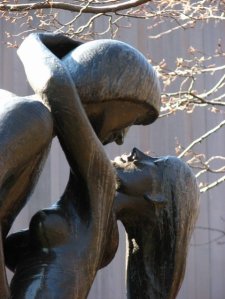
romeo-and-juliet1At the Globe Theatre in London last week, a professor from Rosehampton University gave a short lecture about Romeo and Juliet before the production began.  In discussing the origins of the play the professor said, as an aside, “Of course, as we all know, Shakespeare didn’t invent anything.  All of his plays were based on stories that would’ve been familiar to audiences at the time.”

I was musing about this when I got the following email from a novelist friend:  “I am struggling so on my new novel … I cannot find my way into the story, which breaks my heart, but I cannot give it up, either.  Do you have any tip for finding your way into a very thorny story?”

As everyone knows who has read this piece about the trouble I had writing my new novel, I am quite familiar with this problem.  So here’s something that worked for me.  While writing both The Way Life Should Be and Bird in Hand, I studied novels that successfully achieved something that I wanted to do – and essentially copied their strategies.

When I was writing The Way Life Should Be I wanted the story to move really quickly; I wanted to begin scenes in the middle.  I’d just read The Lovely Bones and admired how Alice Sebold varied her chapter openings and seemed to jump right into the action in each new scene.  So I literally wrote the first few words of each scene in Sebold’s book in a notebook.  Then, when I was stuck, I looked at the list of scene openings for inspiration.  I didn’t actually copy her words, but I found that this list of phrases triggered my own ideas for starting in the middle.

Here’s another example.  Writing Bird in Hand, I was obsessed for a time with Michael Cunningham’s novel The Hours.   I loved the multiple points of view and the paradoxically intimate but slightly detached voice(s).  Bird in Hand is nothing like that book, but I was influenced, in writing it, by how Cunningham achieved a kind of patient unfolding.  The scene in my novel with Ben in the flower shop is my secret homage to Cunningham – and of course to Virginia Woolf’s Mrs. Dalloway … which provided the inspiration and the source material for The Hours.

Filed Under: Writing Tips Tagged With: Bird in Hand, creative process, London, Mrs. Dalloway, Romeo and Juliet, Shakespeare, The Globe Theatre, The Hours, The Lovely Bones, The Way Life Should Be

July 28, 2009 By bakerkline

Writing Tip #8: Everything Old is New Again

butterfliesLast night, reading Anthony Doerr’s lovely essay, “Butterflies on a Wheel,” in a recent issue of Granta, I came across this line: “The brain contains, always, two opposing desires: the urge to stay and the urge to run.”

I read it again. The urge to stay and the urge to run. The phrase echoed in my mind: I had encountered this idea somewhere before. Then it came to me. In Madame Bovary, Flaubert says, “Always there is a desire that impels and a convention that restrains.”

That same word: desire. Stay/restrain, run/impel. Flaubert’s idea is larger, encompassing as it does the notion of social mores and expectations. But convention might as easily come from within as without, and the fact that these forces are in constant tension within us is both a truism and an idea that bears repeating.

It really doesn’t matter whether Anthony Doerr remembered the line from Madame Bovary. I imagine he didn’t. This idea – doubtless repeated in different ways by countless writers over the years – is perennially interesting. Reshaped for a new time and circumstance and refreshed by context, it becomes new again.

(The title itself, “Butterfly on a Wheel,” is an allusion to a line in Alexander Pope’s Epistle to Dr Arbuthnot: “Who breaks a butterfly upon a wheel?” about the foolishness of expending great effort on an inconsequential task. Same conceit, new iteration …)

Filed Under: Writing Tips Tagged With: "Butterfly upon a wheel", Anthony Doerr, creative process, Flaubert, Granta, Inspiration, literary, Madame Bovary, Thoughts

July 15, 2009 By bakerkline

Writing Tip #7: Embrace your Dark Side

Jungian psychologyYou never know where you’ll find inspiration – or where inspiration will find you.

Sitting on an airplane in the summer of 2005, on the way to Fargo, North Dakota with my family to visit my husband’s mother, I came across an interview with the novelist Sue Grafton in Northwest Airlines World Traveler magazine, of all places.  She spoke so eloquently about the source of her creative energy that I copied it in my notebook and later posted it on the bulletin board in my office.

“It’s from Jungian psychology,” she said. “Our dark side, our shadow, [is] where all our creative energy is. If you spend your life looking perfect and doing everything you’re supposed to do, you shut down the part of you that is most energetic. For awhile, I was concentrating on being good, on doing what people expected, and lost track of that energy to do the work itself.”

Filed Under: Writing Tips Tagged With: Carl Jung, creative process, Inspiration, Jungian psychology, North Dakota, Sue Grafton, the dark side, Thoughts, writing a novel

July 9, 2009 By bakerkline

Writing Tip # 6: Mine Your Own Material

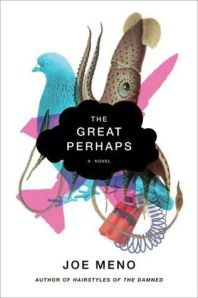
Joe Meno's latest novel“For me, almost everything starts off as a short story,” the novelist and short story writer Joe Meno says in the June 30th issue of One Story magazine.  “All of my novels have been built around material that’s been explored or published as short stories, because it forces me to get to the character and action quickly, and helps me figure out what the story is actually about. I usually write a few short stories and realize that they feature similar questions or characters and decide that there’s a novel there somewhere.”
Meno adds, “To write one good short story, you’re probably going to write about nine bad ones. You have to enjoy the mistakes and failures and misfires and realize writing is all about one thing: trial and error.”

Filed Under: Writing Tips Tagged With: creative process, fiction writing, Inspiration, Joe Meno, One Story, short stories, The Great Perhaps, writing a novel

  • « Previous Page
  • 1
  • 2
  • 3
  • 4
  • Next Page »

COMING MAY 2026: THE FOURSOME

A literary historical novel set in Civil War-era North Carolina, based on a true family story and told from the perspective of Sarah Bunker, one of two sisters who married Chang and Eng, the famous conjoined twins…learn more

Follow on Substack

Subscribe

Connect with Christina

Contact
  • Facebook
  • Instagram
  • Twitter

Copyright © 2026 Christina Baker Kline · Site design: Ilsa Brink