The novelist and creative-writing teacher Susan Breen offers consolation, hope, and advice for anyone trying to get published:
I’ve come to think that publishing stories are like birth stories. There’s usually a lot of pain, but once you hold that bundle in your hands you forget all about it. Then you say, Let’s do it again! My own story, if I can hang on to this image a little longer, was like a very delayed labor. In fact, I’d come to think it would never happen.
It was 2006 and I was in that terrible limbo in which unpublished novelists reside. Every conversation went like this:
What do you do?
I write novels.
Where can I buy one?
You can’t.
Oh. Nice to meet you.
By that point I’d written two (unpublished) novels and had started work on a third, which I thought was good, though I didn’t think it encouraging that my agent stopped returning my calls after I told her about it. I was gearing up to start looking for a new agent, but I was feeling gloomy. One night, clicking around the computer, I came across a sign that said, “Meet Four Editors.” I felt a little like that kid in Willy Wonka who’s looking for the last chocolate bar. But I clicked on the icon and an ad came up for the NY Pitch and Shop Conference.
To make a very long story short, I went. And I did meet with four editors, each of them from a big New York publishing house. I had to give each one a pitch for my novel, which required me to think about what my novel was about. The whole experience was surreal, made more so by the fact that the conference took place in a dance studio. One whole wall was mirrored, which was the wall I was facing. So to my great joy I got to watch my own face contorted with embarrassment as I pitched my novel.
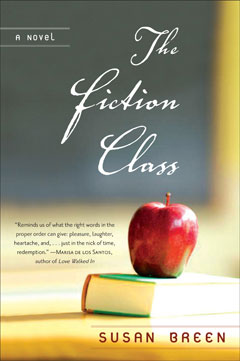
The first editor hated it. The second and third ones seemed interested. But the fourth editor, Emily Haynes, who was a treasure beyond all value, smiled at me and said, “I love it.” She was from Plume, a division of Penguin, and she wound up buying my book, The Fiction Class. It was published in 2008.
What did I learn from this experience?
1. You have to keep writing. If two books don’t sell, write a third. If five books don’t sell, write a sixth. The more you write, the better you’ll get.
2. You have to take a really long view. From the moment I first started to work on a novel to the day it was signed, took me ten years. And I got lucky. (Of course, there are exceptions. So don’t panic.)
3. You need to get out there. I know you’re shy; I am too. But you learn so much from meeting other writers and agents and editors.
4. You don’t need to be related to someone famous to sell a book, though it probably helps.
5. You don’t need to be tall and gorgeous to sell a book, though that probably helps too.
6. This is the final one. Write about things you really care about. Then it won’t matter so much whether you’re published or not because you’ll know you’re doing something meaningful.
Susan Breen is the author of The Fiction Class. She also writes short stories, one of which was anthologized in 2009 Best American Nonrequired Reading. She teaches classes in fiction writing at Gotham Writers’ Workshop and lives in Westchester with her family.