Sign up for Christina’s Newsletter

Christina Baker Kline

Author Website

  • Books
    • The Foursome
    • Please Don’t Lie
    • The Exiles
    • A Piece of the World
    • Orphan Train
      • Orphan Train Girl: The Young Readers’ Edition of Orphan Train
    • Other Novels
      • Bird in Hand
      • The Way Life Should Be
      • Desire Lines
      • Sweet Water
    • Nonfiction
      • Always Too Soon
      • About Face
      • Child of Mine
      • Room to Grow
      • The Conversation Begins
  • Events
  • NEWS
  • Other Writing
  • About
    • Bio
    • FAQs
    • Contact
    • Photos
  • Newsletter

May 4, 2011 By bakerkline

20 Ways to Rejuvenate Your Writing Life This Spring

My own humble flower patch ...


To be a writer is to weather the seasons: we stockpile ideas, we slumber long and hard, we wake up refreshed, and, hopefully, if we are lucky, if the soil has been properly nourished and the sun peeks through the clouds, we bloom.

To celebrate spring, and blooming, here are 20 tried and true tips that Deborah Siegel and I came up with for SheWrites.  Deborah and I have been thinking a lot about this topic, as we’re teaming up to offer a pilot mini-retreat on May 21 in Brooklyn for fellow mamas/grandmamas/caregivers who also write. (We thought we’d start with this group, because such women are multitasking mavens, but in the fall we will broaden our scope!)

Alrighty then.  Here is our list.  I hope you’ll find it…rejuvenating!  And I invite you to add to it, in comments, with tips of your own:

1. Forgive yourself for all that you haven’t written before today.

2.  Stop worrying about the fact that you’re wasting time.  Of course you are.  That’s what writers do.

3.  Pay attention.  Here.  Now.  Look for inspiration anywhere you can find it. Everything you take in will be filtered through the lens of your current obsession.

4.  Allow yourself to play—with language, with direction.  Come at things sideways, in the backdoor, through the attic.

5.  Set a deceptively small goal for today: One great sentence.

6.  Reconnect with your passion for the beauty of that great sentence.  Love the metaphor, the texture, the juxtaposition.

7.  Read what you want to write. “Reading is the nourishment that lets you do interesting work.” –Jennifer Egan

8.  Write what you want to read.

9.  Live where you are.  “All writing is autobiographical as well as invented.  Just as it’s impossible to write the whole and literal truth about any experience, so it’s also impossible to invent without drawing on your own experience, which has furnished your brain.” –Janet Burroway

10.  Remember that creating art is a messy process.  “Beauty follows ashes.  That which is lovely does not rise out of the pristine hollows of the universe but out of roiling, disjointed substance of our lives.” –Christin Taylor

11.  Just for today, write in an unaccustomed place.  Take yourself somewhere new.  Get out of town.

12.  Schedule an “artist date” with yourself.  (Remember those?)

13.  Remember that direction + desire = productivity.

14. Allow yourself to love your own writing.  Allow yourself to hate it.  Remember that reality is probably somewhere in between.

15.  Give yourself permission to be creative, distracted, self-involved—and maybe even bigger than the people around you.

16.  Get inspired by the visual and tactile.  Cut pictures out of magazines, tape postcards on the wall above your desk.

17.  Watch your favorite movie, or listen to your favorite song, with an ear for the narrative.

18. Only connect, as E.M. Forster said.  Recruit yourself—and maybe some writers around you—for a retreat to someone’s friend’s cabin (or, if near Brooklyn, come to ours!).  Produce pages to share, and join up for food and conversation.

19.  Join a group you’ve been lurking around on She Writes, or start one of your own.

20.  Remember that you can’t rejuvenate in the abstract.  You have to put pen to paper.   Ready?  GO.

Now, you:

Tell me YOUR top 3 tips for rejuvenating your writing life, in comments to this post.  (I know you’ve got them!)

To your blooms!


Filed Under: Blog, Inspiration Tagged With: Christin Taylor, Deborah Siegel, E. M. Forster, Janet Burroway, Jennifer Egan, Rejuvenate Your Writing Life, SheWrites, writing retreat, writing workshop

January 11, 2011 By bakerkline

When “Write What You Know” Takes You Somewhere New

Pianist and memoirist Nancy M. Williams on how her passion for music informed her writing – and vice versa:

Two years ago, during a cold and snowy winter, I began my first book during a writing residency at Vermont Studio Center.   My memoir explored reclaiming my passion for piano at age forty after a twenty-five year hiatus.   While a variety of snowflakes, from clumpy to perforated, fell past my writing studio window, I wrote about my relationship with my father, who during my childhood had supported my writing but abhorred the sound of the piano.  (In contrast, my mother, an amateur pianist herself, had savored my playing.)

Writing my story helped me realize that the wrongs my father had committed during my teens had morphed over time into my lack of resolve.  As an adult, I alone  was responsible for the lack or abundance of classical piano music in my life.

After six months of intensive writing following my return home from Vermont, I had completed a rough draft of my memoir.  Needing the perspective that breaks provide, I put the book in cold-storage, vowing not to read a single paragraph for three months.  I felt a desire stronger than ever, stoked by the act of writing the rough draft, to reach my piano potential, squandered when I abruptly had quit at sixteen.

Although I had sustained my daily piano practice and weekly lessons while drafting my book, I had not performed in public—save the occasional student recital—since beginning adult piano lessons four years earlier.  Now while on break from my memoir, in short order I performed three times at my church: a Chopin Nocturne, Debussy’s Reverie, and part of a Beethoven Sonata.  The experience injected me with so much confidence that I took the train into Manhattan in October to audition for The New York Piano Society, a group of skilled amateurs who hold free concerts in New York City and New Jersey.  Much to my awed delight, the director, Elena Leonova, asked me to perform in two concerts in December.  I felt, as I strode out onto the stage at Baruch Hall, that I had answered a call to myself .

Around the time of my audition, I pulled out the rough draft of my memoir.   I delved back into scenes, editing them closely, yet I sensed that my story felt incomplete.   A year after my first residency, I returned to Vermont Studio Center for another period of concentrated work.

Like the year before, snowflakes fell past my window into the black Gihon River below.  In the quiet of my writing studio, I examined the book’s arc and flow.  I felt befuddled.  Where were the performances at my church?  How could I have left out my audition for The New York Piano Society, let alone the two winter concerts?  Then it hit me:  when writing the rough draft, I had yet to live these experiences.  My performances felt so knitted to the memoir’s material that I assumed I already had captured them as scenes.

The adage write what you know gained for me an entirely new texture, not unlike the varied snowflakes I encountered in Vermont.   Writing about the piano, which I both know and love, spurred me to greater pursuits with my musical passion.  The act of creating my book enriched my life.

Nancy M. Williams is an award-winning creative nonfiction writer and an avid amateur classical pianist.  Visit her website for her online music magazine, Grand Piano Passion, as well as her recordings of some of her piano music.   She is currently at work completing her memoir.

Filed Under: Blog, Discipline, Inspiration Tagged With: Beethoven Sonata, Chopin Nocturne, Debussy's Reverie, Elena Leonova, Nancy Williams, New York Piano Society, piano, Vermont Studio Center

September 9, 2010 By bakerkline

A New Twist to a Familiar Story

Karen Essex talks about how she reclaimed — and reframed — the vampire myth by exploring its female origins in her new novel, Dracula in Love:

From the first time I read Bram Stoker’s Dracula in my teens, I just knew that Mina was not satisfied with her role as the quintessential Victorian virgin. Little did I dream that many years later, I would actually revise the story, retelling it from Mina’s perspective.

Though Stoker’s Dracula was a brilliant creation and a haunting story, when it came to the women, he wrote like a man of his time, constructing the typical paradigm of bad girl (Lucy Westenra, who succumbs to the vampire’s seduction) versus the good girl (Mina Harker, who does not).  The vampire’s kiss was a thinly veiled metaphor for—you guessed it—sex.   In the pre-feminist construct, the bad girl is punished; the good girl rewarded.

My ambition for Dracula in Love was to turn the original story inside out. I wanted to give Mina and Lucy rich, full lives, as well as plausible inner lives that made sense in the era in which they lived, but also reflected the breadth of women’s desires. I researched late Victorian art, culture, costume, design, sexual and social mores, religious beliefs, and laws concerning the rights, or lack thereof, of women.  I moved to London so that I could haunt its streets and its museums, breathing in the atmosphere as I wrote.  Walking in the footsteps of the characters is a crucial part of my process, so I also traveled to southern Austria and the west coast of Ireland, where I set Mina’s birthplace.

Those who have read Dracula know that a good portion of the book takes place in an insane asylum.  This is also true of Dracula in Love, but I wanted to recreate the asylum as it would have been in the late Victorian era—not inhabited by an insect-eating vampire slave like Stoker’s Renfield, but full of women, committed for having what we today would consider normal sexual attitudes and desires.  Because these asylum scenes are crucial to both the plot and the themes of my book, I scoured the archives of late 19th century insane asylums.  I also studied the Victorian fascination with the metaphysical.

In the process of my research, I unearthed a wealth of information that became a major theme: vampires have a long history dating back to pre-biblical times, and many of the blood drinkers of myth were female, symbolic of feminine magic and power.

Digging deeper into world mythologies, I became fascinated by these bloodsucking goddesses and monsters.  These are the bad girls of mythology—the fearsome Indian goddess Kali who punished and possessed her enemies by drinking their blood; the vengeful, child-eating, blood-drinking Lamia of Greece and North Africa; Lilith, Adam’s Mesopotamian wife who drank blood in vengeance; and the blood-lusting warrior fairy queens of Ireland.

So if the original blood-drinkers were females, then why was Stoker’s Dracula male?  For one thing, mythological stories rarely follow a straight line.  Myths are reinvented in every culture, adapted to the needs and beliefs of the people and the times.  Through the millennia, concepts of vampires shape-shifted.  They were thought to be spirits of women who had been witches; angry plague victims risen from the dead; victims of crime come back to suck the blood of the perpetrators; and succubi who visited men in the night, draining them of their life force (the male spirits who did similar harm to slumbering females are known as incubi).

But power, supernatural or otherwise, was the last thing the Victorians wanted women to possess.  In the Victorian mind, women were pure and innocent creatures who must remain protected, shielded from worldly life.  To accommodate this mentality, writers like Bram Stoker turned the predatory vampire into a male, giving him preternatural powers, while women became his victims.

Suddenly it was the male vampire roaming the foggy, narrow streets of London threatening lovely young ladies.  With Dracula in Love, it was my joy and privilege to give Mina deep hidden desires and a paranormal past of her own to discover and embrace.  The good girl has some very “bad” moments for which she is not punished.  The old paradigms turn upside down, returning the women to that place of power lost somewhere in the centuries since Lilith and the Lamia roamed the earth, taking their bloody revenge and causing men to quake with fear – and quiver with excitement.

Karen Essex is the author of Kleopatra, Pharaoh, Stealing Athena, and the international bestseller Leonardo’s Swans, which won Italy’s prestigious 2007 Premio Roma for foreign fiction.  She graduated from Tulane University, attended graduate school at Vanderbilt, and received an MFA from Goddard College.  An award-winning journalist and a screenwriter, she lives in London and Los Angeles.

Filed Under: Blog, Guest Blogs, Inspiration Tagged With: Bram Stoker, creative process, Dracula, Dracula in Love, Inspiration, Kali, Karen Essex, Lilith, Mina Harker, writing a novel

July 16, 2010 By bakerkline

Great Writing

Justin Kramon didn’t think he was qualified to call himself a writer. And then he thought about his favorite books, and had a change of heart:

For some reason, I used to have the perception that writers should be interesting, well-rounded, generally knowledgeable people. I got this idea before I’d met any writers, and certainly before I started trying to become one. In fact, my perception of writers was a big obstacle to writing, because – and I have to be completely honest here – I’m not that interesting, am poorly rounded, and most of what I have to offer in the way of knowledge concerns the time it takes to heat various foods in the microwave.

A few years ago, I’d started working on a novel, but it hadn’t come alive. The voice was wooden and the characters seemed predictable, too polite with each other. It was like watching my novel through a window. I wanted to get in there and tickle everyone.

The problem, I realized, was that I wanted to be a good writer. I wanted to sound like the writers everyone had been telling me were great writers, the best writers, the important writers. A lot of these writers happened to be men, and happened to write in wise, commanding, and slightly formal styles. Reading them made me feel like a slow runner in sixth-grade gym, sweating and hyperventalating while everyone else rushed by. They were doing something I could never do, that I wasn’t built to do.

But these great writers were not actually the writers I most enjoyed reading. Picking up their books was more of a responsibility than a pleasure. The writers I loved, the writers who had meant most to me, who had entertained me and stuck with me and let me lose myself in their books – this was a completely different list.

So one morning, when I couldn’t face my own fledgling novel, I decided to make a list of writers I loved. One of the writers that immediately jumped to mind was Alice Adams, who died in the late-1990’s and unfairly seems to have fallen off the map. She wrote some of the most entertaining and insightful books I’ve read, including the novel Superior Women and a story collection called To See You Again. I can’t think of many writers I’d rather sit down and read than Alice Adams. Her books are so absorbing that I feel like I’m reading gossip from a close friend, about people I actually know, except the writing is so much funnier and clearer and more beautiful than any gossip I’ve ever read. John Irving is another one. I love his intricate plots, the slightly larger-than-life characters, the comic set pieces, and the sense of bigness and adventure in all his novels. I think of Irving’s books, as I do of Charles Dickens’s, as treasure chests of ideas and characters and funny moments.

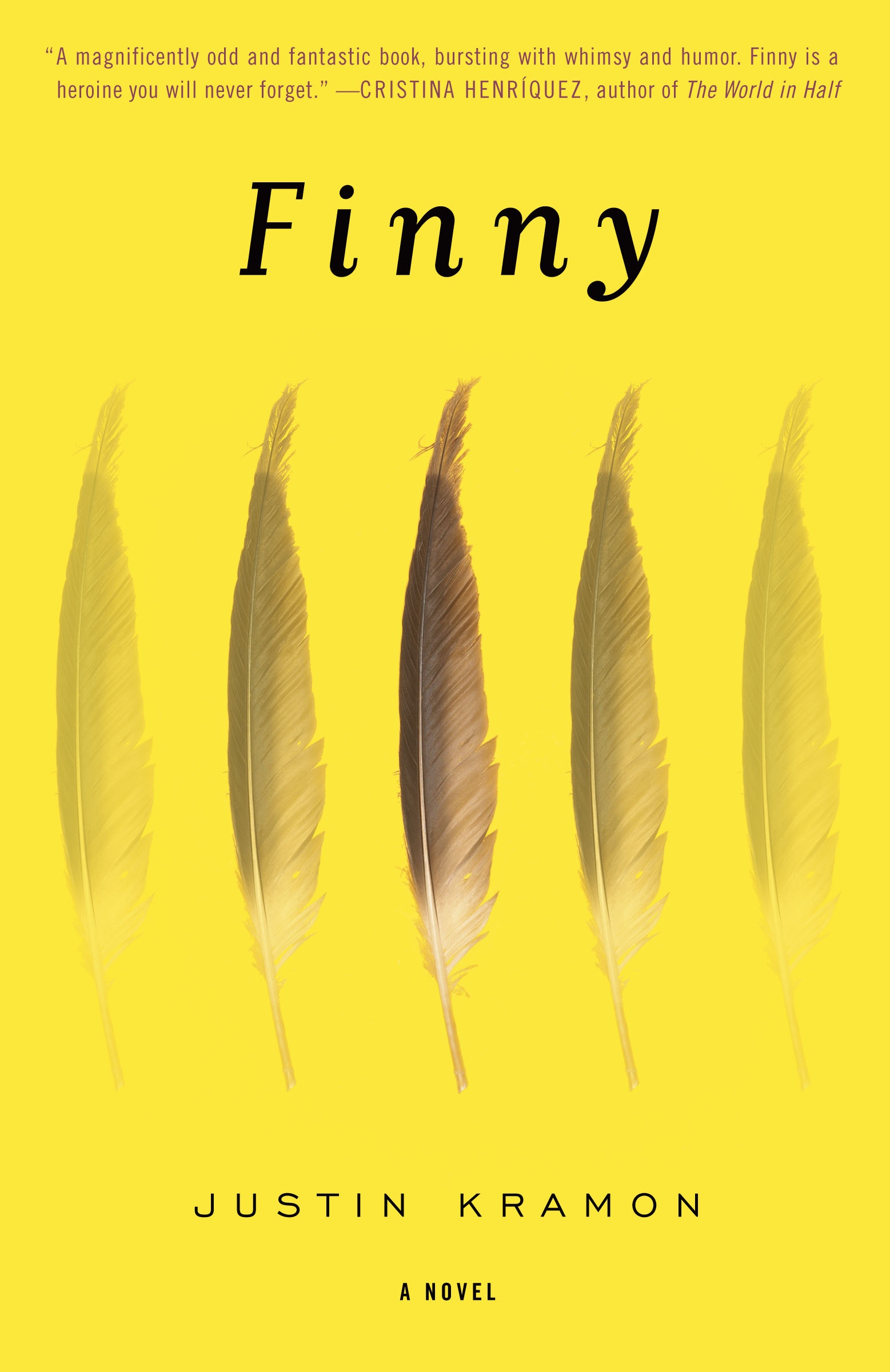
Making this list helped me let go a little bit of the desire to be important. I realized that these are the kinds of books I want to write – books filled with unforgettable characters, books that give me an almost childlike sense of wonder. I started a new novel, Finny, with a narrator whose voice is informal, quirky, a little devilish. Finny’s voice made me laugh, and I honestly cared about her and wanted to see what would happen to her, the people she’d meet, the man she would fall in love with.

Part of the process of becoming a writer has been acknowledging my own limitations, the things I don’t know about. And also being honest: about what I like, what I enjoy, what moves me. To be truthful, I don’t enjoy research. I’m not all that interested in history, and even though I try to stay informed, I’m not ardent about politics. I don’t get a huge kick from philosophical or intellectual discussions. I’m interested in psychology, food, loss, sex, death, awkward social situations, and I’m passionate about the subject of why people are as annoying as they are. I may not win a Nobel Prize for this, but it’s the only kind of novel I can write. Making my list, I saw that what I wanted to do was write books that people love reading, that make them laugh and cry, and that allow me to bring a little of myself into the world.

Justin Kramon is the author of the novel Finny (Random House), which was published on Tuesday. Now twenty-nine years old, he lives in Philadelphia. You can find out more about Justin and contact him through his website, www.justinkramon.com. You can watch a book trailer for Finny here, and you can access Justin’s blog for writers here.


Add to FacebookAdd to DiggAdd to Del.icio.usAdd to StumbleuponAdd to RedditAdd to BlinklistAdd to TwitterAdd to TechnoratiAdd to Yahoo BuzzAdd to Newsvine

Filed Under: Guest Blogs, Inspiration Tagged With: Alice Adams, Charles Dickens, creative process, fiction writing, Finny, Inspiration, John Irving, Justin Kramon, Superior Women, Thoughts, writing a novel

March 25, 2010 By bakerkline

If Two Books Don’t Sell, Write a Third

The novelist and creative-writing teacher Susan Breen offers consolation, hope, and advice for anyone trying to get published:

I’ve come to think that publishing stories are like birth stories. There’s usually a lot of pain, but once you hold that bundle in your hands you forget all about it. Then you say, Let’s do it again! My own story, if I can hang on to this image a little longer, was like a very delayed labor. In fact, I’d come to think it would never happen.

It was 2006 and I was in that terrible limbo in which unpublished novelists reside. Every conversation went like this:

What do you do?
I write novels.
Where can I buy one?
You can’t.
Oh. Nice to meet you.

By that point I’d written two (unpublished) novels and had started work on a third, which I thought was good, though I didn’t think it encouraging that my agent stopped returning my calls after I told her about it.  I was gearing up to start looking for a new agent, but I was feeling gloomy. One night, clicking around the computer, I came across a sign that said, “Meet Four Editors.” I felt a little like that kid in Willy Wonka who’s looking for the last chocolate bar. But I clicked on the icon and an ad came up for the NY Pitch and Shop Conference.

To make a very long story short, I went. And I did meet with four editors, each of them from a big New York publishing house. I had to give each one a pitch for my novel, which required me to think about what my novel was about. The whole experience was surreal, made more so by the fact that the conference took place in a dance studio. One whole wall was mirrored, which was the wall I was facing. So to my great joy I got to watch my own face contorted with embarrassment as I pitched my novel.

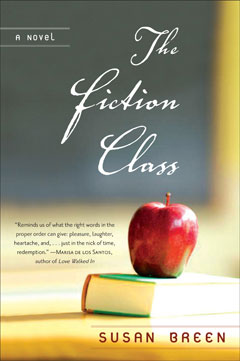
The first editor hated it. The second and third ones seemed interested. But the fourth editor, Emily Haynes, who was a treasure beyond all value, smiled at me and said, “I love it.” She was from Plume, a division of Penguin, and she wound up buying my book, The Fiction Class. It was published in 2008.

What did I learn from this experience?

1. You have to keep writing. If two books don’t sell, write a third. If five books don’t sell, write a sixth. The more you write, the better you’ll get.

2. You have to take a really long view. From the moment I first started to work on a novel to the day it was signed, took me ten years. And I got lucky. (Of course, there are exceptions. So don’t panic.)

3. You need to get out there. I know you’re shy; I am too. But you learn so much from meeting other writers and agents and editors.

4. You don’t need to be related to someone famous to sell a book, though it probably helps.

5. You don’t need to be tall and gorgeous to sell a book, though that probably helps too.

6. This is the final one. Write about things you really care about. Then it won’t matter so much whether you’re published or not because you’ll know you’re doing something meaningful.

Susan Breen is the author of The Fiction Class. She also writes short stories, one of which was anthologized in 2009 Best American Nonrequired Reading. She teaches classes in fiction writing at Gotham Writers’ Workshop and lives in Westchester with her family.

Add to FacebookAdd to DiggAdd to Del.icio.usAdd to StumbleuponAdd to RedditAdd to BlinklistAdd to TwitterAdd to TechnoratiAdd to Yahoo BuzzAdd to Newsvine

Filed Under: Guest Blogs, Inspiration Tagged With: creative process, fiction writing, Inspiration, Susan Breen, The Fiction Class, Thoughts, writing a novel

  • 1
  • 2
  • 3
  • …
  • 7
  • Next Page »

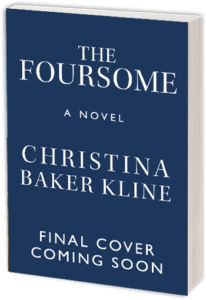
COMING MAY 2026: THE FOURSOME

A literary historical novel set in Civil War-era North Carolina, based on a true family story and told from the perspective of Sarah Bunker, one of two sisters who married Chang and Eng, the famous conjoined twins…learn more

Follow on Substack

Subscribe

Connect with Christina

Contact
  • Facebook
  • Instagram
  • Twitter

Copyright © 2026 Christina Baker Kline · Site design: Ilsa Brink