Sign up for Christina’s Newsletter

Christina Baker Kline

Author Website

  • Books
    • Please Don’t Lie
    • The Foursome
    • The Exiles
    • A Piece of the World
    • Orphan Train
      • Orphan Train Girl: The Young Readers’ Edition of Orphan Train
    • Other Novels
      • Bird in Hand
      • The Way Life Should Be
      • Desire Lines
      • Sweet Water
    • Nonfiction
      • Always Too Soon
      • About Face
      • Child of Mine
      • Room to Grow
      • The Conversation Begins
  • Events
  • NEWS
  • Other Writing
  • About
    • Bio
    • FAQs
    • Contact
    • Photos
  • Newsletter

December 14, 2009 By bakerkline

Virginia in My Mind

Remember those classic bubble bath commercials, “Calgon, take me away”?  When I’m stressed and busy it’s not a sudsy bath I yearn for.  It’s an artists’ colony – a place where someone else shops for groceries, makes dinner, vacuums the living room, washes the sheets, and generally leaves me alone to write.  It’s a place without appointments, errands, or any other external obligations, where the only demands on my time are self-imposed.  A place to think long, uninterrupted thoughts, take meditative walks, speak to others only if and when I choose.  A place where I can leave papers all over the floor and find them in the same place the following morning.  Most of all, it’s a place I can sustain an idea over several days, absorbing myself in what John Gardner has called the “vivid and continuous dream” of a novel.

The artists’ colony I dream about is the only one I’ve ever been to: the Virginia Center for the Creative Arts.  Long ago, as a MFA student at the University of Virginia, I would jump in the car for the hour-long drive to the VCCA for a few days whenever they had a last-minute cancellation.  But I’ve only been once, for a scant week, since having children.

My kids are older now, and I just found out that I’ve been accepted for ten days in May – the perfect time, as I finish a semester of teaching, to plunge deeper into my new novel.  Until then (with a nod to James Taylor) you must forgive me if I’m up and gone to Virginia in my mind.

Jessica Dunne, one of my favorite artists, painted the landscape above, “Contorted Willow, Virginia,” while a resident at the VCCA in 2007.

Filed Under: Inspiration Tagged With: Jessica Dunne, John Gardner, University of Virginia, VCCA, Virginia Center for the Creative Arts

December 6, 2009 By bakerkline

What Makes a Book Great? A Voracious Reader Shares Her Insights

From October 2008 to October 2009, Nina Sankovitch read one book a day and wrote about it on her blog, Read All Day.  After learning about this project in a New York Times article, I went to Nina’s site and found some terrific insights into what makes a book great – so I asked Nina if I could adapt them here:

The traits of great writing are: genuineness, truth, fearlessness.  Say it out loud: no fear. Let your words flap in the wind and light up the sky and bring in the readers, like a boat into a harbor.  Write straight and true and without a safety net.  No safety net!  All the books I’ve read and loved have taken a chance and won.  They won me over with their honesty and beauty.  And I know the hard, hard work that goes into making a novel or a memoir or a short story or a poem. Only hard work and unfettered talent can make such beautiful and moving works of words.

An author who writes without fear – of rejection, of rebuke, of ineptitude, of foolishness or seriousness – can write a great book. If the writer is free of fear, she can go out there and express every aspect of a story, the smells of the characters, the sight of the places, the nature of the emotions, and the pull of the struggle being waged for or against the characters.

Why does greatness matter?  It matters not only because reading such books is a pleasure but also because a great book presents the world in a whole new way.  Not the whole world, necessarily, but a piece of the world, or a person or a thought, presented in such a way that the reader has not thought of before.  Seeing an issue or a person or a situation from a new angle changes the way your mind works, enlarges your mind and enlivens it, as well.

A great story makes us care, heart and soul, about the movement, the struggle, the change. We care when the characters are genuinely portrayed, when just a slight detail can define a whole person.  We care when the place where the story takes place breathes for us; when it is alive and it cradles or rejects the characters within its orbit: think of the Croatia of Josip Novakovich, the Brazil of Paul Coutinho, or the Ireland of Claire Keegan: “On either side, the trees are all and here the wind is strangely human.  A tender speech is combing through the willows.  In a bare whisper, the elms lean.  Something about the place conjures up the ancient past: the hound, the spear, the spinning wheel” (from Walk the Blue Fields). I could be in all those places and know someone who lived and struggled, and I am more, I am richer for having been there, having known the people and the struggle and the outcome.

The best books are the ones that do not follow a formula or try too hard to be a certain genre. When I read a book I know when I am being manipulated and when I am being told a truth. The best stories present a truth about life in any way that the author finds best, even if it is in lies. An author has to be fearless in just not worrying about the verisimilitude of the story, or is it too romantic, too gross, too quiet or too loud.  She has to write without fear of refusal.

Between reader and writer there is a kind of pact. The pact is that the writer will lay out his/her genuine thoughts and ideas through the medium of the best words and characters and plot he/she can work out, and that the reader will commit to reading the result.   I believe that in my year of reading my brain has become more robust and energized, and life all around me is better. The writer of a great book gives us, the readers, a new tank of oxygen, allowing us to dive again and again into life.  Great good comes from reading great books.

Since finishing her year of reading, Nina Sankovitch has been writing a book blog for The Huffington Post.  Recently she signed a contract with HarperStudio to write Tolstoy and the Purple Chair, a book about her year of magical reading.

?

Filed Under: Guest Blogs, Inspiration Tagged With: Great Books, Inspiration, Nina Sankovitch, Read All Day, The Creative Process, Thoughts, writing a novel

December 2, 2009 By bakerkline

Quick Link: A Book that Inspired a Family Ritual

This month I was asked by BookReporter.com to write a personal essay for their Holiday Author Blog feature.  They requested a guest piece about my favorite holiday memories of getting or giving books.   I knew instantly what I’d write about:  a little-known book written and illustrated by Dick Bruna, published in 1963 in Amsterdam and out of print for nearly 40 years, that inspired – and continues to inspire – a family holiday tradition.  You can read my story here.

Filed Under: Inspiration, Quick Links Tagged With: Christmas, Dick Bruna, Inspiration

November 30, 2009 By bakerkline

Learning From the Masters

The essence of art is sensitivity.  How does one retain the freshness of sensitivity?  Answer: By working without worry, freely.  How does one work freely?  By possessing a technique which permits one to work spontaneously:  it is necessary, therefore, to possess the elements of this technique.  Meditation in front of the works of the masters puts one in possession of the eternal rules of art.  Once these rules are learned there is nothing left but to know how to apply them to one’s own temperament.

— Andre Lhote, 1923

Filed Under: Inspiration Tagged With: Andre Lhote, Art, creative process, Inspiration, Thoughts

November 23, 2009 By bakerkline

Under the Influence

When I’m working on a novel I become obsessed with its themes, and look for inspiration anywhere I can find it.  Paintings, photographs, films, poems, essays, novels – everything I take in is filtered through the lens of my current obsession. (I’ve written about some of the visual inspiration for my new novel, Bird in Hand, here and here.)

Recently I opened a file I kept while working on Bird in Hand. It’s filled with newspaper clippings, handwritten and typed pages, poems torn out of magazines, Post-it notes in soft yellow and acid green. One 2”x2” fragment – the bottom of a “To Do” list – has only this, in my handwriting: Don’t worry about starting. Just begin. No story is too large to tell. (Did I write these words, or was I quoting someone? Either way, I must have found them inspiring.)

Leafing through this file, I can trace the genesis of my ideas. The scrap of paper, for example, with phone numbers on one side and Four danger signs for a marriage: criticism, contempt, defensiveness, emotional withdrawal scrawled in black pen on the other. Below this I wrote, “Is [Bird in Hand] a love story or a tale of betrayal? Is it about finding your soul mate, or losing everything you hold sacred? How can the two stories be the same?”

Below are some passages I found in the file that shaped my novel-in-progress –- and why:

1) “I used to think if you fell from grace it was more likely than not the result of one stupendous error, or at least an unfortunate accident. I hadn’t learned that it can happen so gradually you don’t lose your stomach or hurt yourself in the landing. You don’t necessarily sense the motion. I’ve found it takes at least two and generally three things to alter the course of a life: You slip around the truth once, and then again, and one more time, and there you are, feeling, for a moment, that it was sudden, your arrival at the bottom of the heap.” — Jane Hamilton, A Map of the World

This novel-– which, like Bird in Hand, is about the accidental death of a child that sets in motion a series of events that changes the lives of the main characters-– had a huge impact on me. My own opening paragraph, I later realized, echoes the beginning of Hamilton’s powerful book.

2) “Those of us who claim exclusivity in love do so with a liar’s courage: there are a hundred opportunities, thousands over the years, for a sense of falsehood to seep in, for all that we imagine as inevitable to become arbitrary, for our history together to reveal itself only as a matter of chance and happenstance, nothing irrepeatable, or irreplaceable, the circumstantial mingling of just one of the so many million with just one more.” — Alice McDermott, Charming Billy

Bird in Hand is about four people, two of whom betray their spouses. I was interested in writing about moral ambiguity, which McDermott so brilliantly parses in this novel. If you truly believe that your spouse is not your soulmate, and that your own happiness is vitally important, what do you do?

3) “Close to the body of things, there can be heard a stir that makes us and destroys us.”— D. H. Lawrence, Study of Thomas Hardy

That people’s deepest feelings cannot be constrained by social norms or boundaries is an idea I wanted to explore in this book (and an idea that preoccupied Lawrence). Though two of my characters disrupt – and arguably destroy – other lives in their quest to be together, they are oblivious to all but their own happiness.

4) “It is a queer and fantastic world. Why can’t people have what they want? The things were all there to content everybody; yet everybody has the wrong thing.” — Ford Madox Ford, The Good Soldier

My four characters are constantly at odds. Their preoccupations, passions, and dreams are often in conflict. In developing this story, I wanted to give equal weight to each perspective. I was fascinated by the complexity of The Good Soldier, and at how skillfully Ford got to the core of his characters’ motivations.

5) In truth, I did not read Chekhov’s short story “The Lady with the Dog” until after Bird in Hand was published. But this quote (from the Norton edition) is uncanny in its precise application to my story – down to the reference to birds:

“It seemed to them that fate had intended them for one another, and they could not understand why she should have a husband, and he a wife. They were like two migrating birds, the male and the female, who had been caught and put in separate cages. They forgave one another all that they were ashamed of in the past and in the present, and felt that this love of theirs had changed them both.”

At the end of the story, as at the end of Bird in Hand, the characters are on a precipice. Chekhov writes:

“And it seemed to them that they were within an inch of arriving at a decision, and that then a new, beautiful life would begin. And they both realized that the end was still far, far away, and that the hardest, the most complicated part was only just beginning.”

***

This piece, in a slightly different form, originally appeared in Madame Mayo.

Filed Under: Bird in Hand, Inspiration Tagged With: A Map of the World, Alice MdDermott, Anton Chekhov, Bird in Hand, Charming Billy, D. H. Lawrence, Ford Madox Ford, Inspiration, Jane Hamilton, Study of Thomas Hardy, The Good Soldier, The Lady with the Dog, writing a novel

  • « Previous Page
  • 1
  • 2
  • 3
  • 4
  • 5
  • …
  • 7
  • Next Page »

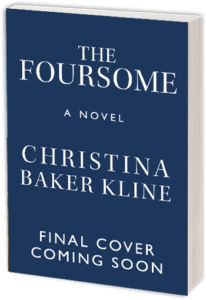
COMING MAY 2026: THE FOURSOME

A literary historical novel set in Civil War-era North Carolina, based on a true family story and told from the perspective of Sarah Bunker, one of two sisters who married Chang and Eng, the famous conjoined twins…learn more

Follow on Substack

Subscribe

Connect with Christina

Contact
  • Facebook
  • Instagram
  • Twitter

Copyright © 2025 Christina Baker Kline · Site design: Ilsa Brink