Sign up for Christina’s Newsletter

Christina Baker Kline

Author Website

  • Books
    • The Foursome
    • Please Don’t Lie
    • The Exiles
    • A Piece of the World
    • Orphan Train
      • Orphan Train Girl: The Young Readers’ Edition of Orphan Train
    • Other Novels
      • Bird in Hand
      • The Way Life Should Be
      • Desire Lines
      • Sweet Water
    • Nonfiction
      • Always Too Soon
      • About Face
      • Child of Mine
      • Room to Grow
      • The Conversation Begins
  • Events
  • NEWS
  • Other Writing
  • About
    • Bio
    • FAQs
    • Contact
    • Photos
  • Newsletter

May 6, 2010 By bakerkline

Can We Write about Our Kids?

"Adolescence," by Eddie Durrett (oil on canvas)

Novelist and clinical psychologist Lisa Gornick explores this question — and finds an answer she can live with:

Last year, I wrote an essay about a dark patch in the otherwise largely luminous life of my sixteen-year-old son. When the essay was finished, I showed it to him.

It was Sunday morning. My son put down the newspaper to read the pages I handed him, and I left him alone in the kitchen, busying myself with chores. I was prepared for him to say simply, “No.” Although I’d been discreet in the essay, with a focus on parenting issues rather than him, he was nonetheless a character. On these grounds alone, I imagined he might say “I don’t want you writing about me.” He might worry what his friends or teachers or coaches would think. On a deeper level, he might feel intruded upon: this was his life, his journey. So it was with surprise and relief that I heard his response when I came back into the kitchen.

“It’s fine, Mom.”

“Really? You’re not worried it could have some kind of negative impact on you?”

My son rolled his eyes. “Clear my dishes for me, okay? Luvya.”

A few hours later, we had a disagreement about something that now eludes me but was of the bread and butter variety of whether he should go to the movies with his ninety-nine hours of homework still ahead.

“What right do you have to tell me what to do?” my son snapped. “You’re going to exploit me with that essay.””

I froze. What? the injured parent in me wanted to retort. You told me it was fine. You told me you had no problems with it.

Yes, the observer in me said: here is the truth of what he feels.

Perhaps you are thinking that with these reflections about how I decided not to publish an essay about my son, I am doing precisely what I disavow: writing publicly about him here. But there is, I think, a qualitative difference. My son, in these paragraphs, is what Forster called a “flat” character, defined by one or two traits. Other than the blandest, most stereotypical facts, I have not revealed anything about him.

For many years, I worked as a psychotherapist as well as a writer. During that time, I faced a similar dilemma. Whereas it was clear that patient confidentiality had to be maintained, what about writing about anonymous “case material” in the service of training and theoretical development? Every clinician has to resolve this conflict in his or her own way; as with raising children, there are myriad wrong roads, but no one right road. The road that I chose was not to write about my patients. I feared that the very act of thinking about what transpired with my patients as “material” for something I might be writing would alter the interaction, my attention divided between observing with curiosity so as to better understand my patient and consciously or unconsciously intervening in ways that would advance the story I was trying to tell.

With the essay I showed my son, it became clear that assent and dissent were bundled together. How could he open up to me if he worried that what he told me would end up in print? How could I exhort my son to be careful about the footprints he leaves on Facebook and in texts and emails, then turn around and publish something that later might be taken out of context and used against him in the infinite cyberspace where nothing ever disappears? How could my son feel loved if I used his story — which I know through the privilege of being his parent — for my own purposes?

Sanctimonious as it sounds, we owe our children our sacred trust. We can tell sweet stories about our children when they are babes and young children, but when as adolescents they sail off into what Michael Chabon gorgeously calls “the red light and velvet darkness,” we need to allow them that journey without fear that we will intrude ourselves unnecessarily or force them to live forevermore with their private voyage documented by us. Equally important, our children need to believe that we will let them sail away — that central as they are to us, we don’t need them to be the subject of our work. We can find our own material.

Lisa Gornick is the author of a novel, A Private Sorcery (Algonquin), short stories in various literary quarterlies (including a Best American Short Stories distinguished story of the year), and numerous academic articles.  She has a PhD in clinical psychology from Yale and is a graduate of the writing program at NYU, and is currently working on a collection of stories and a novel.

Add to FacebookAdd to DiggAdd to Del.icio.usAdd to StumbleuponAdd to RedditAdd to BlinklistAdd to TwitterAdd to TechnoratiAdd to Yahoo BuzzAdd to Newsvine

Filed Under: Blog Tagged With: A Private Sorcery, creative process, Inspiration, Lisa Gornick, Michael Chabon, Real Life, writing about your kids

May 2, 2010 By bakerkline

Five Ways to Jumpstart a Revision

A page from James Michener's rough draft of his novel The Covenant

This week I’m working on revising fiction with my undergraduate and grad students at Fordham. Below are some of the tips and ideas I’ve collected over the years that my students find most useful. (Next week I’ll talk in this space about the best exercises I’ve found for revising nonfiction.)

1) First, answer these questions:
What is my story about? Another way of saying this is: What is the pattern of change? Once this pattern is clear, you can check your draft to make sure you’ve included all the crucial moments of discovery and decision. Is there a crisis action?

2) Write three new openings. Each one should be at least a paragraph long. In each opening, start from a different moment in the story – maybe even at the very end.

3) For a dialogue scene in your story/novel: go back and ground it in the physical world by adding:
a. two actions or gestures that will help us see another important character
b. two physical descriptions of another character that will help us visualize him or her
c. two setting or atmosphere details that will help put readers in the scene

4) The dramatic elements of a story/novel – crisis, power shifts, emotional connections, and withdrawals – are often mirrored on a smaller scale within a scene.

Try analyzing one of your own scenes, asking yourself:
a. What kind of power does each of the main characters have?
b. Where is there at least one shift in power – or even a failed attempt to take power?
c. Where is there at least one moment of making or breaking the emotional connection between the characters? Does it raise the emotional temperature?
d. Is there a mini-crisis or turning point? Something that is said or done, however minor, after which things cannot go back to quite the way they were before?

5) Are your most important lines in direct dialogue, or summarized? Generally, these should be direct. Is information or idle chatter direct or summarized? Generally, these should be summarized. Revise to make sure that the most important moments are in direct dialogue.

Add to FacebookAdd to DiggAdd to Del.icio.usAdd to StumbleuponAdd to RedditAdd to BlinklistAdd to TwitterAdd to TechnoratiAdd to Yahoo BuzzAdd to Newsvine

Filed Under: Blog Tagged With: best-laid plans, creative process, fiction writing, James Michener, revising, revision, The Covenant, writing a novel

April 22, 2010 By bakerkline

Inside the Skin

“The older we get, the more … you realize there’s a whole range of things you will never do, of things and people you will never be.  As life becomes more and more limiting, there is something wonderful about being able to get inside the skin of people unlike yourself.”

— Lee Smith

Lee Smith is the author, most recently, of Mrs. Darcy and the Blue-Eyed Stranger

Add to FacebookAdd to DiggAdd to Del.icio.usAdd to StumbleuponAdd to RedditAdd to BlinklistAdd to TwitterAdd to TechnoratiAdd to Yahoo BuzzAdd to Newsvine

Filed Under: Blog Tagged With: creative process, fiction writing, Inspiration, Lee Smith, writing a novel

April 7, 2010 By bakerkline

Bi-Curious about Writing Fiction

This was never the way she planned — not her intention.  But journalist Cindy Schweich Handler wrote some fiction.  And she liked it.

I can’t remember a time when I didn’t want to be a writer. And since I was an avid reader of fiction as a kid, that meant being a novelist. I was in fourth grade when I wrote the vaguely titled “Castle of Things,” a blatant rip-off of “Alice in Wonderland.” A year later, I followed this up with “Queen Elizabeth Alive,” a “Bewitch”-inspired imagining of the Tudor ruler coming forward in time to hang with a grade-schooler who happened to be a lot like me. Writing for fun was … well, a lot of fun.

As I neared college-age, though, and considered how I would eventually make a living, I decided to become a journalist. That way, I reasoned, I could consistently get paid to write, I’d experience the relatively instant gratification of seeing my work and byline in print, and I would learn about a variety of subjects while covering them. I ended up working in magazines for years and freelancing for them after starting a family, and I never regretted the decision.

That is, until years later, when I wearied of reading the final, heavily edited versions of my service pieces—those articles in women’s and parenting magazines that tell you, in strictly formatted, nearly style-free prose, how to raise a child, budget your time, or achieve any number of perennially visited objectives. Writing them paid well, and (before the market crash and digital revolution smacked the publishing industry) there was a demand for them. But I started to feel as if my writing was merely meat fed into a hamburger grinder. And it wasn’t satisfying.

It was at this point that I started hungering for a more enriching writing experience. Coincidentally, a friend who’s a successful fiction writer suggested that I attend a class for beginning novelists she was teaching in her home. With some trepidation, I took her up on her offer.

That was four years ago. Since then, I’m gratified to report, I’ve written one novel and nearly completed a second, scored a world-class agent whom I adore, and I continue to meet with my extremely supportive fellow students of fiction. (I wish I could say I’ve sold my first novel, but despite three near-misses, I haven’t. Yet.) What I’ve learned during this time, with the guidance of my excellent teacher, is that the leap from nonfiction to fiction is less about blind faith, and more about understanding what all good writing has in common. Among the observations I’ve internalized are:

  • What Stephen King observed in his wonderful guide, On Writing, is true:  the magic of writing lies in successfully transferring a thought as it exists in your head into someone else’s. That is, when you visualize an image or scene, no matter what genre you’re writing in, you need to convey it exactly the way you see it, as economically as possible for maximum clarity.
  • Always keep your theme in mind. This is true whether you’re writing an essay on, say, why cell phones are evil, or a novel about a woman who discovers that her dead son was a sperm donor (my current project). Your writing is an argument, basically, and you’re trying to persuade your audience of something. With non-fiction, of course, you do your research upfront, whereas with fiction, it’s an ongoing process of discovery that takes place in the course of the writing itself. But in both instances, there’s a lot of trial and error before it’s clear what’s extraneous and what gets you closer to your goal. The longer the work, the more arduous this process will be. Which brings me to:
  • Trust the process. A short story might be comparable in length to a long non-fiction piece, but a commercial novel probably averages around 90,000 words. It can take so long to write that first draft that it’s easy to look at the thing, after a year or two of effort, and think, “Wow, this sucks.” Maybe it’s helpful to remember an analogy I read by an online writer. The first draft, he said, is akin to your kitchen sink after you’ve washed off the Thanksgiving dishes: After a thorough going-over, there are bits and pieces that survive, and you go on from there. Sounds harsh — but it’s not, because that realization makes it easier to continue, and the next draft will work itself out a lot faster.

Commercially, fiction is harder to sell, since fewer people read it. And in my experience, it requires more focus and attention to write, because it’s more personal. But in that respect, I find it more rewarding. And not a mysterioso, you’re-born-with-it-or-you’re-not phenomenon, but rather a process that can be learned, and savored.

Cindy Schweich Handler is a former magazine editor whose nonfiction has been published in The New York Times, Newsweek, O: The Oprah Magazine, Redbook, and many other print and online publications.  She writes about politics for The Huffington Post and is currently at work on her second novel, Disaster Recovery.

Add to FacebookAdd to DiggAdd to Del.icio.usAdd to StumbleuponAdd to RedditAdd to BlinklistAdd to TwitterAdd to TechnoratiAdd to Yahoo BuzzAdd to Newsvine

Filed Under: Guest Blogs, The Creative Process Tagged With: bi-curious, creative process, fiction writing, Inspiration, Newsweek, nonfiction, O: The Oprah Magazine, Redbook, Stephen King, The Huffington Post, The New York Times, writing a novel

April 1, 2010 By bakerkline

Reinventing the Novel

My friend Pamela Redmond Satran is a novelist, New York Times bestselling author, ninja web developer, and one-time magazine editor. Now she’s embarking on something entirely new:

Two things inspired me to write my new novel, Ho Springs, online, day by day, instead of writing it for a conventional publisher the way I did my first five novels.  Well, two things that are easy to explain.

The first was my husband, after watching the DVD of American Gangster, telling me he found the movie good enough but ultimately unsatisfying.   “It was a movie,” he explained, “so you knew from the beginning that everything really interesting was going to happen to Denzel Washington and Russell Crowe, and that it was going to build to this big climax at the end.”

That was the problem with conventional novels too, I thought.  They were predictable, limited and finite in form and scope.  Wouldn’t it be more interesting to write – and read – a novel that unfolded in a way that was both more leisurely and more compelling, the way TV shows like Mad Men and The Wire did?

The second influence was creating my blog How Not To Act Old after no one wanted to buy it as a magazine article, turning it into a book and making that book a New York Times bestseller.  That experience taught me that not only was it more fun and exciting to write without an editor between me and my readers, but my own creative instincts were often better than those of the traditional publishing world.

My experience writing five “real” novels and developing two big websites – I’m also a partner in the site nameberry.com, based on the ten baby name books I coauthored with Linda Rosenkrantz – put me in a unique position to create a piece of digital fiction that would combine the best of both worlds.  Rather than writing episodic pieces, I wanted to create a novel that included such conventional elements as a character-driven story, causally-related scenes, and an extended plot that would unspool in unexpected ways, but in a form that could exist only online.

My blueprint was a television series I’d created (but hadn’t sold) a few years ago, set in a fictionalized version of Hot Springs, Arkansas.   A place-based story was perfect for an online novel, I thought, offering a wide range of characters and settings and the potential for stories to expand in an unlimited number of directions.

The big problem was the name, Hot Springs.  The url hotsprings.com was obviously taken.  And then, driving one day, I had a eureka moment: hosprings.com, or Ho Springs.  I was so excited I did a u-turn and drove right back home to track down and reserve the name.

From that moment on, I knew the idea was right.  I wanted to create the site in wordpress, so it would be free and I’d have total creative control, but I couldn’t find a theme that included all the elements – videos, graphic windows that opened to places in the town and story, room for a big block of text.

I needed a designer – or, as it turned out, three designers.  I had a vision for a logo that would look like all the letters were in realistic flames, with the T up in smoke, which called for a photoshop expert.  My budget was zero, or as close to that as I could get.  I was lucky to find Katie Mancinewho built me an amazing logo.

The only problem was, Katie said, she couldn’t design a good-looking site to go with that logo.  Rather, she sold me on the concept “Vintage Tourist Guide,” which was great, but in the end that didn’t work out either.  Katie finally ended up with the design you see now on the site, and my friend Dennis Tobenski, who’s really a composer, made the whole thing dance.  Combined cost: under $1500, and several hundred gray hairs.

Weeks and then months were passing, during which I found a musician, Matt Michael, to write and record two original songs for the site, and also drafted several writer friends to create independent blogs from the characters’ viewpoints.  But the only writing I was doing during this time was putting together the static content describing the characters and the settings.

A novelist creating a work for the web is not, then, just a writer, but a designer, a logician, a manager, a tech guy, a producer.

And then, once you do start writing – or at least, once I did – the process is different too.  I suppose you could write one long story and parcel it out day by day, but the whole point for me was to create it as I went along, publish it immediately, to swing by the crook of my knees with no net below.

That’s the only way to feel the wind on your face, which is something you rarely feel when you’re writing a conventional novel, one that won’t be published for two years or maybe five, that no other person may even see for all that time, or maybe ever.  Writing all my other novels, I’m a big planner, outlining the big story and even each individual scene, revising and reimagining, working on the same piece until I lose sight of where I started and when it will ever end.

With Ho Springs, I get up in the morning, having a vague sense of what I’m going to write about, from which character’s viewpoint, but letting myself be swayed by whatever I encounter between brushing my teeth and opening my computer.  A David Sedaris story in an old New Yorker got one of my characters beaten one morning; an email from a writer friend inspired me to make a video of myself talking about what had influenced me that day.

It wasn’t until after I launched the site that I looked at what anyone else was doing in this arena.  The only site I’ve found that’s similar is All’s Fair in Love and War, Texas, by the brilliant Amber Simmons, which makes me believe God saved me from that Vintage Tourist Guide idea.  Penguin’s We Tell Stories is brilliant, but much more expensively and expertly produced than I could hope for, and more limited in writerly ambition.  Visually-based web fictions that blow me away include Unknown Territories and The Flat on Dreaming Methods.  But they’re movies, really, not novels.

Where is this project going?  My ideal vision is that someone like HBO or a publisher with a production arm will buy it and produce it as a multimedia property, with a television and a web and a book element working together.  I believe that this is how fiction will be written and published in the future, that this will become the new standard long after anyone remembers that Ho Springs ever existed.

Or I may take it down tomorrow and build something else.  The excitement is in creating something.  Holding it in your hands, or staring at it on a screen, holds so much less satisfaction.

Pamela’s personal site may be found here; with Ho Springs just around the corner.  This post originally appeared on the site Noveir.

Add to FacebookAdd to DiggAdd to Del.icio.usAdd to StumbleuponAdd to RedditAdd to BlinklistAdd to TwitterAdd to TechnoratiAdd to Yahoo BuzzAdd to Newsvine

Filed Under: Guest Blogs, The Writing Biz Tagged With: creative process, fiction writing, Ho Springs, How Not to Act Old, Inspiration, Pamela Redmond Satran

  • « Previous Page
  • 1
  • 2
  • 3
  • 4
  • 5
  • 6
  • …
  • 23
  • Next Page »

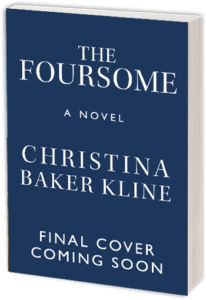
COMING MAY 2026: THE FOURSOME

A literary historical novel set in Civil War-era North Carolina, based on a true family story and told from the perspective of Sarah Bunker, one of two sisters who married Chang and Eng, the famous conjoined twins…learn more

Follow on Substack

Subscribe

Connect with Christina

Contact
  • Facebook
  • Instagram
  • Twitter

Copyright © 2026 Christina Baker Kline · Site design: Ilsa Brink