Sign up for Christina’s Newsletter

Christina Baker Kline

Author Website

  • Books
    • The Foursome
    • Please Don’t Lie
    • The Exiles
    • A Piece of the World
    • Orphan Train
      • Orphan Train Girl: The Young Readers’ Edition of Orphan Train
    • Other Novels
      • Bird in Hand
      • The Way Life Should Be
      • Desire Lines
      • Sweet Water
    • Nonfiction
      • Always Too Soon
      • About Face
      • Child of Mine
      • Room to Grow
      • The Conversation Begins
  • Events
  • NEWS
  • Other Writing
  • About
    • Bio
    • FAQs
    • Contact
    • Photos
  • Newsletter

July 20, 2009 By bakerkline

Guest Blog: Marina Budhos on Endings & Best-Laid Plans

Author Marina Budhos writes about finishing her latest novel:
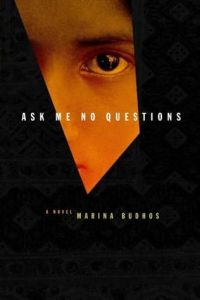
ask me no questionsMy plan this summer was to force myself to write to the end of my historical novel, a book I have been working on for a number of years while I completed other projects.  Summer is my best writing time, when I am home, puttering around my house, the children off in camp, with no teaching responsibilities fracturing my attention. My aim, then, was to bring this all to a head, especially since the end of this novel is meant to be very dramatic and also violent, a crescendo of so many parts, voices, themes.  And yet even the most thoughtful of plans have a way of upending.

Set against the crumbling backdrop of late 19th century British Empire, my novel is about the unlikely friendship between an Indian woman and English woman—a bond that is threatened when they move from India to a Caribbean sugar estate, and violence starts to sweep the plantation.  It is an ambitious book, as I am juggling multiple points of view along with foreign and historic settings, politics, even technical information about sugar growing that I must make vivid to a modern reader.

After building up this world over a number of years, I anticipated that the challenge of writing the ending would be that it was like a tidal wave that is slowly mounting, ready to curl; and yet one would still need to pay attention to the water particles.  One would still have to build scene by scene, moment by moment, even as you were aware of these huge forces compelling the narrative forward.

To my surprise, the ending, the denouement, a series of fast-paced acts, is coming swifter than I expected.  There was no deep rumble in my consciousness, no mounting wave of creativity.  Mostly I find myself sketching out plot—one bad event and bad decision leading to another, and hopefully mounting to tragedy.  This is somehow vaguely disappointing, and runs counter to my more romantic vision of the summer’s work.  But perhaps this is what I need to do—work more as an architect, more cerebrally— setting down the structure.  Then the deeper, unconscious swells will emerge.

This is what I tell myself now as I write event-driven material, pushing toward the end.  Sometimes we need to ride the waves.  And sometimes we must navigate with a plot compass, trusting that instinct and fever dreams will return.

Marina Budhos writes adult and young adult fiction and nonfiction.  Her recent novel, Ask Me No Questions, won the James Cook Teen Book Award and was an ALA Best Book.  Her prior books include House of Waiting, The Professor of Light, and Remix: Conversations with Immigrant Teenagers.  In 2010, she will publish a YA novel, Tell Us We’re Home, and Sugar Changed the World, co-authored with her husband, Marc Aronson.  She teaches creative writing, literature, and Asian Studies at William Paterson University, and can be reached at www.marinabudhos.com

Filed Under: Guest Blogs, The Creative Process Tagged With: Ask Me No Questions, best-laid plans, creative process, fiction writing, finishing a novel, historical novel, Marc Aronson, Marina Budhos, Thoughts, William Paterson University, writing a novel

July 14, 2009 By bakerkline

On Not Knowing What the Hell You’re Doing

Some words of encouragement from two writers who seem to know exactly what they’re doing:

headlights“In beginning a story I know nothing at all: surely not where I am going, and hardly at all how to get there.” — Cynthia Ozick
“Writing a novel is like driving across country at night.  You can only see as far as the headlights, but you can make the whole trip that way.” — E. L. Doctorow

Filed Under: The Creative Process Tagged With: creative process, Cynthia Ozick, Discipline, E. L. Doctorow, fiction writing, Inspiration, short stories, Thoughts, Writing, writing a novel

July 13, 2009 By bakerkline

Guest Blog: Lisa Romeo on Dealing with Rejection

Literary essayist, editor, and writing coach Lisa Romeo writes:

Writers tend to think of rejection as something done to us by outsiders. We paint it as something we cannot control, as something to be feared and avoided, when in reality, rejection begins with ourselves.  Early on.rejection-blog

Even before we start writing, we reject our own creativity.  We dismiss our ideas, our skills, our imagination before we give them a chance to work themselves out on the page. We squash the excitement that might otherwise go along with beginning a new project.  We self-censor before we have words to delete.

Pre-writing — that period from the moment an idea first enters our consciousness until we put words on paper — takes many forms.  It can be notes scribbled on the edges of a calendar, a photo we keep fingering, dialogue that springs into our minds just before we wake in the morning.  It is the sometimes mysterious, occasionally frustrating, often exciting or scary time when we are reading, thinking, imagining, and mentally tinkering with a writing project.

It can also be debilitating.  Because rejection is a big part of pre-writing.  Not the formal rejection associated with a “no thanks” email notification, but rejection that comes from having one-sided conversations with ourselves:

… Nah, it’s been done … so-and-so did it better than I could … it’s silly (stupid, dumb, derivative, old, weird, unusual, boring) … no one but me would want to read it … I don’t have the skill/craftsmanship/knowledge to write it the way it should be done … I’ve never written in this genre before … who would care? … I’ve written about this too many times already … I’ve never written about this before … my agent/last editor/mentor/MFA adviser/writing buddies won’t like it … this will take too long  … the reviewers will hate it … what makes me think I can pull this off? … I’m not the right writer for this … it doesn’t fit in with the rest of my writing career or goals … I’ll never earn any money with this … I’m not even sure how to begin ….

I once thought of myself as a workmanlike writer of the light, straightforward personal essay:  good enough for some markets but not nearly good enough for certain literary venues.  Then one day, swimming in grief and loss and angry with the world, I sat down and started what turned out to be a long, braided, literary essay. I’ve written and published many since.  So much for all the self-rejection banter previously bouncing around my brain.

We need to think of rejection as something organic to the writing process, something we can manage.  Popular advice to writers on handling rejection runs along the lines of growing a tough skin, ignoring it and moving on, learning from it, and – if you like symbolism and ritual – doing something tangible like printing out and lining the hamster cage with all the “no thanks” emails. Many writers have talked about the positive impetus provided by agent or editor rejections, an “I’ll show them” mindset.

But what about self-rejection?  Try this:  the next time you contemplate a new writing project, instead of entertaining that idea in a hostile atmosphere (see list above, and add your own mean-spirited recriminations), why don’t you consciously nurture a different kind of mental environment – an incubator of sorts, a place where ideas come to be nurtured and not nixed?

This shift in perspective can help us put rejection from the outside into a different context. If we recognize that we are constantly in a push-pull with rejection, that rejection is something inherent in and inextricable from the work we do, that it is something we can positively control during a major segment of the writing process, then the whole specter of rejection with a capital ‘R’ loses its power.  Imagine what could happen with your writing if only you stop treating yourself with the kind of harsh, frequent, and final ‘No’s’ that come from the outside.

Go. Write. Do not reject.

Lisa Romeo has been published in the New York Times, O-The Oprah Magazine, literary journals, and several essay anthologies.  A freelance editor and writing instructor, she is also at work on a memoir of linked essays. Her blog, Lisa Romeo Writes, has more on topics of interest to writers.

Filed Under: Guest Blogs, The Creative Process Tagged With: beginning, creative process, fiction writing, ideas, Inspiration, Lisa Romeo, Lisa Romeo Writes, rejection, Writing

July 9, 2009 By bakerkline

Writing Tip # 6: Mine Your Own Material

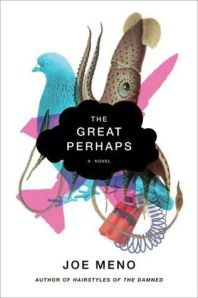
Joe Meno's latest novel“For me, almost everything starts off as a short story,” the novelist and short story writer Joe Meno says in the June 30th issue of One Story magazine.  “All of my novels have been built around material that’s been explored or published as short stories, because it forces me to get to the character and action quickly, and helps me figure out what the story is actually about. I usually write a few short stories and realize that they feature similar questions or characters and decide that there’s a novel there somewhere.”
Meno adds, “To write one good short story, you’re probably going to write about nine bad ones. You have to enjoy the mistakes and failures and misfires and realize writing is all about one thing: trial and error.”

Filed Under: Writing Tips Tagged With: creative process, fiction writing, Inspiration, Joe Meno, One Story, short stories, The Great Perhaps, writing a novel

July 8, 2009 By bakerkline

Breath on the Glass

When I’m working on a novel, ideas rise up at random times from the murk of my subconscious like pronouncements in a Magic 8 ball.  If I don’t write them down right away, these ephemeral thoughts can fade and disappear. FoggyMirror

Driving my 14-year-old son, Hayden, to summer camp in Maine on Sunday, I put him to work as both a DJ and a scribe. (After all, I was the chauffeur.)  He selected a Green Day song from his new i-Pod touch (an 8th-grade graduation present from an indulgent grandmother), then I was allowed a song by The Fray; he picked Ben Folds, I chose Dar Williams.  Every now and then I asked him to open my writing journal – a wire-bound, college-ruled notebook with a green plastic cover – and scribble a line:

Sea air in Galway

Fiction chooses the writer

Breath on the glass

Sea air in Galway. The Maine coastline in similar, in many ways, to the west coast of Ireland, 2500 miles to the east. With this note I was reminding myself to pay particular attention to the sensory details; I thought I might be able to use these impressions in a scene in my novel.

Fiction chooses the writer. This idea for a blog post sprung from an ongoing conversation with several novelists about how and why people start writing fiction.

Breath on the glass. As we drove in the rain, I saw Hayden turn his head to look out the passenger window at two guys on a motorcycle, both without helmets, grimacing into the downpour. Hayden’s breath fogged the glass. When he turned back to me, saying, “Wow, Mom, what were they thinking?” – I glanced over again, and saw that his breath had already evaporated.  And the guys on the bike were gone.

That’s how it is with these fleeting observations, and why I asked Hayden to keep a pen handy and the notebook on his lap. And he was happy to do it – as long as he could listen to Metallica and I promised to get him to Bar Harbor on time.

Filed Under: Inspiration, Real Life Tagged With: creative process, fiction writing, five senses, Inspiration, Ireland, Magic 8 ball, Maine, Thoughts, Writing, writing a novel

  • « Previous Page
  • 1
  • …
  • 11
  • 12
  • 13
  • 14
  • 15
  • 16
  • Next Page »

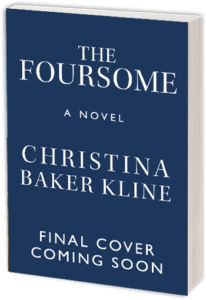
COMING MAY 2026: THE FOURSOME

A literary historical novel set in Civil War-era North Carolina, based on a true family story and told from the perspective of Sarah Bunker, one of two sisters who married Chang and Eng, the famous conjoined twins…learn more

Follow on Substack

Subscribe

Connect with Christina

Contact
  • Facebook
  • Instagram
  • Twitter

Copyright © 2026 Christina Baker Kline · Site design: Ilsa Brink