Sign up for Christina’s Newsletter

Christina Baker Kline

Author Website

  • Books
    • The Foursome
    • Please Don’t Lie
    • The Exiles
    • A Piece of the World
    • Orphan Train
      • Orphan Train Girl: The Young Readers’ Edition of Orphan Train
    • Other Novels
      • Bird in Hand
      • The Way Life Should Be
      • Desire Lines
      • Sweet Water
    • Nonfiction
      • Always Too Soon
      • About Face
      • Child of Mine
      • Room to Grow
      • The Conversation Begins
  • Events
  • NEWS
  • Other Writing
  • About
    • Bio
    • FAQs
    • Contact
    • Photos
  • Newsletter

January 6, 2010 By bakerkline

On Pushing Through to Greatness

Beginning a story or a novel, Alice Munro says, is the easy part …

“Endings are another matter.  When I’ve shaped the story in my head, before starting to put it on paper, it has, of course, an ending.  Often this ending will stay in place right through the first draft.  Sometimes it stays in place for good.  Sometimes not.  The story, in the first draft, has put on rough but adequate clothes, it is “finished” and might be thought to need no more than a lot of technical adjustments, some tightening here and expanding there, and the slipping in of some telling dialogue and chopping away of flabby modifiers.  It’s then, in fact, that the story is in the greatest danger of losing its life, of appearing so hopelessly misbegotten that my only relief comes from abandoning it.  It doesn’t do enough.  It does what I intended, but it turns out that my intention was all wrong.  Quite often I decide to give up on it.  (This was the point at which, in my early days as a writer, I did just chuck everything out and get started on something absolutely new.) And now that the story is free from my controlling hand a change in direction may occur.  I can’t ever be sure this will happen, and there are bad times, though I should be used to them.  I’m no good at letting go, I am thrifty and tenacious now, no spendthrift and addict of fresh starts as in my youth.  I go around glum and preoccupied, trying to think of ways to fix the problem.  Usually the right way pops up in the middle of this. A big relief, then.  Renewed energy.  Resurrection.  Except that it isn’t the right way.  Maybe a way to the right way. Now I write pages and pages I’ll have to discard.  New angles are introduced, minor characters brought center stage, lively and satisfying scenes are written, and it’s all a mistake.  Out they go.  But by this time I’m on the track, there’s no backing out.  I know so much more than I did, I know what I want to happen and where I want to end up and I just have to keep trying till I find the best way of getting there.”

From the Introduction to Selected Stories.

Add to FacebookAdd to DiggAdd to Del.icio.usAdd to StumbleuponAdd to RedditAdd to BlinklistAdd to TwitterAdd to TechnoratiAdd to Yahoo BuzzAdd to Newsvine

Filed Under: Inspiration Tagged With: Alice Munro, beginning, best-laid plans, creative process, Discipline, fiction writing, Inspiration, revising, short stories, writing a novel

December 30, 2009 By bakerkline

New Year’s Resolution: Write that Book! (12 Great Tips)

Just in time for the new year, the fabulous C. M. Mayo shares her strategies for writing – and finishing – your book:

Last spring my latest novel, The Last Prince of the Mexican Empire, was published. This was not a go-to-the-cabin-by-the-lake-and-churn-it-out kind of experience.  No, my novel is a nearly 500-page historical epic based on extensive original research, every line of prose polished to shine like the lighthouse in Alexandria, with more characters than you could pack into a Starbuck’s.  Is it any good?  You be the judge.   What I know for sure is that over the more than seven years it took me to write it, I hung in there.  And eventually I finished.  And then I sold it.  How did I do it?

Herewith one dozen tips:

# 1. Before you begin, state your intentions
It’s important to write them down, stating them specifically, and in present tense.  For example, I write a novel that… you fill in the blanks.  I don’t mean, write down what your novel is about; you might have to fiddle around for a few hundred pages before you figure that out.  But ask yourself, do you want to write a novel that places you among the immortal literary stars?  Or achieve a modest success that might help you get a teaching job?  Or do you just watch to check “publish book” off your “to-do” list?  And how much time and effort are you willing to put into the enterprise of finding a publisher?  It might be easy to find one, or it might take a few years, a bundle of postage, and a mountain of paperwork.  Not to mention heartbreak.  Whatever your path may be, it will be more difficult if you have not clearly identified and acknowledged your intentions.

# 2. Be here now
If you are regretting the past (“I should have started sooner …”) or worrying about the future (“Will they laugh at me?”), you are not writing. And if you are waxing nostalgic about the past (“How wonderful that they liked my short story!”) or daydreaming about the future (“My agent will sell it to the movies for a million dollars!”), you are not writing.  To get the book done, you have to be writing.

# 3. Treat yourself kindly
If you do, your artist self will show up more frequently, and play more freely.  If you bully and criticize yourself, you can sure you’ll end up blocked.

# 4. Keep a pen and something to write on with you at all times
When you’re out and about – driving, at the dentist’s, walking the dog – you just might capture the perfect fragment of dialogue, or hear the opening line of the next chapter in your head.  I don’t recommend those lovely bound “writer’s” journals because they are too big to carry around easily.  I use Moleskines, index cards and sometimes even a small pack of Post-Its.

# 5. When you are writing, always keep your pen resting lightly on the page (if at the computer, keep your fingers on the keyboard)
If you sit back in your chair and lift your hand to your chin, as so many people do, your body is signalizing to your writing self, no, I am not ready. This can contribute to a bad case of block. It’s such a simple thing to always keep your pen on the page, yet very effective.

# 6. Music helps
I find that drifty, New-Agey music in a minor key works best for bringing on the Muses. There is a large literature about music and creativity. I offer a couple of blog posts (with links for more information) on this subject here and here.

# 7. Mise-en-place
This is a French term chefs use that means, more or less, everything in its place. Briefly: start clean, then assemble utensils and equipment; then assemble all ingredients; then wash, cut, chop; then cook. Doing things out of order makes the whole process take longer; the product often come out mediocre (or ruined), and can cause needless stress for the cook and the diners.

This explains why many of the most productive writers write in coffee shops and the rest of them do a lot of housecleaning, n’est-ce pas? It’s not the easiest thing to write a novel when your desk is cluttered with phone bills and stacks of unanswered letters, the dog needs to be walked in five minutes, and, by the way, you’ve left the phone on and your Facebook page tab open. There are people who can work amongst piles and general chaos, but I am not one of them, and I cannot recommend it.

# 8. Learn from other novels
The novels you have already read and love can be your best teachers. But don’t read them passively, for entertainment; neither should you read as an English major might, ferreting out “interpretations.” Read them as a craftsperson. How does Chekhov handle endings? How does Austen handle transitions? How does Hemingway describe food and clothing? Any question you have about your writing conundrums is probably answered, right there, in the books you already have on your shelf. And continue to read, and read actively, with a notebook and pen.

# 9. Learn from books on creativity
Why reinvent the wheel? Whatever your problem (block, confusion, utter despair), you can be sure another writer (or artist) has wrestled with it and has something helpful to say about it in a book. The cost of a book is lentils compared to that of needlessly painful experiences. You’ll find my list of recommended books here.

# 10. Get feedback on your writing
From a writers group, a writing teacher, a freelance editor, workshop participants. You’ll find my 10 tips to get the most out of your writing workshop here.

(For some years I was in a writing group with novelist Leslie Pietrzyk; read what she has to say about it here.)

# 11. Get to know other writers
This is how I found my writers group (thanks, Richard Peabody!), my publisher (thanks, Nancy Zafris!), and my agent (thanks, Dawn Marano!).

Go forth with a spirit of generosity. You never know who will help you, and you might be more helpful to someone else than you realize. So go to readings (they are almost all free!); take workshops, attend conferences, and stay in touch.

# 12. Consistent Resilient Action
Again, why reinvent the wheel? Writers are not the only ones who grapple with their emotions in the face of rejection, failure, criticism, and indifference. There is a large literature on sports psychology. The book I recommend most highly is The Mental Edge by Kenneth Baum. Consistent Resilient Action (CRA) is what sports champions do:  Dropped the ball?  Well, pick it up.  So your first draft is crap?  Write a new one.  An agent rejected you?  Send your manuscript to the next one.  Take a workshop, get feedback, re-read Proust, go write a poem— and so on.  In response to anything negative, instead of wasting your energy in anger, it is crucial to take a positive step, however small, and immediately.

P.S. Many more resources for you here.

And good wishes.

Filed Under: Guest Blogs, Writing Tips Tagged With: C.M. Mayo, creative process, Discipline, fiction writing, Inspiration, Kenneth Baum, Moleskine, The Last Prince of the Mexican Empire, The Mental Edge, writing a novel, Writing Tips

December 26, 2009 By bakerkline

“The Vertical Motion of Consciousness”

In which Annie Dillard articulates the seemingly inexpressible, discussing what she likes about writing fiction:

“The interior life is in constant vertical motion; consciousness runs up and down the scales every hour like a slide trombone.  It dreams down below; it notices up above; and it notices itself, too, and its own alertness.  The vertical motion of consciousness, from inside to outside to back, interests me.” (from To Fashion a Text)

Filed Under: The Creative Process Tagged With: Annie Dillard, character, creative process, fiction writing, Inspiration, Thoughts

December 23, 2009 By bakerkline

“Christmas,” Out of Print

A beloved book from my childhood inspired – and continues to inspire – a family tradition:

When I was growing up, the oldest of four girls in a small town in Maine, we didn’t have much money. My parents are both Southern – my mother is from North Carolina, my father from Georgia – and it was a long way to visit relatives. So we often spent Christmases on our own, far from extended family.

My father was a young professor, and until I was about 10 my mother stayed home with us. A skilled seamstress, she made ornaments out of felt from geometric patterns, and we girls made our own handmade contributions for the tree. Like many families, we gathered around the tree on Christmas Eve and read favorite stories, drank hot chocolate, and strung popcorn. But the most important part of our ritual was the reading of Dick Bruna’s Christmas.

On a dark night long ago, and in a faraway country, shepherds kept watch over their sheep. Suddenly a light so bright and beautiful shone upon them. The shepherds thought the new day was dawning. But that was not so. Bruno’s book pares the story down to its basics: Mary, Joseph, the baby, the barn, several sheep and shepherds, the wise men, some angels, and the North Star. Characterized by bright, simple, Scandinavian-inspired design – Christmas was originally published in 1963 in Amsterdam (and bought by my mother in England, where I was born, in 1964) – it’s probably the least overtly Christian rendering of the Nativity story you could imagine.

This simple book appealed to all of us in different ways. My baby sisters, Clara and Catherine, loved the brilliant colors. Cynthia and I liked the story. My parents appreciated the lack of dogma.

One year my father, who had learned carpentry as a teenager from his father, a house builder, decided to create a three-dimensional rendering of Bruna’s book. Closely adhering to the illustrations, my father built a crèche and all the figures out of wood. He and my mother lovingly sanded the rounded curves of the figures, the scalloped backs of the sheep, and then painted them in the vivid hues of the original, including the bright yellow North Star in a blue square of sky on the black interior of the barn. A white pipecleaner was the shepherd’s staff. Every year, this Nativity scene had pride of place on a table next to the Christmas tree.

One by one we daughters grew up and left home, eventually marrying and having families of our own. And over the past decade, my parents have been making Dick Bruna crèches for each daughter – near-exact replicas of the much-loved original.

The only problem was that we didn’t have copies of the book. It had gone out of print, and was completely unavailable (even on Ebay). And then, several holiday seasons ago, browsing in my local bookstore, I stumbled on a new edition. I couldn’t believe it: the familiar slim, long volume, about 11” x 6”, with its bright-yellow spine, the aqua cover with “Christmas” in white type and a white, line-drawn angel with yellow wings hovering above it, the crisp white paper saturated with color on one side. I ordered copies for all of us, so that each sister would have the story to go along with her crèche – including one for my parents, to display along with the tattered copy that had inspired our family ritual.

It is our children, now, who set up our crèches each year, play-acting with the figures and comparing the two-dimensional illustrations in the book to the figures on the table. And it is they who clamor for the annual tradition:  When the story was finished, the wise man with the white beard said, ‘Now let us go. We have a long journey home.’ Quietly the wise men left. The shepherds went home, too. And Mary and Joseph waved until they were out of sight.

This essay, in a slightly different form, originally appeared on Bookreporter.com.

Filed Under: Inspiration Tagged With: Bookreporter.com, Christmas, Dick Bruno, family tradition, Inspiration

December 21, 2009 By bakerkline

Words to Remember Amid the Madding Crowd

Two quotes from Robert Frost that seem particularly apt this time of year:

“There’s absolutely no reason for being rushed along with the rush.  Everybody should be free to go very slow…. What you want, what you’re hanging around in the world waiting for, is for something to occur to you.”   (March 21, 1954)

“But yield who will to their separation,

My object in living is to unite

My avocation and my vocation

As my two eyes make one in sight.

Only where love and need are one,

And the work is play for mortal stakes,

Is the deed ever really done

For Heaven and the future’s sakes.”

– Two Tramps in Mud Time, 1936

Filed Under: Inspiration Tagged With: "Two Tramps in Mud Time", best-laid plans, creative process, Inspiration, Real Life, Robert Frost

  • « Previous Page
  • 1
  • …
  • 6
  • 7
  • 8
  • 9
  • 10
  • …
  • 19
  • Next Page »

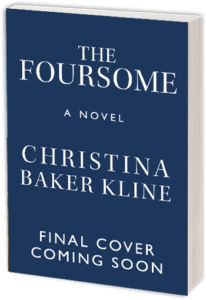
COMING MAY 2026: THE FOURSOME

A literary historical novel set in Civil War-era North Carolina, based on a true family story and told from the perspective of Sarah Bunker, one of two sisters who married Chang and Eng, the famous conjoined twins…learn more

Follow on Substack

Subscribe

Connect with Christina

Contact
  • Facebook
  • Instagram
  • Twitter

Copyright © 2026 Christina Baker Kline · Site design: Ilsa Brink