Sign up for Christina’s Newsletter

Christina Baker Kline

Author Website

  • Books
    • Please Don’t Lie
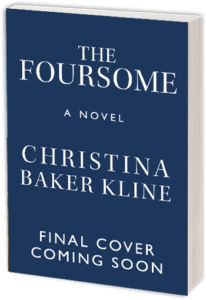
    • The Foursome
    • The Exiles
    • A Piece of the World
    • Orphan Train
      • Orphan Train Girl: The Young Readers’ Edition of Orphan Train
    • Other Novels
      • Bird in Hand
      • The Way Life Should Be
      • Desire Lines
      • Sweet Water
    • Nonfiction
      • Always Too Soon
      • About Face
      • Child of Mine
      • Room to Grow
      • The Conversation Begins
  • Events
  • NEWS
  • Other Writing
  • About
    • Bio
    • FAQs
    • Contact
    • Photos
  • Newsletter

May 20, 2010 By bakerkline

Can We Write About Our Kids? Further Reflections

The writer Lisa Gornick revisits this vexing question — and digs a little deeper:

A few weeks ago I posted on this site an account of writing — and ultimately deciding not to publish — an essay about my teenaged son. Most of the responses were questions about whether the caution I took with my son should extend to other categories: siblings, spouses, parents, nieces, nephews. These questions pushed me to reflect more deeply on various threads of my decision.

The first thread was a creepy feeling I’d had reading certain pieces, often beautifully crafted and insightful, about painful and disturbing events in an author’s child’s life. I understand the impulse to record these moments because I have it, too: the dramas we share with our kids are gripping and soaked in emotion. They matter to us; at times, they occlude everything else. As writers, we want to fashion these experiences into narratives that will help us both to understand our children and ourselves and to believe that we’ve made lemonade from our lemons.

But here’s the rub:  Good writing and good parenting aren’t always compatible. Good writing requires casting a cold eye on the other and on the self and then telling the truth about those observations. Good parenting requires casting a warm eye on our children and then employing tact and prudent boundaries about what we express. The creepy feeling arose when it felt as though the parent was riding shotgun to the writer.

The second thread concerns the notion of consent. Whereas all sentient writers — journalist, biographer, memoirist, novelist, poet — struggle with the impact of their work on those about whom they write (directly or indirectly), most do not believe that they require the consent of their subjects. To complicate matters further, in relationships with significant imbalances of power, consent cannot truly be granted: children cannot grant consent for sexual relations with adults; patients, compromised by transferences and vulnerabilities, cannot grant sexual consent to therapists. In these relationships, a sacred trust is conferred by the less powerful onto the more powerful. What implications does this have for the writer and her child?

These threads came together for me reading Michael Chabon‘s charming and at times philosophical collection of essays, Manhood for Amateurs, where we can find a model for how to write about our kids without — and there’s no other way to say it — harming them. Chabon’s children in these essays are the well-loved, self-assured kids that inhabit hip, urban, affluent communities. In “D.A.R.E.,” Chabon’s thirteen-year-old daughter apprehends listening to the Beatles that there are allusions to pot. Over dinner, she shyly raises the subject with her father, who, as the household expert on the Beatles and, his daughter now recognizes, on marijuana too, confirms her observation.

“Wait,” Chabon’s ten-year-old son demands. “You mean — have you actually smoked marijuana?” Ambushed, Chabon struggles to uphold the vow he and his wife made to be honest when this question inevitably arose.

By the close of the essay, we know that Chabon’s thirteen-year-old daughter is experiencing an explosion of understanding, but not if she dreams of being a dancer or has a crush on her science teacher. We know that his ten-year-old son has antennae up for everything, but not if he cried seeing the Katrina photographs or gloated when he got a home run. We know that his six-year-old daughter struggles with her daunting older sibs to be part of it all, but not if she has been reading since three or still sucks her thumb. If you put me in their respective Berkeley classrooms, I couldn’t pick out a one of them. The children, lively as they are, remain safely flat, their inner selves shielded, because Chabon’s essay is about himself: his attempt to uphold the pledge he’d made with his wife that when the time arrived, they would talk honestly with their children about drugs.

As parents, we have no problem sharing photos of our little kids with bubble bath beards or with their faces smeared with spaghetti sauce because adorable as these images are to us as parents, to an audience, they are clichés. They reveal nothing unique or private about the child. When our kids reach adolescence, sailing into the red light and velvet darkness, to use Chabon’s metaphor for crossing from innocence to knowingness, from simple childhood goodness to complex adolescent transgressiveness, they do not want their parents deciding which of their many faces to make public. They do not want their parents writing their travelogues.

Or do they? After the first blog post, I forwarded my son a link. A few days later, I asked if he’d taken a look. “Yeah. Nice, Mom,” he said with about as much enthusiasm as if I’d inquired how he liked his cereal. Serves me right, I thought. Teenaged boys have other things on their minds than their mother’s scribbles.

He headed down the hall to his room, calling over his shoulder, “You should have published that essay.”

Lisa Gornick is the author of a novel, A Private Sorcery (Algonquin), short stories in various literary quarterlies (including a Best American Short Stories distinguished story of the year), and numerous academic articles.  She has a PhD in clinical psychology from Yale and is a graduate of the writing program at NYU, and is currently working on a collection of stories and a novel.

Add to FacebookAdd to DiggAdd to Del.icio.usAdd to StumbleuponAdd to RedditAdd to BlinklistAdd to TwitterAdd to TechnoratiAdd to Yahoo BuzzAdd to Newsvine

Filed Under: Blog Tagged With: A Private Sorcery, creative process, Inspiration, Lisa Gornick, Manhood for Amateurs, Michael Chabon, Real Life, writing about your kids

May 6, 2010 By bakerkline

Can We Write about Our Kids?

"Adolescence," by Eddie Durrett (oil on canvas)

Novelist and clinical psychologist Lisa Gornick explores this question — and finds an answer she can live with:

Last year, I wrote an essay about a dark patch in the otherwise largely luminous life of my sixteen-year-old son. When the essay was finished, I showed it to him.

It was Sunday morning. My son put down the newspaper to read the pages I handed him, and I left him alone in the kitchen, busying myself with chores. I was prepared for him to say simply, “No.” Although I’d been discreet in the essay, with a focus on parenting issues rather than him, he was nonetheless a character. On these grounds alone, I imagined he might say “I don’t want you writing about me.” He might worry what his friends or teachers or coaches would think. On a deeper level, he might feel intruded upon: this was his life, his journey. So it was with surprise and relief that I heard his response when I came back into the kitchen.

“It’s fine, Mom.”

“Really? You’re not worried it could have some kind of negative impact on you?”

My son rolled his eyes. “Clear my dishes for me, okay? Luvya.”

A few hours later, we had a disagreement about something that now eludes me but was of the bread and butter variety of whether he should go to the movies with his ninety-nine hours of homework still ahead.

“What right do you have to tell me what to do?” my son snapped. “You’re going to exploit me with that essay.””

I froze. What? the injured parent in me wanted to retort. You told me it was fine. You told me you had no problems with it.

Yes, the observer in me said: here is the truth of what he feels.

Perhaps you are thinking that with these reflections about how I decided not to publish an essay about my son, I am doing precisely what I disavow: writing publicly about him here. But there is, I think, a qualitative difference. My son, in these paragraphs, is what Forster called a “flat” character, defined by one or two traits. Other than the blandest, most stereotypical facts, I have not revealed anything about him.

For many years, I worked as a psychotherapist as well as a writer. During that time, I faced a similar dilemma. Whereas it was clear that patient confidentiality had to be maintained, what about writing about anonymous “case material” in the service of training and theoretical development? Every clinician has to resolve this conflict in his or her own way; as with raising children, there are myriad wrong roads, but no one right road. The road that I chose was not to write about my patients. I feared that the very act of thinking about what transpired with my patients as “material” for something I might be writing would alter the interaction, my attention divided between observing with curiosity so as to better understand my patient and consciously or unconsciously intervening in ways that would advance the story I was trying to tell.

With the essay I showed my son, it became clear that assent and dissent were bundled together. How could he open up to me if he worried that what he told me would end up in print? How could I exhort my son to be careful about the footprints he leaves on Facebook and in texts and emails, then turn around and publish something that later might be taken out of context and used against him in the infinite cyberspace where nothing ever disappears? How could my son feel loved if I used his story — which I know through the privilege of being his parent — for my own purposes?

Sanctimonious as it sounds, we owe our children our sacred trust. We can tell sweet stories about our children when they are babes and young children, but when as adolescents they sail off into what Michael Chabon gorgeously calls “the red light and velvet darkness,” we need to allow them that journey without fear that we will intrude ourselves unnecessarily or force them to live forevermore with their private voyage documented by us. Equally important, our children need to believe that we will let them sail away — that central as they are to us, we don’t need them to be the subject of our work. We can find our own material.

Lisa Gornick is the author of a novel, A Private Sorcery (Algonquin), short stories in various literary quarterlies (including a Best American Short Stories distinguished story of the year), and numerous academic articles.  She has a PhD in clinical psychology from Yale and is a graduate of the writing program at NYU, and is currently working on a collection of stories and a novel.

Add to FacebookAdd to DiggAdd to Del.icio.usAdd to StumbleuponAdd to RedditAdd to BlinklistAdd to TwitterAdd to TechnoratiAdd to Yahoo BuzzAdd to Newsvine

Filed Under: Blog Tagged With: A Private Sorcery, creative process, Inspiration, Lisa Gornick, Michael Chabon, Real Life, writing about your kids

April 26, 2010 By bakerkline

Tap Dancing on the Beach

Hooray and congratulations!  It’s pub day for Debra Galant, whose new novel, Cars from a Marriage, “delivers wit, charm and characters who feel like next-door neighbors,” according to Booklist. So why does Debra feel like she’s tap dancing on the beach?

Politicians kiss babies. I take pictures of them chewing on postcards advertising my new novel, Cars from a Marriage.

I know this is neither dignified nor author-like.

Nor are a lot of things I’ve been doing in the six weeks leading up to my April 27 pub date.

I’ve become a regular in the Staples’ label aisle, because advertising postcards are nothing without labels reminding people that the book is “Perfect for Mother’s Day!” and that they might win a free iPod nano if they enter a contest by telling me their best story about love and cars.

I ambushed the New York International Auto Show in early April, handing out several hundred cards while my husband followed me around, camcorder in hand, to record my rejections Michael Moore style.

I’ve spend ungodly amounts of time on Facebook, and have searched every nook and cranny of the internet looking for every book blogger I can find and charm.

I’m doing this to keep my own spirits up because it appears that neither my publisher nor the book industry at large is particularly excited about the publication of my third novel.

My first two novels were proudly displayed at the front of Barnes & Noble stores all over the country. This one won’t be. B&N has only ordered 1,000.

It breaks my heart that a book that comes out barely two weeks before Mother’s Day – a novel that should really appeal to reading women – won’t be seen by the shoppers who might be looking for a present for their reading mothers and wives.

It breaks my heart that my parents, who were so excited by my first novel, have become so jaded by the bruising process of trying to hand-sell my books to their friends that they practically don’t want to ask anymore. And the few friends they do ask will most likely march into a Barnes & Noble, not find it, and feel that they’ve done their bit.

Sure, sure, poor me. Poor published author. I’ve actually got a novel coming out from a major New York publishing house and I’m whining. And I have the poor grace to be whining at exactly the moment when friends and relatives are coming up to me with cheerful congratulations.

But the truth is, even though my friends want me to be, I’m not excited. I’m not remotely optimistic about my book’s chances. Like Hollywood and junior high school, the book industry is increasingly dominated by a few stars, and it’s pretty obvious that I’m not one of them. What I’m feeling, at this moment on the cusp of publication, is small and inconsequential.

The irony is, when a new book comes out is when I feel least like a writer. It’s when I feel like Willy Loman.

Eventually, sometime late at night, when I least expect it, I’ll feel like a writer again. I’ll be lying in bed reading a great book, and I’ll notice a fabulous sentence or a great plot device or a marvelously unreliable narrator, and I will appreciate the sentence or the device or the narration the way a tailor would note the stitching on another tailor’s suit.

I might even write a fabulous sentence, or get an idea for a story or a novel that will thrill me. And then I’ll remember that I really am a member of a great guild and that having my words published and read by complete strangers is an honor and a privilege – maybe even a piece of immortality.

In the meantime, though, to stave off depression, I’m using every wile I have to eke out new fans. One by one by one. Handing out cards to babies, barnstorming auto shows, leaving stacks of cards at the YMCA. It feels a little like tap dancing on the beach — kicking up a lot of sand, but making no noise whatsoever.

Absurd, perhaps. Yet it does take place on a comfortingly human scale. The other day, shopping at Coldwater Creek, I made friends with two ladies in the dressing room, both teachers. We were advising each other about how we looked in various outfits and whether our fat rolls showed. One of them wondered whether I would wear a certain blouse, which was the tiniest bit sheer, to work. That’s when I dug into my purse and handed them each a postcard for Cars from a Marriage.

“I’m an author,” I said. “I have a new book coming out.”

They were delighted – just completely bowled over – to be in the presence of a real writer. And that delighted me.

Debra Galant’s new novel, Cars from a Marriage, comes out today — April 27 — from St. Martin’s Press. You can read more on her website, her blog or her Facebook page.

Add to FacebookAdd to DiggAdd to Del.icio.usAdd to StumbleuponAdd to RedditAdd to BlinklistAdd to TwitterAdd to TechnoratiAdd to Yahoo BuzzAdd to Newsvine

Filed Under: Blog Tagged With: beginning, best-laid plans, Booklist, Cars from a Marriage, Debra Galant, fiction writing, Real Life, Thoughts, writing a novel

March 18, 2010 By bakerkline

Writer, Interrupted

Jill Smolowe hasn’t been writing much lately. She has a pretty good excuse:

Lately I’ve been thinking about writing.

And therein lies the problem. Thinking about writing is one thing; writing is another matter entirely.

Though my professional writing life continues to produce a steady stream of words (and a steady paycheck), my personal writing life—the one that produces memoirs, essays and novels without guarantee of income or publication—has been largely in hibernation for three years now. I know that weekly magazine output would, for many, add up to a writing career. Certainly, it did for me for many years. But at some point in my 30-plus-year journalism career, my writing appetite no longer felt sated by short pieces about other people’s lives. It came to require the finding of personal expression through longer-form memoir and fiction. That’s the work that leaves me alternately frustrated and satisfied; that’s the work that has been slumbering the better part of these last few years.

Granted, some of my excuses for avoiding work are probably better than yours. On January 1, 2007 my husband was diagnosed with leukemia. That day, without reservation, I set aside the novel I was working on, a manuscript that after two years and 200 pages was finally beginning to take shape. Nine months later when Joe returned to his desk, I returned to mine. In fits and starts that mirrored his medical fortunes, I eventually finished a first draft of the novel.

Then, in June 2009, my husband died.

I know. I feel your sympathy. Thank you.

But this isn’t about my pain. This is about my writing—which is what I haven’t been doing since that startling moment when my husband of 24 years fried some eggs, chatted with me about another person’s colon cancer, then abruptly checked out of my life forever.

That someone else with the advanced-stage colon cancer? My sister.

Like I said, some of my excuses for avoiding work are probably better than yours. After Joe died, countless people told me, “Don’t make any major decisions for a year.” By that they meant don’t make any life-altering decisions that I might later regret. (Don’t relocate. Don’t sell my house. Don’t quit my job. Don’t remarry). When I would say that I’m not writing, I would receive nods of approval. “Of course you’re not. You need to give yourself a break.”

What they didn’t realize—what I didn’t realize—is that I’d already made a big decision: after 12 years of honoring a pre-dawn, five-day-a-week appointment in front of my computer screen, I’d bailed on my writing life. By so-doing I’d stripped away a key part of my identity: writer.

Granted, during these last nine months I’ve journaled, at first dutifully and without heart, lately with increasing attention to detail. All the while I’ve been telling myself, There’s material here for future writing projects. (Duh.) But recapping events, recording snippets of conversation, providing memory jogs for future narratives, does that count? Christina rendered a verdict in an earlier entry on this blog: “All of it is part of creating a novel. But it’s not writing.”

I couldn’t agree more. For decades I referred to myself as a “magazine writer” or a “journalist,” unable to lay claim to the title of “writer” because that seemed too exalted, a goal to which I could only aspire. Then one day after years of slaving away daily at novels (none of which have found their way into print), it suddenly came to me: I’m a writer. With that acknowledgment, the word lost its loftiness and assumed the contours of a fitting self-description. By then, by dint of persistent, hard work, I’d found my way to a very simple (some might say unsparing) definition of writer: a writer is someone who writes. Period.

The corollary to that, of course, is also simple (and equally unsparing): if you’re not writing, you’re not a writer. Period.

That would be me these last nine months: not a writer. Yeah, I’ve got some compelling excuses. But that’s all they are. Excuses. And more and more, of late, they sit less and less comfortably.

Outside, I hear the rumble of garbage trucks. Dawn is breaking. Today, I know, is going to be a better day. Why? Because today I’ve pushed myself beyond thinking about writing and done some work. Granted a piece like this is a sprint, not the more demanding and disciplined marathon of a novel or a memoir. But wrestling these ideas into coherent shape is an important first step. Fate, which has already stripped away one identity (wife) and imposed another (widow), may not yet be done with me, but only I can lay claim to that identity (writer) I continue to regard as so precious. With this piece, I am serving myself notice: time to stop with the excuses and restake my claim.

Jill Smolowe is author of the memoir An Empty Lap: One Couple’s Journey to Parenthood and co-editor of the anthology A Love Like No Other: Stories from Adoptive Parents. An award-winning journalist, she was a foreign affairs writer for Newsweek and Time, and is currently a Senior Writer at People. Her articles and essays have appeared in numerous publications and anthologies, among them The Washington Post Magazine, The New York Times, The Boston Globe and the Reader’s Digest “Today’s Best NonFiction” series.

Add to FacebookAdd to DiggAdd to Del.icio.usAdd to StumbleuponAdd to RedditAdd to BlinklistAdd to TwitterAdd to TechnoratiAdd to Yahoo BuzzAdd to Newsvine

Filed Under: Guest Blogs, Real Life Tagged With: A Love Like No Other, An Empty Lap, colon cancer, creative process, identity as a writer, Jill Smolowe, Leukemia, People magazine, Real Life, Thoughts

March 4, 2010 By bakerkline

The Curse of Multitasking

Waiting to pick up my son after his play rehearsal, I sit in the car and grade student essays. I listen to podcasts as I drive over the George Washington Bridge to work. When the phone rings at home and it’s my sister, I get up from my desk to make beds, put in a load of laundry, start the dishwasher.  I make sandwiches for school lunches while fixing dinner.

I have come to realize that I rarely do one thing at a time.  And that’s the problem.

When you write, you can only write.  You can’t do laundry or wash dishes.  You can’t make sandwiches or talk on the phone.  You can’t even listen to music (or I can’t – unless I’m in a coffee shop, where for some reason ambient noise doesn’t usually bother me).  It’s just you and the lined paper – or blank screen – in front of you, and any distraction will not only affect your writing that day, it may change the course or the tenor of the work you’re trying to do.

But multitasking is a hard habit to break, even temporarily.  I sit down to write and items for a “to do” list march through my head.  I suddenly remember that I never called the dentist; I forgot to pick up a package at the post office; we’re out of milk.

In almost every other aspect of my life, my ability to multitask is a good thing.  Doing several things at once is how I’ve learned to juggle my various responsibilities:  mother, wife, editor, teacher, volunteer.  It’s the only way to keep all the balls in the air.

But writing is not about keeping the balls in the air.  It’s about letting them drop.  To unspool a story is to inhabit a different space altogether. You have to let the world in your head grow until it becomes more important than the world you inhabit.  You have to calm your heartbeat, slow your skipping brain, become comfortable with silence.  You have to accept that you will get nothing done except this one thing – this one paragraph or page or, perhaps, on a good day, a chapter – and possibly not even that.

You have to stop worrying about the fact that you’re wasting time.  Of course you are.  That’s what writers do.

And when you emerge from your writing fog you will have accomplished nothing tangible.  You will have checked nothing off your list.  Your teeth still need cleaning.  The package awaits at the post office.  There’s no milk in the fridge.  And your book isn’t finished – far from it.

But perhaps you had a moment of clarity, of insight, about your story.  Maybe you understand it a little better.  And if you really want to be a writer, these moments are more than enough to keep you going, to give you strength to push back against the many-headed hydra of tasks and responsibilities that threatens to devour the precious time you have to create something. Something light-years removed from your ordinary life.

Add to FacebookAdd to DiggAdd to Del.icio.usAdd to StumbleuponAdd to RedditAdd to BlinklistAdd to TwitterAdd to TechnoratiAdd to Yahoo BuzzAdd to Newsvine

Filed Under: Real Life Tagged With: best-laid plans, creative process, Discipline, Inspiration, multitasking, Real Life

  • « Previous Page
  • 1
  • 2
  • 3
  • 4
  • 5
  • Next Page »

COMING MAY 2026: THE FOURSOME

A literary historical novel set in Civil War-era North Carolina, based on a true family story and told from the perspective of Sarah Bunker, one of two sisters who married Chang and Eng, the famous conjoined twins…learn more

Follow on Substack

Subscribe

Connect with Christina

Contact
  • Facebook
  • Instagram
  • Twitter

Copyright © 2025 Christina Baker Kline · Site design: Ilsa Brink