Sign up for Christina’s Newsletter

Christina Baker Kline

Author Website

  • Books
    • The Foursome
    • Please Don’t Lie
    • The Exiles
    • A Piece of the World
    • Orphan Train
      • Orphan Train Girl: The Young Readers’ Edition of Orphan Train
    • Other Novels
      • Bird in Hand
      • The Way Life Should Be
      • Desire Lines
      • Sweet Water
    • Nonfiction
      • Always Too Soon
      • About Face
      • Child of Mine
      • Room to Grow
      • The Conversation Begins
  • Events
  • NEWS
  • Other Writing
  • About
    • Bio
    • FAQs
    • Contact
    • Photos
  • Newsletter

February 15, 2010 By bakerkline

Writing Past the Blind Spot

Last week Bonnie Friedman found out something big …

As soon as I finished writing my guest post for this blog last week about how “people don’t do such things,” I put the computer in “sleep” mode, stood up, and the answer to the question I was secretly asking washed through me.

Why couldn’t I really believe that people in the world do mean and otherwise outrageous things (things that, if I could believe in them, I could let my characters do, as well)?  Because my sister was mean and I couldn’t let myself know it. Voila! Also: not so earthshaking, since she’s my sister, not yours.  But here’s the part that likely does apply to you.  We all have blind spots — things that we can’t let ourselves know and yet which we write in order to find out.  And if we don’t believe what our pens reveal, we have to keep writing the same thing time and again until we do.

What does the blind spot feel like?  What does denial feel like?  It feels like a numbness.  It feels like the bloated anesthetized lip at the dentist’s.  It’s large, it’s tingly, there’s a temptation to bite it and bite it again until one’s mouth drips.  It feels like something is there, but you can’t say what.  It feels like being stupid — others can see what you can’t.  They even laugh at how obvious it is!  And as you become more acutely aware that you are in denial, it feels like needing others for a verdict on your own experience, as if you have to steer your car by looking in a series of tilted mirrors rather than by looking straight ahead at the truth.  There’s something there, you need to know it, but when you look it’s subsumed in fog.

Which is why many of us write.  We want to get at that thing suffused in fog.

Why couldn’t I know that my sister was mean?

Because I loved her, and she was suffering.  She was a bossy, dear, acne-stricken, wounded girl who shared my bedroom and who frightened me.  I thought she was right that my existence was an imposition on her.  She’d been alive six years before I was born, and that proved in both our minds that I was an inconvenience she should not have to put up with.  I cringed, I obliged, I believed I was a doltish, messy thing — as if I lived inside a gooey, disgusting jellyfish or as if the jellyfish was all over me. I was forever pressing my eyeglasses against my face, trying to see better through that jelly haze.  I believed what my sister said. She was a clever, shrewd, unobliging sort, quick to point out others flaws.  I’d gawp, astonished at what she’d illuminated.  And I felt sorry for her, because her suffering was obvious.  And if she were alive today I certainly wouldn’t be writing this.  She passed away four years ago, freeing me to articulate and understand what before I’d had to keep concealed in the slam book of my heart, where I inscribed, under my observations about her, my own verdict on myself: wrong, impulsive, prone to distortion.

Even now it seems unkind and exaggerated to call her mean.  Surely she was merely outspoken. Surely she’d only spoken rashly from time to time.  The old denial wants to subsume me.

I could not see mean people in the world because I could not see a mean person in my bedroom.  And so my writing was hampered by a certain obligingness, a certain vacillating wateriness, a certain wishy-washy tepidity.  And it was only when I started admitting that certain people are bold and spiky and mean, or at least do mean things, and that I can trust my own perceptions, that my own world and writing acquired a greater clarity.

What would you see if you trusted your own vision? I ask myself.  What preposterous things would you know are true?   You are the person riding alongside the blind-spot girl.   You are the tilted mirror she needs.   Oh, believe the truth, believe it, I urge her.  Because in her other ear is the old whispering voice, still suggesting: You’re wrong.  You’re bad.  You don’t know what reality is.  Surely the truth isn’t as stark as all that.

This is the third in a series of three essays – including “The Novel Terminable and Interminable” and the above-linked “People Don’t Do Such Things” – that Bonnie Friedman has written for this blog this month.  Her book Writing Past Dark: Envy, Fear, Distraction, and Other Dilemmas in the Writer’s Life, is a modern-day classic, and has been in print since it was first published in 1993.

Add to FacebookAdd to DiggAdd to Del.icio.usAdd to StumbleuponAdd to RedditAdd to BlinklistAdd to TwitterAdd to TechnoratiAdd to Yahoo BuzzAdd to Newsvine

Filed Under: Guest Blogs, The Creative Process Tagged With: Bonnie Friedman, character, creative process, fiction writing, jellyfish, Real Life, Thoughts, writing a novel

February 2, 2010 By bakerkline

How Much of the Book is True?

Sheila Kohler, author of the new novel Becoming Jane Eyre, offers a nuanced answer to this perennial question:

Shortly after the publication of my first novel, The Perfect Place, my husband and I were invited to dinner by friends. I can still see us sitting somewhat awkwardly side by side while our hostess, a book critic, quizzed us about the new book.  The book, you need to know, is narrated by a cold, detached woman who moves through her isolated life observing rather than feeling. It becomes increasingly clear that she is not entirely innocent of a violent crime that has been committed.

Looking at us a little askance, our hostess asked, “But do tell me, I’m dying to know, how much of the book is true?” My husband and I both answered the question immediately and at once: he said, “Every word of it!” and I said, “Not one word!”

In a way we were both right.  Though my character seemed very far from me—indeed I thought of the aloof, narcissistic woman as my opposite – no doubt she reflected facets of my hidden thoughts and feelings which I was able to express thus disguised unto myself.

This question which always fascinates readers, “How much is true?” continues to come up more than twenty years later, though I have now published ten books and could hardly have lived all the adventures of my many characters!  I am even more frequently asked this because I have now turned from my own life, which was the basis of much of my earlier work, to the lives of others.  For many years I wrote repeatedly and in many different forms about the early and tragic death of a beloved sister who was, I believe, murdered, though her husband, himself, who was driving the car, survived and was never accused when my sister died in the accident.  This theme, of lost girls, comes into so many of my early books.

Recently, I have written about other women, famous and not so famous.  In Bluebird or the Invention of Happiness I wrote of a relatively unknown eighteenth-century woman, the Marquise de la Tour du Pin, who left France during the Revolution and became a dairy farmer in the Albany area, and now with my latest book, Becoming Jane Eyre, I have turned  to the well-known lives of the Brontes.

When one takes a real life, particularly one that is so well known to many readers, like the lives of the Brontes, and turns it into fiction, one has obviously to be careful not to alter the facts that are known, or not to alter them too much, but that leaves, of course, ground to cover. As Fritz von Hardenburg has said, “Novels arise out of the shortcomings of history.” There are so many things we do not know even about those nearest and dearest to us and of course we always make a selection. Real life is often too long, too complicated, and too boring for any book. In a way, when one takes a historical character that person acts as a sort of screen behind which one can both hide and onto which one can project so much that is true in one’s own life.

Believing I had left my own life behind, I found myself finding parts of it in Charlotte Bronte’s: the death of her sisters, of course; the sharing of her creative work with her sisters, which I have done so often with my daughters who write; the role of the teacher, which has been such an important role in my own life as well as my life as a student. Writing about the Brontes, tricking myself, in a way, into believing I was writing about someone else’s life, I was able to create a middle distance and to find myself in her story, as I hope many of my readers will find his or her own in my book.

Sheila Kohler is the author of seven novels: Becoming Jane Eyre; Bluebird or the Invention of Happiness; Crossways; Children of Pithiviers; Cracks; The House on R Street; and The Perfect Place. She has also written three books of short stories, Stories from Another World; One Girl; and Miracles in America.  Her work has received an O. Henry Prize, the Open Voice prize, the Smart Family Foundation Prize, and the Willa Cather Prize.  This essay, in a slightly different form, originally appeared in Penguin Group USA’s blog.

Add to FacebookAdd to DiggAdd to Del.icio.usAdd to StumbleuponAdd to RedditAdd to BlinklistAdd to TwitterAdd to TechnoratiAdd to Yahoo BuzzAdd to Newsvine

Filed Under: Guest Blogs, The Creative Process Tagged With: Becoming Jane Austen, Bluebird or the Invention of Happiness, Charlotte Bronte, creative process, fiction writing, Inspiration, Real Life, Sheila Kohler, The Perfect Place, writing a novel

December 21, 2009 By bakerkline

Words to Remember Amid the Madding Crowd

Two quotes from Robert Frost that seem particularly apt this time of year:

“There’s absolutely no reason for being rushed along with the rush.  Everybody should be free to go very slow…. What you want, what you’re hanging around in the world waiting for, is for something to occur to you.”   (March 21, 1954)

“But yield who will to their separation,

My object in living is to unite

My avocation and my vocation

As my two eyes make one in sight.

Only where love and need are one,

And the work is play for mortal stakes,

Is the deed ever really done

For Heaven and the future’s sakes.”

– Two Tramps in Mud Time, 1936

Filed Under: Inspiration Tagged With: "Two Tramps in Mud Time", best-laid plans, creative process, Inspiration, Real Life, Robert Frost

November 12, 2009 By bakerkline

Guest Blog: Lisa Romeo Adds Her Two Cents to the Writer-as-Parent Manifesto

[Editor’s note:  Yesterday, on her terrific blog about writing, writer/editor Lisa Romeo talked about Louise DeSalvo’s piece in this space and added some tips of her own.  Thanks, Lisa, for giving me permission to post them here as well.]lisa romeo blog

Just the other day I was passing along tips to some writing class students who have school-age children and were explaining (that is, complaining) how little time this leaves them to write. Then today I came across this tough-love post by Louise DeSalvo.  To her advice, I’ll just add a few of my own tips; some are different, and some amplify what she advises:

  • No (more) volunteering for school activities that take more than an hour or two a month. Or how about just: NO.
  • Accept that you will have a dirtier (or at least a messier) house than you probably would like – OR hire someone to clean it.
  • Write anywhere. A lot of my stuff has been rough-drafted on the bleachers at baseball games, in the car waiting for kids to finish up at an activity, on the patio while the kids (when little) were playing nearby, even in the ladies room at insufferably long school and family functions!
  • Decide what you can slice out of your parenting life in order to get a writing life. Five years ago, when my youngest was in first grade, I decided I could do without the daily chats with other moms while waiting for our kids at pick-up time after school. I still had to arrive 15 minutes before the bell rang to get a parking space, but I decided to sit in my car and write – bingo, an extra hour or so a week.
  • As DeSalvo says, ALWAYS call it “work.” I realized this important distinction when asking a non-writing relative to watch the kids; and get the kids used to that terminology too. Mom’s working. Period.
  • Break free of the idea that you always have to write…at the keyboard, in your office, seated in that great armchair, with your favorite pen.
  • Get a writing accountability buddy – another parent writer who will exchange daily emails consisting of just one line about how many words or pages you each wrote that day; no venting allowed.

Now – what are you still doing here?

Filed Under: Discipline, Guest Blogs Tagged With: creative process, Discipline, Lisa Romeo, Louise DeSalvo, parenting, Real Life, Tough Love

November 11, 2009 By bakerkline

Guest Blog: Louise DeSalvo on Why Having Kids is No Excuse

A celebrated memoirist calls the bluff of a parent who laments that he doesn’t have time to write:

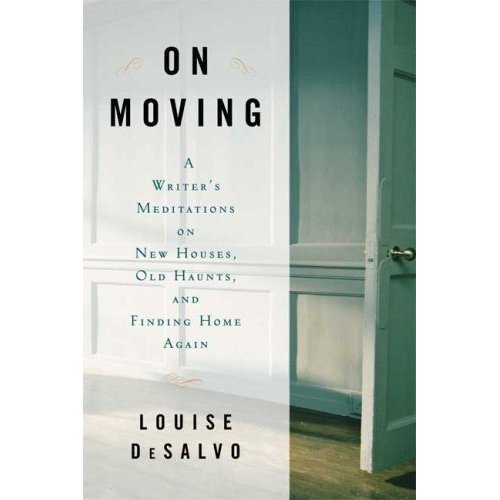
DeSalvo, On MovingHe was across the street raking leaves, and I went over to say hello one a cool autumn day, to take a break from my work, writing about my father’s life during World War II.
“How did you write when you had kids?” he asked me.  “I have this book I want to write, and I can’t get anywhere.  All the housework and time with the kids leaves me no time for writing.”

Bob is a work-at-home dad.  He’s told me about the book he’s burning to write about raising kids with his partner, filled with unconventional wisdom, hard-earned.

Your kids are at school now.  What are you doing raking leaves?

Maybe I should have sweet-talked him about how, yes, it’s tough to get to your work, blah, blah, blah.  But I figured he wanted to know how I did it, so I told him how I kept at my writing when my kids were growing up, and I gave him my “rules” that made it possible.

Rule Number 1:  As soon as the kids are off to school, get to your desk. When they’re babies, as soon as they’re in their cribs, or in their rooms, for a quiet time or a nap, get to your desk.  Don’t do housework.  Don’t make telephone calls.  And for goodness sake, don’t do e-mail, go on Facebook, or look at Oprah.  Don’t waste the precious little time you have.  You can shop, run a household, cook, when the kids are around, and they can help you.  Bob’s kids love raking leaves – they’d raked mine for money.  But there he was, raking, pining for his work, which meant he was choosing to rake, not to write.

Rule Number 2: You don’t need “blocks of time.” Lots of biographies describe writers going to their studies for the entire day.  Nice, if you can do it. Most of us can’t, or wouldn’t want to.  Many writers who aren’t writing tell me they need “blocks of time.”  When I ask if they write in snippets of time, they say no.  When my kids were young, I could get in three hours of work a day, no matter what.  Everyone can get in three hours of work a day.  That’s all Virginia Woolf worked; that’s all the time she took to write. Sometimes, for me, it was an hour here, fifteen minutes there.  When they were babies, I used their nap time and two hours after they went to sleep to write. I took my work to wading pools, doctor’s offices, the park.  I didn’t push my kids on a swing.  They were there to play, not me.

Rule Number 3: You’re not a taxi cab driver. The suburbs are wonderful, sure, but also hellish places for parents, especially if you feel bound to ferry kids from one activity to another.  I tried it.  I died inside.  Each of my kids got one ride a week, no more.  Sure, they got angry.  But they figured out how to get places.  Like walking.  Or riding their bikes.  And I didn’t go to every one of their games.  That was their thing, not mine.  There’s nothing sadder than seeing talented, dying-to-express-themselves parents sitting around doing nothing while their not-so-talented kids dance, play soccer, or twirl around on gym equipment.  If you have to go, bring your work and do your work.  Ignore your child.  Wave occasionally.

Rule Number 4:  You have a right to do your work even though you’re not getting paid for it (yet). Writing, as Audre Lorde said, is not a luxury, surely not for the person yearning for self-expression.  The way I look at it, you can either write, or you can get angry, feel ripped off, or worthless.  Better that you write.  And when you get paid, even a pittance, invest the money into your growing business.  Think of yourself as a start-up company.  Keep ten percent of the profits for yourself.  Spend the rest to replace your labor to give you more time.  To write.

Rule Number 5: You’re the grown-up.  Your life is yours, not your child’s. This is the way Europeans run their households.  This is the way I ran mine.  My needs had to be met.  First.  Selfish?  Yes.  “She sacrificed her life for her children” is not something I want written on my tombstone.  A parent’s life is a terrible thing to waste.

Rule Number 6: Touch your work every day. Live by Anne Lamott’s father’s rule: Work every day, and finish things.

Rule Number 5: Call it work, not writing. No one I knows cares if you’re writing.  That’s why you have to call it work.  Because that’s what it is.  Your work.  Your life’s work.

Louise DeSalvo is the Jenny Hunter Distinguished Scholar for Literature and Creative Writing at Hunter College.  Her most recent book is On Moving.  Her other titles include the memoir Vertigo, which received the Gay Talese award; Crazy in the Kitchen: Food, Feuds, and Forgiveness in an Italian American Family, which was named a Booksense Book of the Year; and Writing as a Way of Healing: How Telling Our Stories Transforms Our Lives. DeSalvo is also a renowned Virginia Woolf scholar.

Filed Under: Discipline, Guest Blogs Tagged With: best-laid plans, creative process, Inspiration, Louise DeSalvo, On Moving, Real Life, Thoughts

  • « Previous Page
  • 1
  • 2
  • 3
  • 4
  • 5
  • Next Page »

COMING MAY 2026: THE FOURSOME

A literary historical novel set in Civil War-era North Carolina, based on a true family story and told from the perspective of Sarah Bunker, one of two sisters who married Chang and Eng, the famous conjoined twins…learn more

Follow on Substack

Subscribe

Connect with Christina

Contact
  • Facebook
  • Instagram
  • Twitter

Copyright © 2026 Christina Baker Kline · Site design: Ilsa Brink