Sign up for Christina’s Newsletter

Christina Baker Kline

Author Website

  • Books
    • The Foursome
    • Please Don’t Lie
    • The Exiles
    • A Piece of the World
    • Orphan Train
      • Orphan Train Girl: The Young Readers’ Edition of Orphan Train
    • Other Novels
      • Bird in Hand
      • The Way Life Should Be
      • Desire Lines
      • Sweet Water
    • Nonfiction
      • Always Too Soon
      • About Face
      • Child of Mine
      • Room to Grow
      • The Conversation Begins
  • Events
  • NEWS
  • Other Writing
  • About
    • Bio
    • FAQs
    • Contact
    • Photos
  • Newsletter

October 8, 2009 By bakerkline

Everything is Material

back to school nightWhen I’m working on a novel, everything is material …

It’s Back-to-School night, an annual ritual I must repeat three times this year in three different schools.  (Bad planning, those birth dates.) High school, middle school, elementary, it’s all the same: green-tinted fluorescents buzzing faintly overhead, the slight whiff of disinfectant, at least one nervous teacher with a fistful of bullet points, several dozing parents.

Yet despite the surface sameness, each endless evening is endless in its own way.  So I look around, and I pull out my writing pad.  I note a bead of sweat on the new vice-principal’s brow.  The inspirational bromides of the athletic director (and the whistle he wears around his neck, even in front of parents at 8 pm).  The Julia Child-like guffaw of a frizzy haired bio teacher.  (Did I just glimpse a flirtatious glance between the band leader and the pianist?  Maybe not. But his wife is watching him like a hawk.)

And then there are the parents. Tired and bedraggled, restless and impatient, alert and engaged. Some, like me, are taking notes. (Other writers? No, probably just better parents than I’ll ever be, legitimately interested in keeping A days and B days straight.)  Directly in front of me, a group of women wearing running shoes and windbreakers, all with similar gray-streaked layered haircuts, cluster together; across the room, a tall blonde MILF in a low-cut purple dress bites her frosted lower lip; half a dozen dads in suits surreptitiously check their I-Phones and Blackberries. Stay-at-home moms in tennis bracelets (and some in tennis whites) contrast with working moms in tailored dresses carrying stylish totes.  Latecomers of all stripes stand wearily against the back wall.

Time flies, and before I know it I’m back in the parking lot with a page full of characters and an idea for a scene.  See, that wasn’t so bad, was it?

Filed Under: Real Life Tagged With: Back-to-School night, creative process, fiction writing, Inspiration, Real Life, Thoughts, writing a novel

September 10, 2009 By bakerkline

Five Life Lessons I Learned Writing my New Novel

supermodel1. I am not a supermodel. Or a professional soccer player.
At times, over the eight long years it took to finish Bird in Hand, I was seized with panic. Look at all those fresh-faced young writers madly producing books, while I grow wrinkled and gray! But then I realized: it doesn’t matter how damn old I am. Unlike some professions, writing does not require that you have dewy skin or the speed of an antelope. All that matters are the words on the page. So when I got into a panic about my work, I reminded myself that life is long; some of my favorite writers have done their best work in their seventies and eighties. And not only that, but …

2. Older really is wiser, at least in some ways.
Climbing up and over the hill of middle age, I’ve learned that some of the positive clichés about aging really are true. I trust my first impulses more. I’m more confident about what I know for sure. I believe that I can write a decent sentence. I care much less than I used to about what people think. I understand my own process. Which leads me to …

3. What works for me is what matters.
Writers are always asked about their work habits because it’s endlessly fascinating (even to other writers). Do you write in the morning or the afternoon? Do you work on a laptop or with a ballpoint pen? Do you sit in a basement, like John Cheever, or an austere sliver of a room, like Roxana Robinson? Do you work for two hours or ten?

But here’s the thing: it doesn’t matter what anyone else’s process is. What matters is what works for me. For example – unlike most other novelists I know, I’m not a morning person. My best writing time may be mid-to-late afternoon. Writing Bird in Hand, I often worked in a generic Panera Bread Shop in a different town, on subways, and in dentists’ offices. I also wrote the first drafts longhand, which few seem to do anymore. Maybe I could train myself to write first drafts on the keyboard, but why should I? This is what works for me.

And that’s my point. I’m still intrigued by how other people work, but I also know that writing is a strange alchemical business, and I need to follow my own impulses. Whatever it takes to get the words on the page is what I need to do. And I also need to remember that …

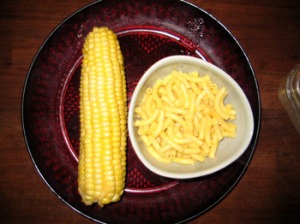
kid food4. My life feeds my work.
For a long time my “real” life and my writing life seemed like two separate states, and when I was in one I felt guilty about neglecting the other. I’ve come to understand that time away from writing nourishes my creativity; time immersed in the creative process allows me to inhabit my personal life with less conflict and more serenity. All the bits and pieces of my life experience feed my writing in ways I don’t even realize until they’re on the page. I drew on this in Bird in Hand by writing about the minutiae of childrearing, “…endless bland kid dinners, fish sticks and chicken nuggets and macaroni and cheese and Classico sauce with spaghetti, on a revolving loop.” At the same time, though …

5. Contrary to popular opinion, quality time is as important as quantity time.
In the final few months writing Bird in Hand, I went around in a perpetually foggy state, and I often felt guilty about my lack of focus. What I came to realize is that my kids – who are 9, 13, and 14 – like having me around, but they don’t always require my undivided attention. Being there when they got home from school in the afternoon, having conversations in the car, family dinners, weekend excursions, cooking together, and the occasional board game made up for a lot of times when I might have been physically present but mentally in a different time zone.

Knowing that there were plenty of times when I’d drop everything and focus on the moment – quality time, that is — my kids were happy to let me work when I had to. And they began taking themselves off to do their own work, too. The oldest one writes and records music. My second child plays piano for hours. And the younger one is currently obsessed with Harry Potter. Some of the best moments are when I feel the household humming with activity – mine and theirs.

I originally wrote this guest post for Lisa Romeo Writes, a terrific blog about “writing, reading, books, life after the MFA, editing (and editors), submissions, getting published (and rejected), media & the publishing business, journalism, revisions, and the writing life.”

Filed Under: Bird in Hand, Real Life Tagged With: Bird in Hand, Christina Baker Kline, Lisa Romeo Writes, Real Life, Roxana Robinson

September 3, 2009 By bakerkline

Guest Blog: Alexandra Enders on Claiming Authority as a Writer

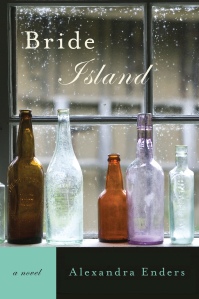
brideislandWhat do you say when someone asks, “And what do you do?”
When someone asks what I do, I say I’m a writer, or sometimes a novelist, but I never say I’m an author. Most writers I know are the same way. It sounds humbler, I suppose, more like what we do instead of what we are. And yet perhaps there’s more to it. To be an author, after all, means to have authority. Doesn’t it?

Years ago, I sat next to a well-respected literary publicist at dinner. When I introduced myself as a “beginning writer,” she gave me a piece of advice: “Act like you’re already the successful writer you intend to become.”  Her words were revolutionary to me—how could I do that, when it was all in my own head?  Then, in 2007, my first novel came out and suddenly I had not only a book but also a new persona as published author.  The hard physical evidence of a book conveys authority unlike anything else, makes it easier to speak to a group of students about writing or answer questions from the audience at a reading—or even tell the person next to you at dinner that you’re a writer.  But as I work on a new novel I’ve come to realize that the struggle for authority is not only a question of publication, but is in fact present every time we sit down to write.  Each act of writing is an act of self assertion.

There’s a famous story of Toni Morrison telling an audience of writers, “If any of you feel you need permission to write, I’m giving it to you.” The problem is this permission, this authorization, isn’t something you receive once; it must be claimed over and over. Writing is such a strange thing to do, sitting alone in a room, making stuff up. There are no guarantees, of any kind. And no matter what you’ve already accomplished, with each new project you must start afresh. We need authority when we begin to write, but we also need it to continue to write when we get stuck or lose our way or our confidence.

Recently I found a group of my old stories.  Well, the beginnings of them. Each story ended abruptly about a page and a half in. I was surprised, not because they were well written (though they were fine) or because they were compelling (though I did want to know what came next), but because each had a distinct tone of authority. These stories had the right to be told. But they were truncated, I knew, because of my lack of confidence, my insecurity about my status as an author. I didn’t feel authorized to tell them. As a young and inexperienced writer, I sometimes confused the act of writing—the hard, uncertain work of inventing—with the ease of reading. I thought stories should just come.  Now I know better, and I know the process better.

The motto for my MFA program was, “I will try.” My friend and I cracked up when we discovered the words written in gold on the back of a Windsor chair in the lounge one night. How unassuming, how un-ambitious, how, well, pathetic, we thought. And yet. It’s not a bad motto for a writer. Authority isn’t always about force or might or conviction. It’s also about faith, in the process and in oneself. It’s about doing what feels uncomfortable, acting as if you’re confident when you’re not, continuing the scene or story or novel even when you’d rather read someone else’s beautiful, seamless, apparently effortless (and already published) book.

Alexandra Enders worked as a magazine editor and writer before getting an MFA in Writing from Vermont College.  She has published stories in iBOMB, Hunger Mountain, and Critical Quarterly, and is the author of the novel Bride Island.  She lives with her husband, daughter, and dachshund in New York.  Visit her at her website www.alexandraenders.com.

Filed Under: Guest Blogs, Real Life Tagged With: Alexandra Enders, Bride Island, fiction writing, identity, Real Life, Thoughts, writing a novel

August 27, 2009 By bakerkline

Real Life Sucks

pile_of_clothesBack from Europe.  Kids milling around the house until September 9th, when school finally starts.  Basement fridge a horror.  Weeds all over the yard.  Mounds of laundry; an endless cycle of food shopping, preparing, clean-up.  Sylvia Plath, Anne Sexton:   I’m thinking of you.

Filed Under: Real Life Tagged With: Anne Sexton, Real Life, Sylvia Plath

August 13, 2009 By bakerkline

Quick Link: The Name So Nice I Used it Twice

babyYou’d think that someone who spends her days creating and naming characters might have gotten the hang of it by the time she had to name some actual humans.  That’s what I thought, at least.  In fact, I was rather smug about it …
So begins my guest post on Nameberry, a very cool baby name site that’s the brainchild (so to speak — yes, I did) of bestselling writers Pamela Redmond Satran and Linda Rosenkrantz.

Even someone who names fictional people for a living can make mistakes when naming real live babies.  Like when I named my three sons: Eli, his brother William, and his other brother William.

Read more here.

Filed Under: Quick Links Tagged With: best-laid plans, Nameberry, naming characters, Pamela Redmond Satran, Real Life

  • « Previous Page
  • 1
  • 2
  • 3
  • 4
  • 5
  • Next Page »

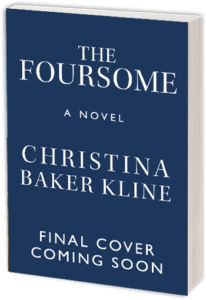
COMING MAY 2026: THE FOURSOME

A literary historical novel set in Civil War-era North Carolina, based on a true family story and told from the perspective of Sarah Bunker, one of two sisters who married Chang and Eng, the famous conjoined twins…learn more

Follow on Substack

Subscribe

Connect with Christina

Contact
  • Facebook
  • Instagram
  • Twitter

Copyright © 2026 Christina Baker Kline · Site design: Ilsa Brink